

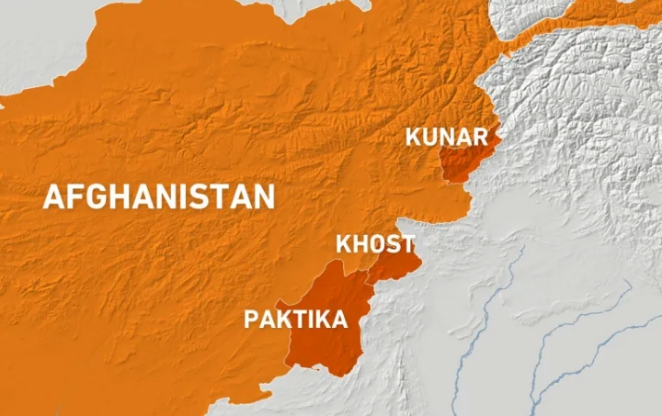
Afghanistan says Pakistan bombed Khost overnight, destroying a family home and escalating tensions as both countries trade accusations over sovereignty violations and insurgent movements complicating an already fragile regional environment.
Taliban spokesman Zabihullah Mujahid confirmed the attack, stating Pakistani jets crossed into Khost’s Gurbuz district without warning and struck a civilian compound belonging to local resident Waliat Khan and his extended family.
Afghan officials reported nine children and a woman were killed, describing shattered rooms, collapsed brick walls, and distraught neighbours recounting the terrifying moment explosions ripped through the quiet rural community before dawn.
Residents said several aircraft circled overhead moments before impact, triggering panic among families already fearful due to rising cross-border tensions following months of deadly clashes and stalled diplomatic negotiations.
Mujahid said, quoting eyewitness testimonies, “The Pakistani invading forces bombed the house of a civilian, killing innocent children who had no connection to any conflict or armed movement whatsoever.”
He condemned the strike as “a blatant violation of Afghan sovereignty,” insisting Kabul would raise the incident through political and diplomatic channels despite growing frustration with Pakistan’s repeated military incursions.
Emergency workers searched through debris for personal belongings and identification documents while survivors attempted to comprehend the loss, many too traumatized to speak as officials documented the damage.
Local health authorities said bodies of the victims arrived at Khost Provincial Hospital shortly after sunrise, prompting emotional scenes as relatives gathered outside the morgue demanding accountability and transparency.

Further Pakistani military strikes were reported in Kunar and Paktika provinces, wounding several civilians and raising fears of a wider confrontation along the historically volatile frontier separating Afghan and Pakistani tribal territories.
Provincial officials in Kunar said explosions near sparsely populated villages forced families to flee, fearing additional bombardments amid uncertainty surrounding Pakistan’s intentions and the Taliban’s response mechanisms.
In Paktika, residents described tremors rocking their homes, recalling past episodes when border hostilities flared unexpectedly, leaving civilians caught between armed groups and state security forces operating across rugged mountain terrain.
Pakistan has not issued an immediate statement regarding the reported strikes, continuing a pattern of delayed communication that Afghan authorities say exacerbates confusion during critical security incidents.
The attack occurred one day after a suicide bombing targeted Pakistan’s paramilitary Federal Constabulary headquarters in Peshawar, a deadly incident quickly claimed by Jamaat-ul-Ahrar, a faction linked to the Pakistan Taliban.
State broadcaster PTV reported the Peshawar attackers were Afghan nationals, prompting President Asif Zardari to blame what he called “foreign-backed Fitna al-Khawarij,” Islamabad’s term for Pakistan Taliban networks allegedly sheltering inside Afghanistan.
Rahimullah Khan, a Peshawar security analyst, said Islamabad views the Peshawar assault as “proof that TTP factions continue operating from Afghan soil despite assurances from the Taliban government during previous negotiations.”
Another suicide bombing earlier this month in Islamabad killed at least twelve people and was also claimed by a Pakistan Taliban faction, further heightening Pakistani concerns about insurgent infiltration routes from Afghanistan.
Pakistan’s interior ministry accused a militant cell “guided at every step by the high command based in Afghanistan,” igniting a fresh cycle of accusations and counter-accusations between the two neighbours.
The relationship between Pakistan and Afghanistan has deteriorated significantly since the Taliban returned to power in August 2021, with both sides struggling to establish a sustainable framework for border security and intelligence cooperation.
Tensions spiked recently after intense clashes in October left about seventy people dead on both sides of the border, prompting Qatar and Turkiye to broker a short-lived ceasefire aimed at preventing further escalation.
Talks held in Istanbul collapsed without a lasting agreement, as Pakistan demanded Kabul rein in Pakistan Taliban fighters, while Afghanistan insisted Islamabad address groups hostile to the Taliban operating within Pakistani territory.
Diplomats familiar with the discussions said mistrust dominated the sessions, with each side presenting security reports contradicting the other’s claims regarding safe havens, operational movements, and intelligence responsibilities.
Taliban spokesman Zabihullah Mujahid reiterated Kabul’s denial that it shelters armed groups attacking Pakistan, accusing Islamabad of “fabricating narratives to justify cross-border aggression that harms Afghan civilians.”
Khost residents expressed shock over the latest strike, saying many families feared renewed bombings as the fragile ceasefire negotiations remained stalled, leaving border communities vulnerable to sudden outbreaks of violence.
Local farmer Najibullah said, “We are ordinary people living near the frontier. Every clash between governments becomes our tragedy because bombs never distinguish between fighters and children.”
Humanitarian organisations warned that repeated airstrikes risk worsening displacement as families flee border districts for safer areas, increasing pressure on local administrations already struggling with economic hardship.
Aid workers said Afghanistan’s southeast provinces face compounding challenges, including limited medical infrastructure, poor road access, and heightened insecurity resulting from unresolved territorial disputes with Pakistan.
Regional analysts said the latest incident demonstrates how Afghanistan says Pakistan bombed Khost amid rising suspicion, weakened diplomacy, and limited trust-building mechanisms capable of preventing these rapid escalations.
Pakistani commentators, meanwhile, have argued their country faces a surge of Pakistan Taliban attacks supported by militants crossing from Afghanistan, intensifying pressure on the Pakistani military to respond forcefully.
Islamabad maintains that the TTP’s growing operational capacity stems from Afghanistan’s inability or unwillingness to dismantle militant structures operating along the porous border regions adjacent to Pakistani tribal districts.
But Afghan officials counter that Pakistan routinely conducts operations without coordinating with Kabul, undermining regional stability while violating Afghan sovereignty and endangering non-combatant populations living in contested areas.
Residents in Gurbuz district said funerals for the victims drew hundreds of mourners from neighbouring villages, with clerics condemning the strike as unjustifiable and calling for renewed diplomatic engagement.
One elder said, “These children had no role in any violence. Their deaths will only deepen the wounds between two nations that should be resolving disputes peacefully.”
As Afghanistan says Pakistan bombed Khost, international observers warned that both governments risk entrenching hostility, making it harder to restore dialogue or revive stalled confidence-building measures.
The United Nations urged restraint, releasing a brief statement expressing concern about civilian casualties and calling for investigations that respect international humanitarian law.
Security analysts said both Afghan and Pakistani leaders face internal pressure to project strength, limiting their flexibility in negotiations and raising the likelihood of intensified confrontation if provocations continue unchecked.
In Kabul, authorities convened emergency security meetings to assess border deployments and evaluate whether Pakistan’s actions signal a shift toward more aggressive regional military tactics.
In Islamabad, security officials reviewed intelligence from recent attacks, arguing that militant networks benefit from what they describe as inadequate enforcement by Taliban security structures across Afghanistan’s eastern frontier.
A Peshawar-based think tank said escalating attacks reflect a dangerous cycle in which each side believes forceful action is the only effective deterrent.
Afghan commentators said political channels remain open but fragile, requiring sustained diplomatic investment from neutral states capable of mediating long-standing disputes and rebuilding trust between the two nuclear-armed neighbours.
An Afghan analyst noted, “As long as Pakistan blames Kabul for TTP activity, and Kabul accuses Pakistan of unjust strikes, civilians will continue suffering due to unresolved historical grievances.”
As Afghanistan says Pakistan bombed Khost, regional powers including Iran, China, and Central Asian states have monitored the situation closely, fearing broader instability affecting trade routes and cross-border security initiatives.
Experts warn prolonged tensions could derail regional economic projects, including transport corridors linking Afghanistan to Pakistan’s ports, potentially harming both countries’ already weakened economies.
Despite intense public anger, some Afghan elders urged restraint, warning young men against retaliatory violence and stressing the need for diplomatic channels to prevent further tragedy.
Political observers said both sides may return to indirect negotiations if back-channel communication facilitated by international mediators gains momentum.
Afghan civilian groups called for independent investigations, urging transparency from Pakistan and accountability for actions resulting in the deaths of children and non-combatants.
Residents of border districts said uncertainty now dominates their lives, with rumours of additional airstrikes spreading fear through communities dependent on farming, cattle-herding, and seasonal labour.
Aid agencies warned displacement may increase if violence continues, raising humanitarian concerns as winter approaches and rural families face shortages of food, shelter, and heating materials.
Some analysts believe Pakistan may intensify cross-border pressure until it perceives Afghanistan taking stronger action against Pakistan Taliban fighters operating inside Afghan territory.
Kabul, however, insists Islamabad’s strategy risks fueling resentment among Afghan communities, driving ideological polarisation and empowering militant networks exploiting public anger.
While Afghanistan says Pakistan bombed Khost, both governments remain trapped in a dangerous pattern of reactions driven by distrust, misinformation, and conflicting security priorities.
Calls for de-escalation echoed across regional diplomatic circles, but the path to meaningful stability remains uncertain without significant compromises from both sides.
Border communities now mourn lost children, fear renewed bombings, and question whether political leaders truly understand the suffering inflicted during each eruption of cross-border violence.
Analysts say the incident may shape future diplomatic discussions, influencing how regional actors view Pakistan-Afghanistan security cooperation and the feasibility of long-term peace mechanisms.
As Afghanistan says Pakistan bombed Khost, many Afghans hope the tragedy forces renewed engagement aimed at protecting civilians who remain the most vulnerable amid regional power struggles.
Families in Gurbuz district continue burying their dead, searching ruins for belongings, and waiting for answers as uncertainty deepens across Afghanistan’s tense and heavily militarized frontier regions.

