

Starved and terrified civilians in Darfur are recounting harrowing experiences after fleeing the RSF in Sudan, with thousands still unaccounted for following the capture of El-Fasher.
Alkheir Ismail, who escaped to Tawila, described being among 300 people stopped by fighters. One recognized him from university and spared his life while others were executed.
“There was a young man I studied with in Khartoum,” Alkheir recalled. “He told them, ‘Don’t kill him.’ The rest of the group, the youths, were all killed.”
Other survivors spoke of the RSF in Sudan targeting fleeing civilians indiscriminately, throwing them to the ground, seizing belongings, and, in some cases, physically abusing women and children.
Tahani Hassan, who also fled to Tawila, recounted the fear. “Three young men appeared suddenly. They wore RSF clothes, fired shots in the air, and assaulted anyone in their path,” she said.
Fatima Abdulrahim walked for five days under brutal conditions with her grandchildren. She witnessed the group behind her being raped, though her girls escaped, she said with tears.
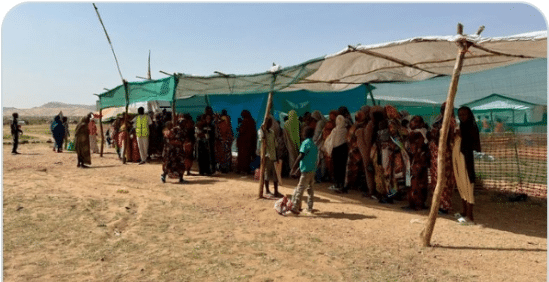
Rawaa Abdalla, another escapee, revealed her father is missing. “We don’t know if he’s alive, injured, or among those captured. The uncertainty is unbearable,” she explained, her voice trembling.
RSF leader Mohamed Hamdan Dagalo urged fighters to protect civilians, promising prosecution for violations. Observers remain skeptical of RSF in Sudan’s commitment to accountability.
Despite claims of arrests for abuse, UN officials have questioned RSF in Sudan’s ability to investigate violations impartially, citing a history of impunity and denial of atrocities.
High-level RSF commanders dismissed reports as “media exaggeration” intended to obscure their military defeat in El-Fasher, according to news agencies reporting from the region.
Both the RSF in Sudan and the Sudanese army have faced war crimes accusations throughout the conflict, which has forced over 14 million from their homes and killed tens of thousands.
Famine, cholera, and other disease outbreaks are widespread. Humanitarian organizations warn that civilians trapped between the warring factions face increasing starvation and violence.
Between Sunday and Wednesday, over 62,000 people fled El-Fasher, formerly home to around 260,000 residents. Many remain missing, raising fears that RSF in Sudan is systematically hunting them.
Doctors Without Borders (MSF) reported only around 5,000 people reached Tawila safely. “Those trying to flee are being killed, blocked, and hunted down,” said MSF emergencies head Michel Olivier Lacharite.
MSF noted alarming malnutrition: every child under five among recent arrivals in Tawila suffered acute malnutrition, with 57 percent experiencing severe conditions requiring urgent care.
Survivors said RSF in Sudan separated civilians by age, gender, and ethnicity. Many were held for ransom, with demands reaching nearly $50,000 per individual in some cases.
One witness described RSF fighters running over prisoners with vehicles. “I cannot describe the horror; people were killed in front of me,” a survivor said, speaking under protection from the UNFPA.
A 24-year-old man recounted: “Of 200 people, only four who could pay survived. The rest — children, the elderly, women — were shot dead on the spot.”
A 26-year-old woman shared that her husband’s ransom secured her safety, but he was killed before her eyes. Another 19-year-old girl reported sexual assault by RSF in Sudan soldiers.
The UNFPA confirmed at least 460 people were killed at El-Fasher’s maternity hospital on October 29. Patients, visitors, and healthcare staff were among the victims, highlighting RSF in Sudan’s brutality.
In North Kordofan, RSF in Sudan has captured Bara, displacing more than 36,000 residents. UN officials warn the state may become the next major conflict zone.
Stephane Dujarric, UN spokesperson, confirmed reports of executions, sexual violence, and attacks on humanitarian volunteers in North Kordofan, emphasizing the pattern of abuse by RSF in Sudan.
Mohammed Elsheikh of the Sudan Doctors Network described fleeing residents in dire health, enduring extreme temperatures and dangerous desert terrain on long journeys to safety.
RSF fighters have previously attacked North Kordofan villages, killing nearly 300 people, including children and pregnant women, demonstrating a pattern of targeted atrocities in multiple regions of Sudan.
Aid agencies urge international mediators, including the US, Saudi Arabia, UAE, and Egypt, to intervene immediately to protect civilians from further attacks by RSF in Sudan.
The international community has repeatedly condemned the RSF in Sudan, calling for urgent humanitarian access, investigation of violations, and assistance for the tens of thousands displaced or trapped.
As survivors continue to arrive in Tawila and other towns, stories of killings, abductions, sexual assault, and starvation highlight the growing scale of RSF in Sudan’s campaign against civilians.
With famine spreading and disease outbreaks worsening, RSF in Sudan’s takeover of El-Fasher exacerbates the world’s most severe humanitarian crisis, requiring immediate global attention and action.
The RSF in Sudan now holds El-Fasher, but the human cost is staggering, leaving tens of thousands missing, traumatized, and in desperate need of aid and protection.
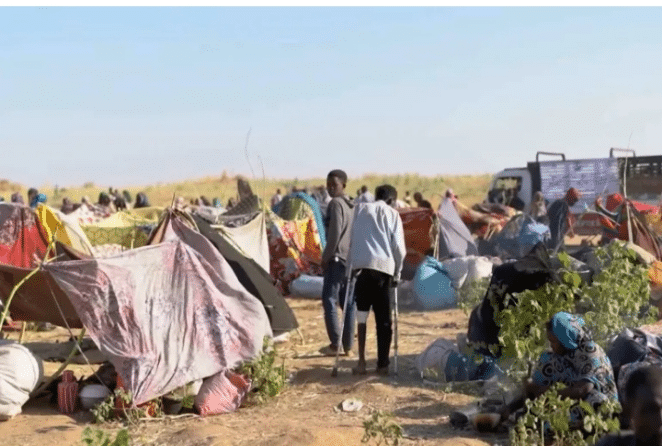
For civilians trapped in Darfur, the fall of El-Fasher is not just a military event—it represents terror, loss, and the ongoing risk of systematic killing and abuse.
The situation underscores the urgent need for intervention, protection of civilians, and accountability for RSF in Sudan, whose actions continue to devastate families and communities across Darfur.
About The Author


