

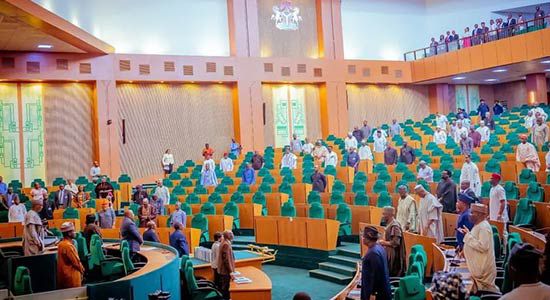
The House of Representatives has resolved to probe the green energy project placements across various Ministries, Departments, and Agencies (MDAs) over concerns that several renewable and clean energy initiatives have been wrongly domiciled with entities lacking the technical expertise or legal mandate to manage them effectively.
The decision followed the adoption of a motion of urgent national importance on Wednesday during plenary, sponsored by Hon. Jesse Onuakalusi, who represents Oshodi/Isolo II Federal Constituency of Lagos State under the Labour Party.
According to Onuakalusi, the Federal Government has, through multiple MDAs, funded several green energy projects — including solar mini-grids, wind farms, and hybrid renewable systems — to boost access to sustainable power, reduce carbon emissions, and advance rural electrification.
However, he lamented that some of these projects have been mismanaged or stalled due to poor coordination and inappropriate domiciliation.
Lawmaker Raises Alarm Over Misplaced Green Energy Project Placements
In his presentation, Onuakalusi expressed deep concern about what he described as “the misplacement of green energy project placements,” warning that the trend undermines Nigeria’s Energy Transition Plan and the broader goals of the Paris Climate Agreement.
He said, “The House is disturbed that the domiciliation of critical green energy projects with agencies and institutions lacking the requisite technical capacity has led to duplication of functions, inefficiencies, substandard implementation, and even abandonment of key renewable initiatives.”
The lawmaker added that the absence of due diligence in assigning projects has resulted in wastage of public resources and has eroded public trust in the government’s renewable energy agenda.
Onuakalusi emphasized that such practices, if unchecked, could derail Nigeria’s progress toward achieving the United Nations Sustainable Development Goal 7 — which focuses on affordable, reliable, sustainable, and modern energy for all.
“The continued mismanagement and inappropriate domiciliation of green energy projects can derail the nation’s commitment to clean energy, environmental sustainability, and economic diversification,” he noted.
Reps Committee to Investigate Domiciliation of Green Energy Projects
Following extensive deliberations, the House directed its Committee on Renewable Energy to investigate the circumstances surrounding the domiciliation of green energy projects across MDAs and to determine whether due process, statutory mandates, and capacity standards were adhered to.
The committee is expected to identify cases where renewable projects have underperformed or been mismanaged due to poor green energy project placements, and to recommend appropriate corrective measures, including sanctions for erring institutions.
Lawmakers further urged the Office of the Secretary to the Government of the Federation (SGF) and the Bureau of Public Procurement (BPP) to ensure that future green energy project placements are executed only through legally competent and technically capable institutions to guarantee accountability and value for money.
The resolution also tasked the Federal Ministry of Power and the Energy Commission of Nigeria to develop a clear framework for inter-agency coordination in implementing renewable and green energy projects.
The framework is expected to define institutional responsibilities, eliminate overlaps, and promote efficiency in project execution.
Need for Reform in Renewable Energy Management
Industry experts and lawmakers alike have long argued that Nigeria’s renewable energy drive has been slowed by administrative bottlenecks, funding mismanagement, and poor institutional synergy.
Observers believe that placing green energy projects with specialized agencies like the Rural Electrification Agency (REA), the Energy Commission of Nigeria (ECN), and the Nigerian Electricity Regulatory Commission (NERC) would enhance technical quality, monitoring, and sustainability.
The House, in its resolution, also proposed an urgent review of the Electric Power Sector Reform Act to align the existing legal framework with emerging renewable energy priorities.
The amendment, lawmakers said, would ensure that renewable initiatives are strategically domiciled in relevant institutions with proven expertise.
Nigeria’s Clean Energy Drive Faces Implementation Hurdles
Nigeria’s commitment to the global clean energy transition has seen the government launch multiple programmes targeting off-grid electrification, waste-to-energy systems, and hybrid solar installations in schools, hospitals, and rural communities.
Yet, progress has often been hindered by mismanagement, corruption, and overlapping institutional mandates.
Experts warn that misaligned green energy project placements not only waste scarce public funds but also threaten the credibility of Nigeria’s climate commitments under the Paris Agreement.
Energy governance analyst, Dr. Akinola Fashola, told The Punch that effective coordination is crucial for project sustainability.
“If renewable energy projects are executed by agencies without the proper technical background, it’s like asking a fish to climb a tree. You’ll get neither results nor accountability,” he said.
He stressed that consolidating oversight under technically competent agencies will drive transparency and attract private sector investment in renewable energy.
House to Enforce Accountability and Transparency
The House Committee on Renewable Energy is expected to submit its report within four weeks, outlining recommendations to strengthen the institutional structure for managing green energy project placements in Nigeria.
Lawmakers reaffirmed their commitment to ensuring that renewable and clean energy projects deliver value and align with the nation’s energy transition roadmap.
They further called on the Federal Government to enhance collaboration between the Ministry of Power, the Energy Commission of Nigeria, and the Rural Electrification Agency, to avoid duplication and guarantee efficiency.
With Nigeria seeking to diversify its energy mix and meet climate obligations, the outcome of the probe into green energy project placements could mark a turning point in the country’s renewable energy governance.
About The Author


