

The Pound to Naira exchange rate today reflected a mixed outcome across Nigeria’s foreign exchange markets on Monday, December 15, 2025, as the naira posted marginal weakness against the British pound at both the official and parallel market segments.
Market watchers say the divergence between the official Nigerian Foreign Exchange Market (NFEM) and the parallel market continues to highlight lingering pressure on the naira, despite recent reforms aimed at improving transparency and liquidity within the country’s FX framework.
Pound to Naira exchange rate today at official NFEM window
At the official Nigerian Foreign Exchange Market, the Pound to Naira exchange rate today stood at ₦1,936.86 per pound sterling during early trading.
This rate applies to transactions conducted through authorised dealers and regulated channels, including corporates, investors, and exporters.
Compared to the previous trading session, the naira recorded a mild depreciation against the pound, signalling cautious demand for foreign exchange at the start of the week.
Currency dealers attributed the movement to limited inflows and steady demand from businesses settling overseas obligations.
Despite recent stability recorded at the official window, analysts note that the naira remains vulnerable to shifts in FX supply, especially as inflows from crude oil exports and portfolio investments fluctuate.
Parallel market records higher pound rates
While the official market maintained relative calm, the parallel market told a different story.
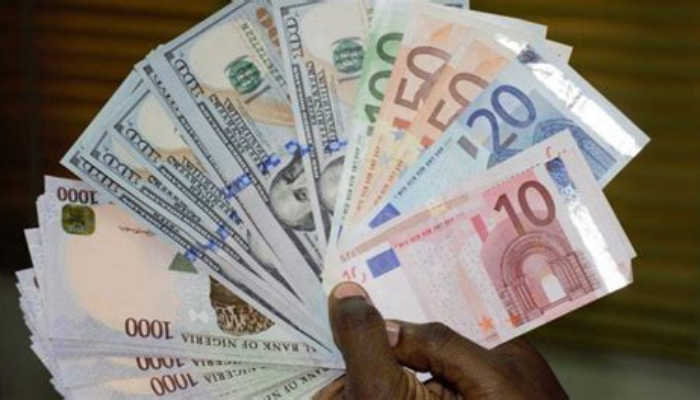
In major commercial centres such as Lagos, Abuja, and Port Harcourt, the pound exchanged hands at significantly higher levels.
Dealers reported buying rates between ₦1,940 and ₦1,950 per pound, while selling prices averaged ₦1,970 per pound.
The gap between official and black-market rates continues to reflect unmet FX demand, particularly from individuals and small businesses unable to access the formal market.
Traders explained that demand for the pound typically increases due to payments related to school fees in the UK, medical expenses, imports, and international travel, all of which place added strain on the informal market.
Dollar, euro and other currencies follow similar pattern
Beyond the Pound to Naira exchange rate today, other major foreign currencies also recorded uneven performance against the naira.
At the official market, the US dollar traded between ₦1,443 and ₦1,450, supported by relative stability in supply conditions.
However, at the parallel market, the dollar sold for as high as ₦1,500, depending on location and transaction size.
The euro also showed a noticeable spread between markets. Official rates placed the euro around ₦1,575 to ₦1,585, while parallel market prices ranged from ₦1,620 to ₦1,650.
Importers dealing with European machinery, pharmaceuticals, and consumer goods accounted for much of the demand pressure.
Other currencies, including the Canadian dollar and Chinese yuan, recorded modest movements.
The yuan, increasingly used for trade with China, traded close to ₦200–₦210 at the official window, reflecting Nigeria’s expanding trade ties with Asia.
What is driving today’s exchange rate movements?
Analysts say the current FX movements are being driven by a combination of domestic and global factors.
On the global front, uncertainty around interest rate direction in major economies continues to influence capital flows into emerging markets such as Nigeria.
Locally, crude oil prices and production levels remain critical. Although oil prices have remained relatively steady in recent weeks, Nigeria’s production challenges continue to limit the volume of export earnings entering the FX market.
Foreign reserve levels also play a key role in shaping market confidence. Market participants say stronger reserve buffers would improve the Central Bank of Nigeria’s ability to manage volatility and narrow the widening gap between official and parallel rates.
CBN reforms and the road ahead for the naira
The Central Bank of Nigeria has maintained that recent FX reforms are designed to promote transparency, improve price discovery, and gradually stabilise the naira.
Measures such as tighter monitoring of authorised dealers and a market-driven pricing mechanism have helped reduce extreme distortions, though structural challenges persist.
Economists argue that sustained improvement in the Pound to Naira exchange rate today and other currency pairs will depend on increased FX inflows from exports, diaspora remittances, and foreign direct investment.
They also stress the need for long-term reforms to reduce Nigeria’s heavy dependence on imports and strengthen non-oil revenue sources.
Impact on businesses and consumers
For Nigerian businesses, particularly import-dependent firms, higher parallel market rates translate to increased operational costs.
These costs often filter down to consumers through higher prices for goods and services.
For households, exchange rate movements directly affect overseas school fees, travel expenses, medical bills, and digital subscriptions priced in foreign currencies.
As a result, daily FX updates remain a key reference point for financial planning.
The Pound to Naira exchange rate today underscores the fragile balance within Nigeria’s forex market.
While reforms have delivered modest stability at the official window, sustained pressure in the parallel market suggests that demand still outweighs available supply.
Analysts believe that consistent policy implementation, improved FX inflows, and stronger economic fundamentals could gradually ease pressure on the naira in the months ahead.
Until then, currency movements are expected to remain sensitive to both global developments and domestic policy signals.
About The Author

