Poland warns citizens to leave Iran as tensions across the Middle East intensify, with Warsaw issuing its strongest travel warning in years over imminent conflict risks.
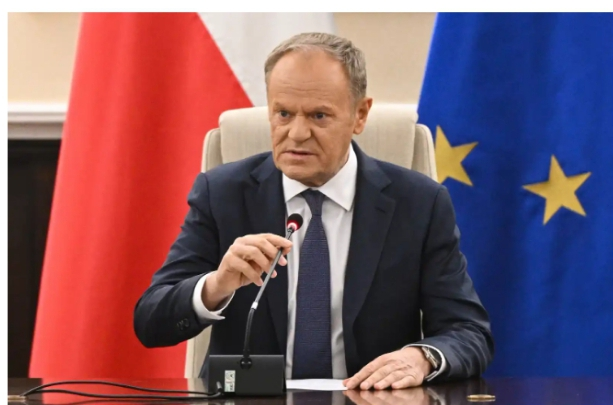
At a high-level press conference, Donald Tusk said intelligence assessments suggest hostilities could erupt within hours, not days, leaving foreign nationals stranded without evacuation options.
The Polish leader stressed that the security situation in Iran has deteriorated sharply, describing the prospect of open conflict as “very, very real” and increasingly unavoidable.
“Please take this seriously,” Tusk told reporters, recalling past crises where delayed departures left citizens exposed to closed airspace and inaccessible borders during sudden military escalations.
According to the prime minister, once a “hot conflict” begins, governments may be unable to provide assistance, warning that commercial flights could be suspended without notice.
He urged Polish nationals currently inside Iran to depart immediately, while advising others to cancel all planned travel regardless of purpose, including business or family visits.
The warning reflects mounting regional instability driven by unresolved diplomatic confrontations, military posturing, and intelligence alerts pointing to possible retaliatory strikes.
Polish officials believe any escalation could unfold rapidly, overwhelming civilian infrastructure and making land evacuations dangerous or logistically impossible under emergency conditions.
Warsaw’s foreign ministry has reportedly activated crisis-response mechanisms, including consular hotlines and coordination with allied embassies still operating in Tehran.
While no precise trigger was disclosed publicly, officials hinted at “multiple converging indicators” suggesting a narrow window for safe civilian departure.
Security analysts note that modern conflicts often begin with sudden air or missile strikes, grounding flights and sealing borders before evacuation plans can be executed.
Tusk underlined that the advisory is not precautionary rhetoric but a direct response to credible assessments shared with Poland by international security partners.
He said similar warnings were issued in previous crises but ignored by some travelers, resulting in prolonged exposure to conflict zones and diplomatic complications.
The prime minister emphasized that personal assumptions of safety are unreliable when state-level military decisions can change realities within minutes.
Poland’s message aligns with broader Western concerns about the volatility of the current standoff, although each government is issuing guidance independently.
Several European states have quietly reduced diplomatic staffing in the region, a move often interpreted as a prelude to potential hostilities.
A senior Polish official, speaking off the record, said evacuation capacity should be assumed “finite and uncertain” once fighting begins.
Airlines servicing Iranian routes are already reviewing contingency plans, raising the possibility of abrupt service suspensions even before conflict formally erupts.
Tusk warned that waiting for official evacuation orders could prove disastrous if airports close or airspace restrictions are imposed suddenly.
He reiterated that responsibility ultimately rests with individuals to act on warnings while normal travel options remain available.
The prime minister’s remarks were unusually direct, reflecting frustration with past experiences where advisories were dismissed as overly cautious.
In earlier regional crises, delayed departures led to citizens seeking emergency extraction under far more dangerous circumstances.
Poland’s government says it wants to avoid repeating those scenarios, especially given the speed of modern military escalation.
Officials also cautioned that digital connectivity and banking access could be disrupted quickly in a conflict, complicating logistics for stranded travelers.
Tusk noted that embassies cannot function normally amid bombardment or widespread unrest, limiting consular protection during active hostilities.
He described the current moment as a “last safe window” for departure, urging decisive action rather than prolonged deliberation.
The advisory applies nationwide and covers all categories of travelers, without exception, according to the foreign ministry.
Poland has not announced plans for forced evacuations, reinforcing the message that voluntary, immediate departure is the safest option.
Regional experts say such blunt language from a European leader indicates unusually high confidence in short-term escalation risks.
While diplomatic efforts continue behind the scenes, officials acknowledge that negotiations may not prevent sudden military action.
Tusk concluded by stressing that the warning is issued “in the interest of life and safety,” not politics or speculation.
Read also: Bill Gates cancels India AI impact summit keynote amid renewed Epstein scrutiny
He said Poland will continue monitoring developments hour by hour but urged citizens not to wait for further updates before acting.
The government plans to issue follow-up guidance through official channels as long as communication lines remain stable.
For now, Warsaw’s position is unequivocal: leave while you still can.
About The Author