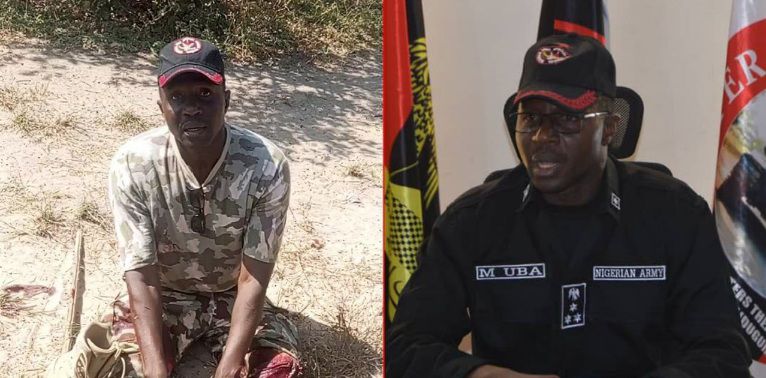
Poland has formally identified two Ukrainian men as primary suspects in a sophisticated rail sabotage incident, claiming they worked in coordination with Russian intelligence to target strategic transport routes.
Prime Minister Donald Tusk described the sabotage as “an alarming attack on our sovereignty,” noting that the operation aimed to disrupt the Warsaw–Lublin railway line supplying Ukraine.
Tusk emphasized, “The sabotage was calculated, not random. It was designed to threaten civilian lives and critical infrastructure, a serious escalation of hybrid warfare against Poland.”
According to the government, the suspects crossed from Belarus into Poland, carried out the attack, and then returned to Belarus, complicating jurisdiction and cross-border investigative efforts.
Authorities revealed one suspect had previously faced conviction in Ukraine for sabotage, while the other hailed from eastern Ukraine, indicating experience in tactical operations and possible intelligence training.
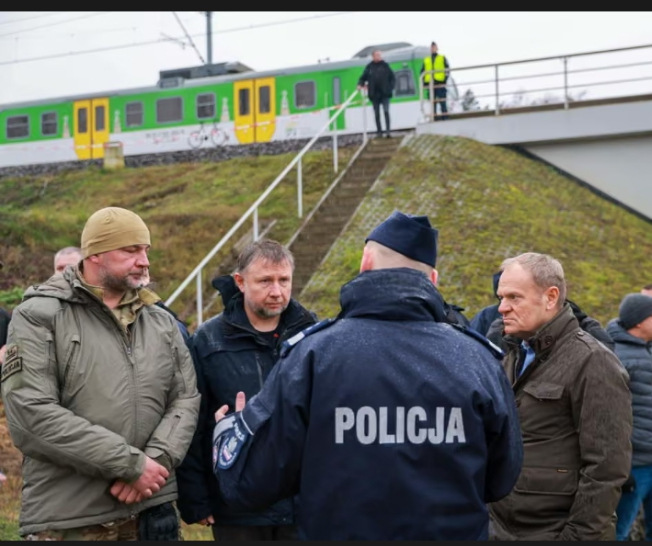
Investigators said the explosive device involved military-grade C‑4, wired along roughly 300 meters of railway track, designed to derail freight trains and create maximum disruption.
Kierwiński, Poland’s Interior Minister, confirmed that physical evidence, including CCTV footage, explosive residue, and fingerprints, had been collected from multiple sabotage sites.
The partial detonation under a freight train caused significant damage to the tracks, but authorities reported no casualties, attributing their success to rapid detection and preventive measures.
A second attempt involved attaching steel clamps to the rails near Pulawy, accompanied by a mobile phone as a triggering mechanism, showing increased sophistication in operational planning.
Defense experts warn that the use of mobile phone triggers reflects modern hybrid warfare tactics, blending espionage, sabotage, and psychological intimidation.
Tusk stressed the broader implications, stating, “This is not isolated. It is part of an orchestrated effort by Russian intelligence to destabilize Poland and intimidate European allies.”
The Defense Ministry dispatched specialized military teams to inspect and reinforce about 120 km of the Warsaw–Lublin railway line, aiming to prevent additional sabotage attempts.
Tusk called for unity within NATO and the EU, emphasizing that protecting critical transport infrastructure is a shared responsibility that transcends national borders.
Security Services Minister Tomasz Siemoniak told reporters: “This is a matter of foreign intelligence operations. These are not ordinary criminals, but trained operatives working for external powers.”
Kremlin spokesman Dmitry Peskov denied involvement, dismissing Polish claims as politically motivated and alleging “Russophobia” underpinned the accusations rather than any verifiable evidence.
Investigators also reported sabotage damage to overhead power lines, suggesting coordinated attacks that went beyond simple rail track disruption and pointed to detailed operational planning.
Eight individuals, including Ukrainian nationals allegedly collaborating with Russian intelligence, have been detained in Poland on related sabotage and espionage charges.
Some detainees attempted to send explosives or incendiary parcels to Ukraine, further demonstrating cross-border sabotage efforts designed to undermine European stability.
The parcels were reportedly engineered to ignite or explode during transit, creating both physical risk and a climate of fear among transportation operators.
Prosecutors confirmed that formal investigations have been launched under Polish law, including charges of espionage, sabotage, and creating the possibility of catastrophic transport accidents.
Tusk called for enhanced intelligence sharing and preventive infrastructure measures across Europe, stating: “We must anticipate these attacks before they happen, not only respond afterward.”
Analysts suggest that targeting Poland’s rail network reflects a deliberate strategy to intimidate EU states supporting Ukraine while undermining logistical supply chains.
The use of operatives with prior sabotage experience indicates careful selection and training by Russian intelligence, demonstrating a methodical approach to hybrid warfare.
Poland’s government has increased rail inspections, particularly on strategic lines serving both domestic and international freight, recognizing these corridors as potential high-value targets.
European security experts warn that rail sabotage is increasingly favored by state-backed actors because it combines operational simplicity with high potential disruption and psychological impact.
Tusk noted that the Warsaw–Lublin rail line is not just a transport route but a symbol of Poland’s strategic commitment to supporting Ukraine in ongoing conflict zones.
Parliamentary hearings have stressed the importance of reinforcing early detection systems and advanced surveillance measures along critical infrastructure corridors across the continent.
Kierwiński highlighted the effectiveness of joint operations between police, prosecutors, and the ABW, Poland’s Internal Security Agency, in rapidly identifying and intercepting sabotage networks.
Tusk’s office announced plans to invest in hardened rail infrastructure, drone monitoring, and real-time intelligence sharing to prevent future incidents and deter external sabotage.
The government has reiterated that even if suspects operate from abroad, Polish authorities remain committed to holding them accountable through international cooperation and potential extradition.
“The perpetrators will not escape justice,” Tusk declared. “Hybrid warfare cannot succeed if Europe remains united and vigilant in protecting its critical infrastructure.”
Officials caution that sabotage threats are evolving, including attempts to manipulate railway signaling, disrupt logistics software, and use improvised devices that can evade standard detection protocols.
Experts have emphasized public awareness, urging transport workers and civilians to report suspicious packages or unusual activities near rail lines to authorities immediately.
Tusk concluded: “Safeguarding infrastructure is not optional; it is essential to national and European security. We will respond with intelligence, law enforcement, and international solidarity.”
Poland’s identification of the two Ukrainian suspects serves as a warning to other EU nations that hybrid threats targeting transport networks are ongoing and must be addressed proactively.
The administration is now exploring advanced cybersecurity measures to secure railway control systems, which may be vulnerable to coordinated physical and digital attacks.

While investigations continue, the broader political message remains clear: Poland will resist foreign interference and invest in protecting its transportation corridors and sovereignty from hybrid attacks.
About The Author