Nigeria faces a growing national security crisis after a serving General is killed by insurgents, exposing deep vulnerabilities and raising urgent questions about State authority.
Nigeria has witnessed many tragedies in the long, painful battle against insurgency, but few moments match the gravity of what recently occurred.
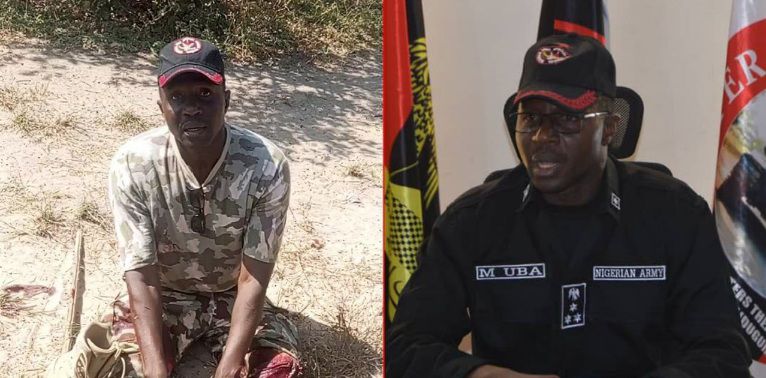
A serving General of the Nigerian Army, a man who represents the very apex of military authority, experience, and national defence, was ambushed, captured, and killed by terrorists.
This was not a mere attack. It was a deliberate strike at the foundations of our national security.
To understand the magnitude of this event, we must first understand what a General represents.
A General is not just a senior officer; he is a symbol of the State’s strength, a custodian of national defence strategy, and a figure terrorists should fear.
When such a figure is successfully targeted and eliminated, it signals not just a tactical victory for insurgents, but a strategic humiliation for the nation.
The precision of the attack raises alarming questions. These were not disorganised criminals. Their coordination, firepower, and intelligence point to an insurgency that has evolved far beyond the State’s public descriptions.
Someone is arming them. Someone is training them. Someone is feeding them information. Terrorists do not acquire military-grade weapons, advanced communication tools, and strategic capability by chance.
And yet, what followed this national shock was silence, a silence that speaks to deeper institutional paralysis.
Government statements were flat, emotionless, and devoid of the urgency a moment like this demands.
No fiery address. No swift retaliation. No visible show of force. Just cold words on paper, as though the death of a General were an unfortunate traffic incident.
This is not merely disappointing; it is dangerous.
The consequences for Nigeria as a sovereign nation are profound.
First, the country has suffered a loss of deterrence. A nation’s power is measured partly by how feared its military is.
If terrorists can kill one of the highest-ranking officers with no immediate consequence, they will believe they can defeat anyone, soldiers, civilians, communities, even institutions. It emboldens them.
Second, military morale takes a direct hit. Soldiers already fighting under harsh conditions now have to reckon with the reality that their leadership, the people they look up to, can fall in the same way they do.
When soldiers lose confidence in the State’s ability to protect commanders, discipline and motivation decline. No army can win a counterinsurgency war with broken morale.
Third, the nation’s internal stability becomes endangered. Insecurity thrives when the State appears weak.
Other armed groups, kidnappers, separatist militias, ethnic militias, bandit cartels, pay close attention to events like this.
If one group can strike deep and survive, others will attempt the same. A sovereign nation must project strength consistently; any lapse encourages disorder.
Fourth, the incident damages Nigeria’s international credibility. Foreign partners, international observers, and neighbouring states are all watching.
A nation whose top-ranking officers can be neutralised by terrorists will be viewed as unstable and unreliable in regional security cooperation.
Nigeria’s long-standing reputation as West Africa’s military backbone is weakened by such events.
Finally, the greatest danger is territorial fragmentation. Once armed groups begin to see themselves as equals to the State, or worse, as superior, the risk of parallel governance emerges.
The early stages of national disintegration always begin with armed groups challenging State authority without consequence. We have seen this in Libya, Mali, Sudan, and Somalia. Nigeria is not immune to the same fate.
The death of a General is therefore not just a tragic headline; it is a national warning. It exposes gaps in intelligence, response capability, leadership resolve, and strategic coordination.
It reveals a military that is overstretched, under-supported, and unable to apply overwhelming force where it matters.
For Nigeria to remain a sovereign nation with control over its territory, this moment must mark a turning point. The government must respond with decisive, coordinated, overwhelming action, not symbolic gestures.
The military must reassert dominance with visible, sustained operations that dismantle those responsible for this attack and send a clear message to others who may be watching.
We cannot continue the cycle of leniency, where captured terrorists are later paraded as “repentant,” rehabilitated, and reintegrated into a society they once terrorised.
This practice not only demoralises soldiers but signals weakness to insurgents. A sovereign nation must protect its honour and its citizens, not appease those who challenge its authority with bloodshed.
Nigeria stands at a crossroads.
One path leads to strength, sovereignty, and restored security.
The other leads to creeping instability, expanding insurgency, and eventual fragmentation.
The death of a General is the loudest warning this nation will receive.
If Nigeria does not act now, the consequences will echo for generations.
About The Author