Trump hosts Saudi crown prince in Washington during a meticulously choreographed White House engagement emphasizing renewed alignment, strengthened cooperation and expansive long-term commitments shaping strategic relations between both influential nations.
The crown prince’s first White House appearance in over seven years highlighted a recalibrated diplomatic landscape as Riyadh seeks stronger ties while addressing lingering concerns from earlier controversies.
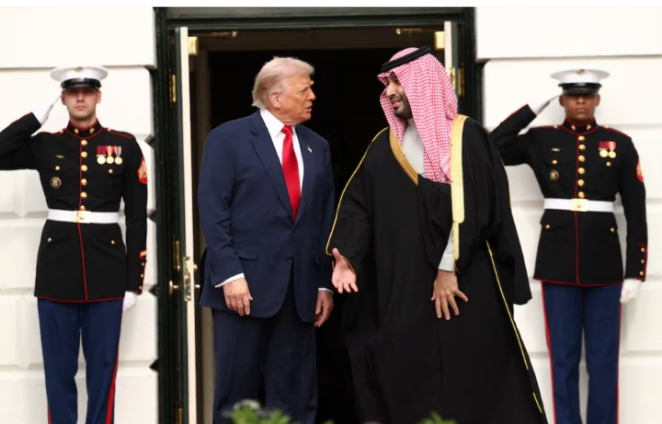
President Trump greeted Mohammed bin Salman with ceremonial grandeur, including a cannon salute, an honor guard and a U.S. Air Force flyover symbolizing the administration’s eagerness to reaffirm alliance strength.
Witnesses described Trump as energetic and welcoming, shaking hands with the crown prince while praising the relationship as “incredibly important for global security, regional stability and mutual prosperity.”
The crown prince arrived focused on reinforcing U.S.–Saudi relations through expanded cooperation in defense procurement, civil nuclear development, artificial intelligence and a growing catalogue of major investment initiatives.
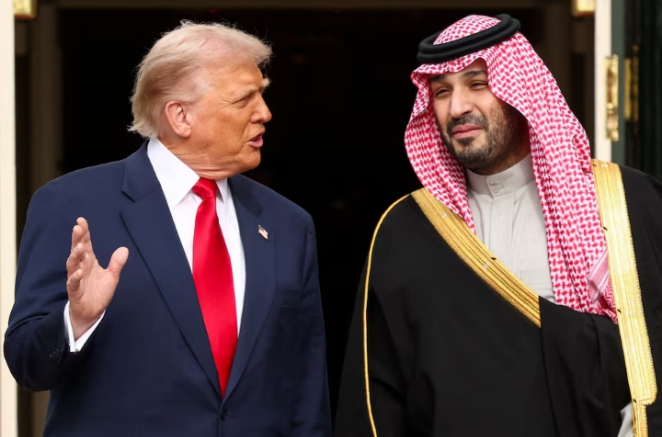
White House officials emphasized that both leaders viewed the visit as crucial for shaping long-term strategic direction, particularly regarding energy security, technological innovation and coordinated regional engagement.
Inside the White House, Trump escorted the crown prince through the presidential corridor, sharing brief remarks about history while maintaining a relaxed tone ahead of formal discussions.
After entering the Oval Office, Trump described the partnership as “stronger than ever,” telling reporters, “The United States and Saudi Arabia are building an incredibly powerful future together.”
The crown prince reciprocated, stating, “We value our partnership with the United States greatly, and we believe today will mark a turning point for our region’s stability.”
Their meeting focused on a wide range of issues including security guarantees, defense modernization, economic diversification and new policy frameworks designed to guide bilateral cooperation over the coming decade.
A senior U.S. official confirmed that Saudi investment deals, previously estimated at $600 billion, remain a top priority as both nations pursue aligned economic and technological ambitions.
According to the official, both delegations reviewed projects involving renewable energy, artificial intelligence research, cybersecurity partnerships and industrial development designed to support innovation across both national economies.
Trump highlighted the importance of shared investment, noting, “Saudi Arabia is committing to projects at historic scale, and these investments will create jobs and build technologies that benefit everyone.”
Saudi officials described the meeting as productive, stressing the kingdom’s desire for structured security cooperation capable of addressing evolving regional challenges while supporting long-term economic transformation under Vision 2030.
Trump hosts Saudi crown prince as discussions expanded toward defense procurement, including the proposed F-35 fighter jet sale considered a milestone capable of reshaping regional strategic balances.
If approved, the F-35 fighter jet sale would represent the first transfer of the advanced aircraft to Riyadh, challenging historical limits placed to preserve Israel’s military advantage.
Officials said the administration expects “extensive consultations with Congress and regional partners,” acknowledging sensitivity surrounding Washington’s longstanding promise to protect Israel’s qualitative military edge.
Trump reiterated confidence, saying, “We believe this deal strengthens security for all our partners by ensuring stability, deterrence and shared technological capabilities across the region.”
Saudi diplomats expressed optimism, calling the potential agreement “a step toward modernizing our military forces and improving our capacity to safeguard regional security and international trade routes.”
Beyond defense, both leaders discussed establishing a civil nuclear cooperation framework enabling Saudi Arabia to pursue peaceful nuclear energy development while complying with international safety, oversight and non-proliferation standards.
U.S. officials stressed that any framework would include robust safeguards, emphasizing transparency and accountability to reassure lawmakers and regional partners of its peaceful intent.
Analysts believe such cooperation could deepen U.S.–Saudi relations by creating long-term technological dependencies, reducing Chinese influence over regional nuclear development and strengthening joint energy diversification objectives.
Trump hosts Saudi crown prince at a time when Washington remains determined to limit Beijing’s growing footprint in Middle Eastern energy, security and technology sectors.
Former diplomat Dennis Ross commented, “Trump sees deepening cooperation with Saudi Arabia as essential for countering China’s rise and ensuring America remains the kingdom’s most trusted strategic partner.”
Another major topic was Abraham Accords diplomacy, as Trump continued pressuring Riyadh to normalize relations with Israel, describing Saudi participation as “the single most transformative step for regional peace.”
The crown prince reiterated the kingdom’s position that meaningful progress on Palestinian statehood remains essential, noting that regional stability “must include dignity, justice and a viable future for Palestinians.”
While normalization remains uncertain, American officials insisted the issue will shape ongoing diplomatic conversations and could evolve depending on regional military conditions and future political developments.
Saudi advisers privately indicated that normalization remains possible in the long term but requires measurable steps from Israel, particularly regarding humanitarian conditions and future territorial negotiations.
Trump suggested progress was still achievable, saying, “I believe Saudi Arabia ultimately wants peace and will play a leading role when the right conditions emerge.”
The leaders also addressed the ongoing Gaza conflict, Iran’s regional activities and the deterioration of maritime security in the Red Sea, all viewed as critical for regional coordination.
Both sides stressed the importance of defending shipping routes, countering drone threats and strengthening intelligence sharing to prevent destabilizing actions from non-state actors operating across the Middle East.
Human rights groups urged U.S. officials to raise civil liberties concerns with the crown prince; however, the administration prioritized strategic cooperation, reflecting policy continuity from previous engagements.
The crown prince defended Saudi reforms, stating, “We continue advancing social and economic changes, and we believe our nation is progressing at a pace unprecedented in our history.”
Trump hosts Saudi crown prince amid rising global economic volatility, making energy security another critical point of discussion as Washington seeks predictable production levels and market stability.
Energy officials highlighted new avenues for cooperation including hydrogen research, renewable infrastructure development and broader collaboration allowing both nations to diversify energy portfolios while advancing green technologies.
Trump praised Saudi commitments to modernization, saying, “The kingdom is investing heavily in innovation and clean energy, and we look forward to supporting these ambitious goals.”
Following meetings, the leaders attended a high-profile black-tie dinner featuring business executives, military officials and diplomats representing industries expected to benefit from deepened bilateral cooperation.
During the dinner, Trump toasted the crown prince, declaring, “Together we are shaping a future of peace, prosperity and extraordinary partnership between our two great nations.”
The crown prince responded with gratitude, acknowledging the “historic nature” of the visit and emphasizing his desire to “build stronger connections across security, technology and economic development.”
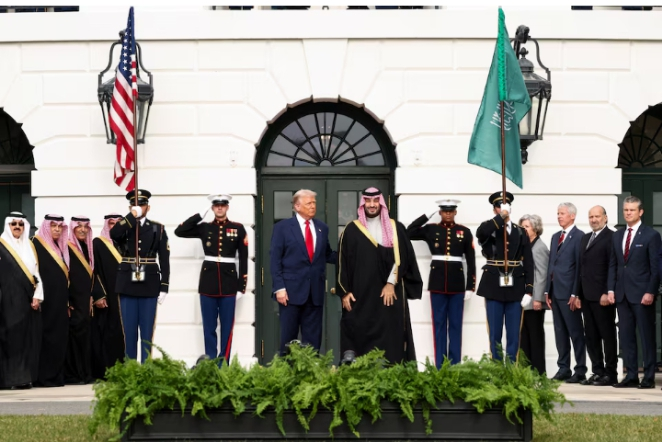
As the evening concluded, officials from both countries expressed confidence that agreements reached during the visit would accelerate progress on long-term objectives and reinforce enduring strategic ties.
The visit ended with Trump hosts Saudi crown prince departing the White House amid strong expectations that follow-up negotiations will convert ceremonial symbolism into concrete policy achievements for both nations.
—
About The Author