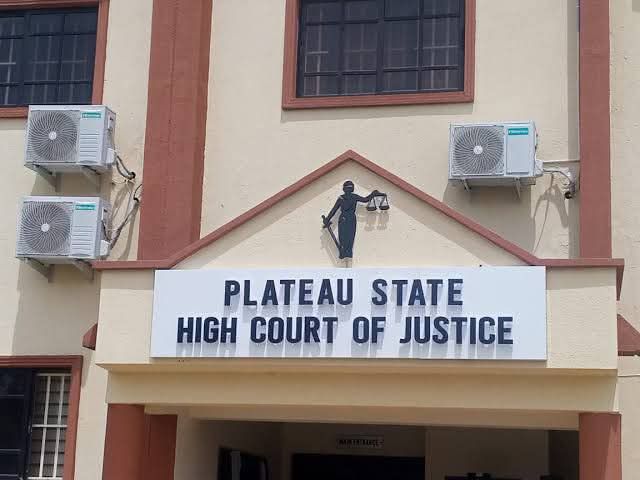
A significant court ruling has reshaped the tenure structure for elected local government leaders in Plateau State, with the High Court in Jos declaring that council chairmen must serve a four-year term instead of the two years previously provided under state laws.
The judgement was delivered by the Chief Judge of Plateau State, Justice David Mann, who concluded that the two-year tenure contained in the laws governing local government administration in the state conflicts with the provisions of the Nigerian Constitution.
According to the court, any law that contradicts the Constitution cannot stand.
The Plateau court ruling specifically examined provisions in the Plateau State Local Government law and the regulations guiding the Plateau State Independent Electoral Commission (PLASIEC).
These provisions had previously limited the tenure of elected council chairmen to two years.
However, the court held that such a short tenure does not align with the constitutional requirement for a democratically elected local government system.
Justice Mann explained that Section 7(1) of the 1999 Constitution of Nigeria, as amended, guarantees the existence and operation of democratically elected local government councils across the country.
In his judgement, the Chief Judge emphasized that the constitutional framework intends for local government institutions to function effectively as the third tier of government.
He noted that limiting elected officials to a two-year term may weaken governance at the grassroots level and make it difficult for local authorities to implement meaningful development programmes.
The Plateau court ruling therefore declared the two-year tenure provision invalid because it undermines the constitutional structure designed to protect democratic governance within local councils.
The court maintained that state laws must always comply with the Constitution, which remains the supreme legal authority in Nigeria.
As a result of the decision, elected local government chairmen in Plateau State will now serve a four-year tenure.
Legal experts say the judgement brings Plateau State closer to the general democratic practice where elected officials are given longer terms to provide stability in governance and carry out policy initiatives.
Observers believe the Plateau court ruling could have important implications for local administration in the state.
A four-year tenure is expected to give council leaders enough time to plan, implement, and complete development projects in their respective local government areas.
It may also reduce frequent election cycles that often create administrative disruptions.
The timing of the judgement is also significant because the Plateau State Independent Electoral Commission has already announced plans to conduct local government elections in September 2026.
With the new legal interpretation, the forthcoming elections will now produce chairmen who are expected to remain in office for four years.
Political analysts say the Plateau court ruling could influence how electoral guidelines are prepared for the upcoming polls.
PLASIEC may need to review aspects of its regulations to ensure that they align with the constitutional interpretation provided by the court.
Beyond the immediate political implications, the judgement reinforces the principle of constitutional supremacy in Nigeria’s legal system.
Courts across the country often play a crucial role in resolving conflicts between state legislation and constitutional provisions.
For many residents and governance observers, the decision represents a step toward strengthening democratic institutions at the grassroots level.
By affirming a four-year tenure, the court has effectively created a more stable structure for leadership within local government councils.
Ultimately, the Plateau court ruling highlights the ongoing effort within Nigeria’s legal and political system to ensure that laws guiding democratic institutions remain consistent with the Constitution while supporting effective governance for citizens at the community level.
Ireport247news