Nigeria has taken another decisive step towards repositioning its energy sector as the Nigerian National Petroleum Company Limited (NNPC Ltd) formally unveiled its Gas Master Plan 2026, a comprehensive roadmap designed to raise national gas production to 12 billion cubic feet per day (bcf/d) by 2030 while unlocking more than $60 billion in new investments across the oil and gas value chain.
The plan, launched at the NNPC Towers in Abuja, underscores the Federal Government’s determination to transform Nigeria into a gas-driven economy, leveraging its vast natural gas endowment to power industrialisation, deepen energy security and support economic diversification.
With proven gas reserves of about 210 trillion cubic feet (Tcf) and an estimated upside potential of 600 Tcf, Nigeria ranks among the most gas-rich countries in the world.
However, years of infrastructure gaps, underinvestment and policy inconsistencies have limited the country’s ability to fully monetise these resources.
NNPC Gas Master Plan 2026 anchors Nigeria’s low-cost gas ambition
At the heart of the new strategy is the NNPC Gas Master Plan 2026, which officials describe as a deliberate shift from policy formulation to disciplined execution, with a strong emphasis on cost optimisation, commercial viability and integrated sector coordination.
Speaking at the unveiling, the Minister of State for Petroleum Resources (Gas), Dr Ekperikpe Ekpo, said the Plan reflects a clear national resolve to translate gas potential into tangible economic outcomes.
“Today’s launch is not merely the unveiling of a document; it represents a strategic pivot towards a more integrated, commercially driven and execution-focused gas sector,” Ekpo said.
“Nigeria is fundamentally a gas nation. Our challenge has never been about resources, but about translating them into reliable supply, infrastructure into value, and policy into measurable outcomes for our economy and our people.”
According to the minister, the NNPC Gas Master Plan 2026 aligns seamlessly with the Federal Government’s Decade of Gas Initiative, which positions natural gas as the backbone of Nigeria’s energy security, industrial growth and just energy transition.
Exceeding presidential gas production targets
In his address, the Group Chief Executive Officer of NNPC Ltd, Engr. Bashir Bayo Ojulari, said the Plan was designed not only to meet but exceed presidential mandates on gas production.
He explained that while the current national target is 10 bcf/d by 2027, the company is working towards 12 bcf/d by 2030, driven by operational efficiency, improved supply reliability and sustained investment inflows.
“The Plan is structured to exceed the presidential mandate of increasing gas production to 10 billion cubic feet per day by 2027 and 12 billion cubic feet per day by 2030, while catalysing over $60 billion in new investments across the oil and gas value chain,” Ojulari said.
He noted that the NNPC Gas Master Plan 2026 prioritises cost optimisation and systematic resource maturation, particularly the conversion of gas reserves from speculative 3P categories to bankable 2P reserves, a critical requirement for attracting long-term financing.
Strengthening domestic gas utilisation
A major pillar of the Plan is the expansion of domestic gas utilisation, especially in power generation, transportation and industrial production.
Ojulari said NNPC intends to strengthen gas supply to power plants, compressed natural gas (CNG), liquefied petroleum gas (LPG), Mini-LNG projects, and other critical industrial offtakers.
Energy analysts note that improving gas supply reliability could significantly reduce Nigeria’s dependence on expensive liquid fuels for power generation, while also lowering production costs for manufacturers.
The NNPC Gas Master Plan 2026 also introduces greater flexibility between domestic and export markets, allowing Nigeria to optimise value across different demand centres without compromising local supply obligations.
Investors’ confidence and sector collaboration
Reaffirming his personal commitment as chief sponsor of the initiative, Ojulari said NNPC has adopted a more collaborative and investor-centric approach in shaping the Plan, working closely with industry stakeholders, partners and financiers.
This approach appears to be resonating with industry players.
In a goodwill message, the Chairman of the Independent Petroleum Producers’ Group (IPPG) and Chief Executive Officer of Aradel Holdings, Adegbite Falade, described the Plan as a much-needed boost to the economy.
“This is giving a shot in the arm to the economy and will help bridge the gap between intent and reality,” Falade said. “Gas thrives on the value chain, from upstream producers to offtakers, and we, as IPPG members, reiterate our full support for this initiative.”
Similarly, the Chairman of the Oil Producers Trade Section (OPTS) and Managing Director of TotalEnergies Upstream Companies in Nigeria, Matthieu Bouyer, commended NNPC for the ambition behind the NNPC Gas Master Plan 2026, noting that international oil companies remain aligned with its core operating principles.
The new Plan builds on the foundation laid by the Nigerian Gas Master Plan (NGMP) 2008, which provided the initial strategic framework for harnessing Nigeria’s gas resources.
However, unlike earlier efforts, the 2026 version places stronger emphasis on execution discipline, private-sector participation and regulatory certainty.
Officials said the Plan is also fully aligned with the Petroleum Industry Act (PIA), which has reshaped Nigeria’s oil and gas governance architecture and improved transparency in commercial operations.
By integrating upstream production, midstream infrastructure and downstream consumption, the NNPC Gas Master Plan 2026 is expected to serve as the definitive framework for coordinated gas sector development over the next decade.
Experts believe that achieving the 12 bcf/d production target could have far-reaching implications for Nigeria’s economy. Increased gas supply could stabilise electricity generation, lower energy costs for businesses, stimulate petrochemical investments and support job creation across multiple sectors.
Moreover, positioning gas as a transition fuel aligns with global climate objectives, enabling Nigeria to reduce routine gas flaring while meeting domestic and export energy demand in a more environmentally responsible manner.
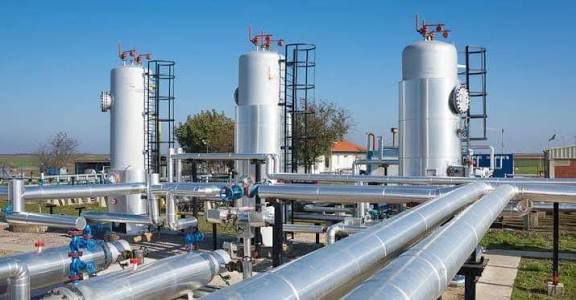
As global energy markets increasingly favour cleaner fuels, Nigeria’s ability to deliver affordable and reliable gas at scale could significantly enhance its competitiveness.
A defining moment for Nigeria’s gas future
With ambitious production targets, strong policy backing and growing investor interest, the NNPC Gas Master Plan 2026 represents a defining moment in Nigeria’s long quest to fully harness its gas wealth.
If effectively implemented, the Plan could finally bridge the gap between Nigeria’s enormous gas potential and the economic prosperity it promises—turning natural gas into a true catalyst for national development by the end of the decade.