

SpaceX Starship reaches orbit for the first time after the giant rocket successfully completed its first attempt to circle Earth during a major test flight from Texas.
The milestone came despite an engine failure during the rocket’s ascent, which initially raised concerns that the mission’s planned orbital attempt could be abandoned.
SpaceX controllers ultimately decided it was safe to proceed with an engine burn that placed Starship on its planned trajectory around Earth.
Cheers and applause erupted at SpaceX’s Starbase launch facility after the decision was confirmed and the spacecraft successfully entered orbit.
Daniel Hewitt, an engineer narrating SpaceX’s livestream, announced the milestone moments after the orbital burn, declaring: “Starship is in orbit.”
The achievement represents a major development for SpaceX’s long-term plans to use Starship for missions beyond Earth, including future expeditions to the Moon and Mars.
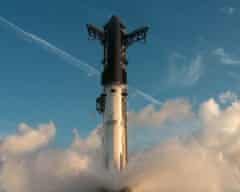
SpaceX Starship Launch Marks Major Milestone
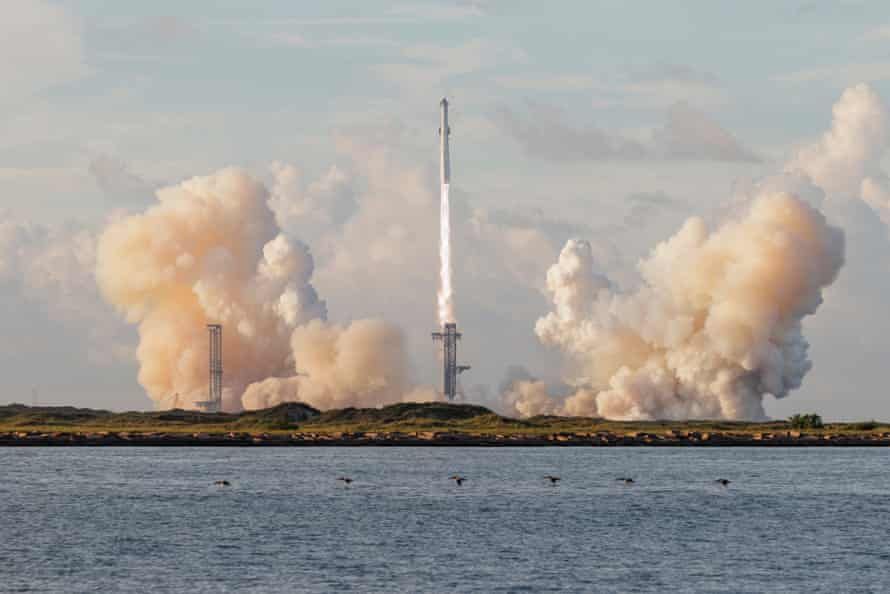
The rocket lifted off from SpaceX’s Starbase facility in Texas at 7.48am local time, marking the 14th test flight of the Starship system.
Unlike previous full-scale Starship test flights, which targeted suborbital trajectories, the latest mission was designed to send the spacecraft around Earth before returning to the planet.
Starship is the largest and most powerful rocket ever built, standing more than 120 metres tall when fully assembled with its Super Heavy booster.
The enormous launch system is designed around SpaceX’s goal of developing fully reusable rockets capable of carrying large payloads and eventually people on missions beyond Earth.
Reaching orbit requires Starship to travel at approximately 28,000km/h, or about 17,400mph.
The latest mission therefore represented a significant technical challenge compared with earlier flights that remained on simpler suborbital trajectories.
Engine Failure Threatened Orbital Attempt
The successful orbital insertion was particularly significant because the mission encountered an engine problem during its ascent.
The failure initially created uncertainty over whether Starship would be able to continue with the planned orbital manoeuvre.
SpaceX mission controllers nevertheless determined that the spacecraft could safely proceed and carried out the burn needed to place it on an orbital trajectory.
The decision triggered a visible celebration among SpaceX personnel as the mission progressed beyond an important milestone.
The spacecraft eventually reached an altitude of about 171 miles, or 275 kilometres, above Earth.
Starship Mission Changed After Reaching Orbit
SpaceX originally planned for Starship to complete six loops around Earth during a mission lasting almost 10 hours.
The spacecraft was then expected to splash down in the Pacific Ocean west of Chile.
However, more than an hour into the flight, SpaceX announced that Starship would return earlier than initially planned.
The revised mission called for a landing attempt in the north Pacific approximately three hours after launch.
The change meant that reaching orbit became the central achievement of the test rather than completing the entire original flight plan.
Although the spacecraft successfully reached orbit, its return ended with the vehicle erupting into a ball of flames after performing its planned atmospheric descent manoeuvres.
Expert Hails Starship Orbital Flight
The achievement drew praise from Martin Barstow, professor of astrophysics and space science at the University of Leicester.
“This is an important milestone for SpaceX, with Starship successfully reaching orbit, and at the first attempt,” Barstow said.
He added that the achievement marked the beginning of a transition from Starship’s testing and development phase toward becoming a vehicle capable of delivering large payloads.
According to Barstow, the development could support future efforts to return humans to the Moon.
He also described the availability of such a large launch capability as potentially transformational for the wider space industry.
The comments highlight the significance of the orbital milestone beyond SpaceX itself, particularly because Starship is being developed for missions requiring much larger payload capacities than many existing launch systems.
Starship Tests New Technology
The latest SpaceX Starship launch also included several new technologies and hardware changes designed to address problems encountered during earlier tests.
During the mission, Starship deployed 26 next-generation Starlink satellites.
Three of those satellites carried cameras intended to capture images of the spacecraft’s heat shield.
The imagery is expected to provide engineers with additional information for evaluating the heat shield ahead of future missions.
Starship’s upper stage also had to use aerodynamic flaps to control its speed and orientation during atmospheric re-entry.
The spacecraft descended horizontally in a manoeuvre commonly described as a belly flop before turning upright as it approached its designated landing area.
It then slowed down before the vehicle was engulfed in flames over the Pacific.
Booster Returns to Earth
The mission also involved the Super Heavy booster separating from the Starship upper stage after launch.
Following separation, the booster performed manoeuvres intended to return it toward an offshore landing location in the Gulf of Mexico.
Unlike a previous Starship test in 2024, SpaceX did not attempt to catch the booster using the giant mechanical arms installed at its launch tower.
The booster had previously experienced difficulties during an earlier test flight when several engines developed ice-related problems.
The manoeuvre was abandoned after three engines began clogging, while a subsequent landing burn saw only eight of 13 planned engines successfully reignite.
SpaceX subsequently modified both hardware and software in an effort to address the problems.
Read also: Taiwan pushes back as Xi and Trump clash over World War Two history
Elon Musk’s Moon and Mars Ambitions
The successful orbital flight is closely connected to Elon Musk‘s long-term plans for reusable space transportation.
Musk has sought to develop a rocket system capable of rapid turnaround between missions while reducing the cost of launching large payloads into space.
Starship is intended to eventually transport cargo and astronauts beyond Earth, including missions to the Moon and Mars.
NASA also hopes to use Starship as part of its plans for future lunar exploration.
The spacecraft’s ability to carry substantial payloads is considered important for missions that require equipment, fuel and other materials to be transported beyond low Earth orbit.
A successful orbital test therefore provides SpaceX and its partners with additional flight data for future development.
Starship’s Previous Test Flights
The latest achievement comes after a series of Starship test flights that produced both progress and setbacks.
SpaceX has flown the complete Starship system since 2023, but previous missions focused primarily on suborbital trajectories.
Those flights allowed engineers to test launch, stage separation, flight control and landing systems without placing the vehicle on a complete orbital path around Earth.
Several tests ended unsuccessfully.
In March of the previous year, Starship exploded shortly after launch, with debris scattered over parts of the Bahamas.
Two months later, another spacecraft lost control and began spinning shortly after separating from its booster.
A month after that, Starship exploded during preparations for another test flight.
The latest orbital achievement therefore represents a significant step in a development programme that has involved repeated testing, failures and hardware modifications.
Starship Moon and Mars Missions Move Closer
The first successful orbital insertion provides SpaceX with important data for the next stages of Starship’s development.
The company’s ultimate objective extends far beyond simply placing the spacecraft into Earth orbit.

SpaceX wants Starship to become a reusable transportation system capable of carrying people and large quantities of cargo to the Moon, Mars and potentially other destinations.
For NASA, the vehicle’s development could also play a major role in future lunar exploration.
The latest flight did not complete every objective originally planned for the mission, and the spacecraft ultimately broke apart during its return.
However, the successful orbital insertion represents a major milestone in the development of a vehicle designed for a new generation of large-scale space missions.
As engineers examine data from the flight, the results are expected to influence further modifications and future Starship Moon Mars missions.
For SpaceX, reaching orbit on the first orbital attempt marks a significant progression from experimental suborbital flights toward the company’s ambition of making Starship a fully reusable vehicle for missions beyond Earth.
About The Author


