Taiwan‘s government has pushed back over World War Two history after Chinese President Xi Jinping and US President Donald Trump highlighted the wartime alliance between their countries during their recent summit.
The issue has drawn concern in Taipei, where officials say Beijing’s account of China’s role in World War Two does not adequately recognise the Republic of China’s position during the conflict.
Taiwan says the Republic of China was the government in China during World War Two and fought alongside the Allied powers against Japan.
Beijing, however, maintains that communist forces played a central role in China’s wartime resistance, describing Communist guerrilla forces as the “backbone” of the fighting.
The competing accounts have become part of a broader dispute between Beijing and Taipei over history, identity and China’s political legacy.
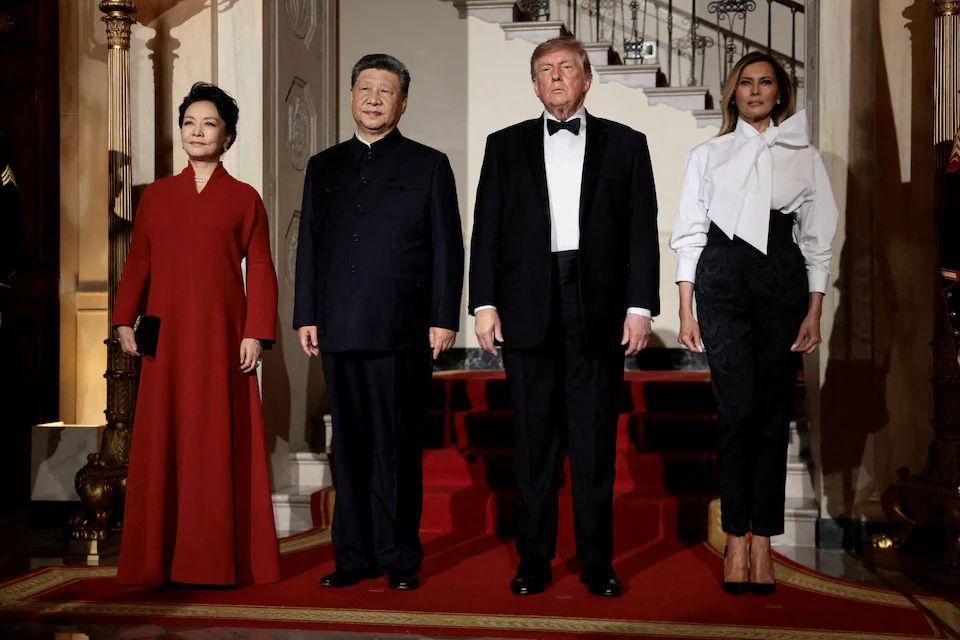
Xi Jinping and Trump Highlight Wartime Alliance
During a state dinner in Washington on Thursday, Xi and Trump highlighted the cooperation between the United States and China during World War Two.
A White House fact sheet issued after the summit said the two leaders recalled that the US and China “were allies in World War Two and fought side by side to win the war”.
The emphasis on the wartime alliance has attracted attention in Taiwan because officials there are concerned about how Washington interprets China’s historical role.
Shen Yu-chung, deputy head of Taiwan’s Mainland Affairs Council, said Xi was seeking to shape the historical narrative around the People’s Republic of China.
He said Xi is “continuously trying to guide the World War Two historical narrative to be led by the People’s Republic of China”.
Shen added that Taiwan would continue communicating with Washington to ensure that the historical role of the Republic of China was properly understood.
“Taiwan will continue to convey messages to the US so it ‘correctly understands that during the entire World War Two process, the Republic of China was America’s steadfast ally’,” he said.
Taiwan Challenges Beijing’s Historical Narrative
Taiwan Deputy Foreign Minister Francois Wu also accused Beijing of seeking to change the historical record surrounding the war.
“China is trying to replace the Republic of China’s role during World War Two,” Wu said. “I think this is something we should feel very sad about.”
The comments reflect the longstanding disagreement between Beijing and Taipei over which government should be associated with China’s wartime resistance and international relations during the period.
The People’s Republic of China was established in 1949 after Mao Zedong‘s communist forces defeated the Republic of China government in the Chinese civil war.
The Republic of China government subsequently relocated to Taiwan, where it has retained its formal name.
Taiwan remains self-governed, while Beijing claims the island as part of China’s territory.
Republic of China Fought Alongside Allies
The historical dispute centres partly on the identity of the Chinese government during the Second World War.
Taiwan’s position is that the Republic of China was the government representing China during the conflict and that its forces fought alongside the Allies against Japan.
The Republic of China had been China’s recognised government before the communist victory in the civil war.
Taiwanese officials therefore argue that references to China’s wartime contribution should not be framed in a way that gives the People’s Republic of China, established after the war, the role held by the Republic of China during the conflict.
Beijing’s official historical account places greater emphasis on communist resistance forces and their contribution to the war.
Chinese authorities have described communist guerrilla forces as the “backbone” of China’s wartime fighting.
The competing narratives have remained a longstanding source of political and historical disagreement between Beijing and Taipei.
US-China Wartime Alliance Becomes Political Issue
The renewed debate comes after Xi and Trump publicly emphasised cooperation between their countries during World War Two.
For Taiwan, the concern extends beyond historical interpretation because the United States is the island’s most important supplier of military equipment.
Taipei is therefore closely watching how Washington approaches China’s historical narrative and its broader relationship with Beijing.
Taiwanese officials fear that greater acceptance of Beijing’s version of history could affect perceptions of Taiwan’s role and its relationship with the United States.
However, the White House and US State Department did not respond to requests for comment on the concerns raised by Taiwanese officials.
China’s Taiwan Affairs Office also did not respond to requests for comment.
China and Taiwan Continue Disputing the War’s Legacy
The disagreement is not limited to government statements.
Within Taiwan itself, the legacy of World War Two remains contested because the island was a Japanese colony from 1895 until 1945.
Taiwan’s political parties have different approaches to the island’s historical relationship with China and the Republic of China.
The Democratic Progressive Party, which traditionally promotes Taiwan’s separate identity and history from China, has often emphasised Taiwan’s distinct political development.
The Kuomintang, meanwhile, was the Republic of China’s ruling party during World War Two and continues to approach the historical question differently.
KMT Criticises Taiwan Government
Taiwan’s largest opposition party, the Kuomintang, said the government was correct to defend the Republic of China’s historical role but criticised what it described as the political use of history.
Read also: RAF Fairford terror plot: Five arrested as Iran link investigated after explosives found
The KMT argued that President Lai Ching-te’s government refers to pre-1949 Republic of China history selectively when confronting Beijing.
The party said the government was “bringing back the 1945 Republic of China when they need to confront Beijing and compete for the narrative rights”.
That criticism illustrates that the historical dispute exists not only between Taiwan and China but also within Taiwan’s own political debate.
US Audience Targeted by Competing Narratives
Taiwanese academics have also highlighted the challenge of communicating the island’s interpretation of the war to Americans.
Chen Fang-yu, an associate professor at Taipei’s Soochow University, said Taiwan faces difficulty competing with China’s ability to promote its historical narrative internationally.
“We’re facing the Chinese communists’ enormous propaganda resources and their continuous attempts through various means to brainwash and influence US public opinion,” Chen said at a forum in Taipei.
His comments reflected his assessment of Beijing’s international messaging rather than an independently established finding about the effectiveness of those efforts.
The debate has gained renewed attention following last year’s 80th anniversary of the end of World War Two.
At the time, the de facto US embassy in Taipei accused China of spreading what it called “false” World War Two narratives as part of pressure on Taiwan.
Taiwan World War Two History Debate Continues
The dispute over Taiwan World War Two history is ultimately tied to a much broader disagreement about China’s political past and Taiwan’s place in the present.
Taiwan’s government argues that the Republic of China was America’s wartime ally and that its contribution should not be replaced in historical accounts by references to the People’s Republic of China.
Beijing’s official narrative gives a central role to communist forces and their resistance against Japan.
The issue has now received renewed international attention after Xi and Trump highlighted the US-China wartime alliance during their Washington meeting.
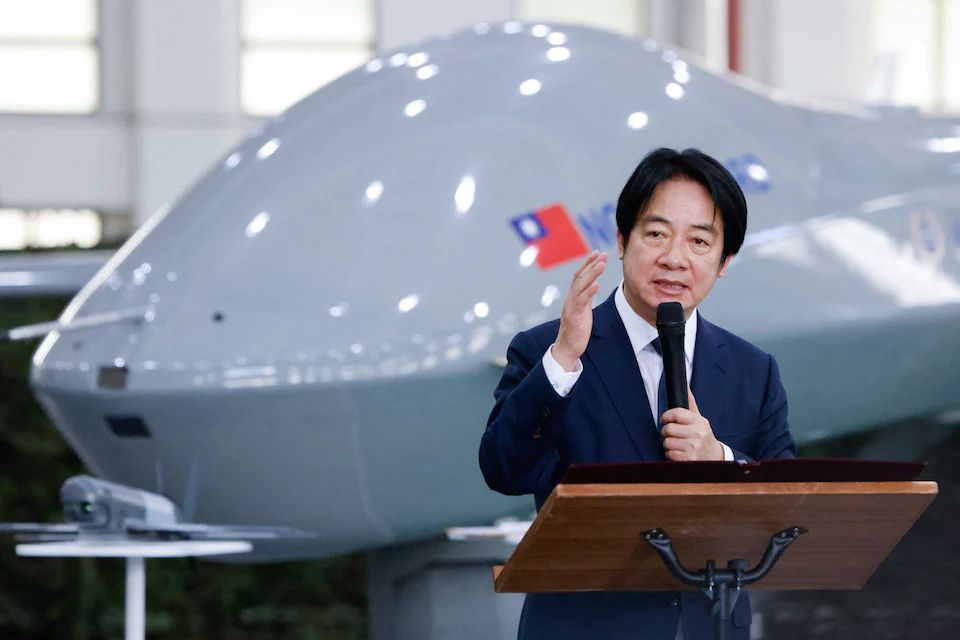
With Taiwan continuing to seek US support and Beijing maintaining its claim over the island, historical narratives remain closely connected to contemporary diplomatic and political tensions.
The competing accounts are likely to remain part of the wider debate over how World War Two is remembered and how its legacy shapes relations between China, Taiwan and the United States.