

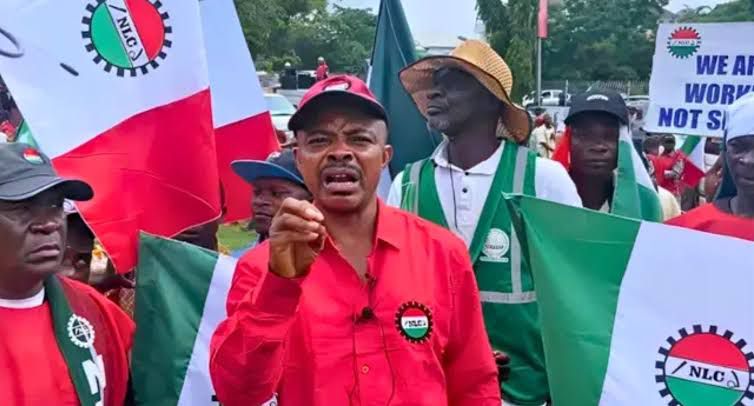
The Nigeria Labour Congress (NLC) has announced plans to begin fresh negotiations with the Federal Government over a new national minimum wage, arguing that the current N70,000 monthly salary has been overtaken by Nigeria’s harsh economic realities.
The labour movement said the rapid increase in the cost of living, persistent inflation and the continuous rise in the prices of essential goods and services have significantly reduced the purchasing power of workers, making the existing wage structure unsustainable for millions of Nigerians.
The position was made known on Thursday during the Rights of Workers Summit held in Birnin Kebbi, Kebbi State, where labour leaders gathered to discuss the welfare of Nigerian workers, labour rights and the country’s changing economic landscape.
Speaking at the summit, the President of the Nigeria Labour Congress, Joe Ajaero, represented by the union’s Deputy President, Audu Titus Amba, said organised labour was preparing to engage the Federal Government in another round of negotiations in line with the minimum wage review provisions contained in the existing law.
According to him, Nigerian workers have continued to bear the burden of rising living expenses while their earnings have remained largely stagnant.
He maintained that the current wage can no longer provide adequate support for workers and their families, considering the steady increase in food prices, transportation costs, accommodation expenses and utility bills.
Amba stated that the union believes the time has come for a comprehensive review of workers’ salaries, stressing that wages should reflect the country’s prevailing economic conditions rather than remain fixed despite worsening inflation.
He argued that workers deserve salaries capable of meeting their basic needs, adding that anything below N500,000 would be insufficient under the current economic realities.
“Anything less than N500,000 cannot cater for workers. The current minimum wage is due for review, and we will soon begin negotiations with the government,” he said.
His remarks underline growing concerns among labour unions that the economic reforms introduced over the past two years have significantly reduced the value of workers’ incomes, leaving many households struggling to cope with rising expenses.
Also speaking at the summit, President of the Trade Union Congress (TUC), Festus Osifo, who was represented by the union’s Secretary-General, Nuhu Toro, expressed similar concerns about the declining purchasing power of Nigerian workers.
Toro noted that inflation has continued to erode workers’ earnings, making it increasingly difficult for employees to provide for their families despite receiving the current national minimum wage.
He explained that the rising cost of food, transportation, rent, healthcare and other essential services has widened the gap between workers’ earnings and their daily financial obligations.
According to him, many employees now spend a substantial portion of their salaries on transportation and feeding alone, leaving little or nothing for housing, education, healthcare or savings.
Labour leaders insisted that reviewing the minimum wage is not merely about increasing salaries but about ensuring that workers can maintain a reasonable standard of living despite the country’s economic challenges.
The current national minimum wage of N70,000 was signed into law by President Bola Tinubu on July 29, 2024, following extensive negotiations between the Federal Government and organised labour.
The legislation replaced the previous N30,000 minimum wage and also introduced a provision requiring that the wage structure be reviewed every three years to ensure it remains relevant to prevailing economic conditions.
That review clause is now expected to form the legal basis for the next phase of discussions between labour unions and the Federal Government.
Although no official date has been announced for the commencement of negotiations, the latest declaration by the NLC signals that organised labour intends to begin consultations in the near future.
The expected negotiations are likely to attract significant public attention, particularly as many Nigerians continue to grapple with rising inflation and increased living costs.
Economic analysts believe the discussions could shape future labour policies and influence the welfare of millions of workers across the public and private sectors.
For many employees, the outcome of the proposed negotiations will determine whether their earnings can better match the realities of today’s economy, where the prices of essential goods and services have continued to rise steadily.
As preparations begin for another round of wage talks, labour leaders say they remain committed to advocating for improved salaries and better working conditions, insisting that Nigerian workers deserve compensation that reflects the true cost of living and protects their economic wellbeing.
About The Author
