Former French president Nicolas Sarkozy has been released from La Santé prison in Paris, with a court ruling allowing him to serve the remainder of his sentence at home; as he lamented life in prison as “gruelling and a nightmare.”
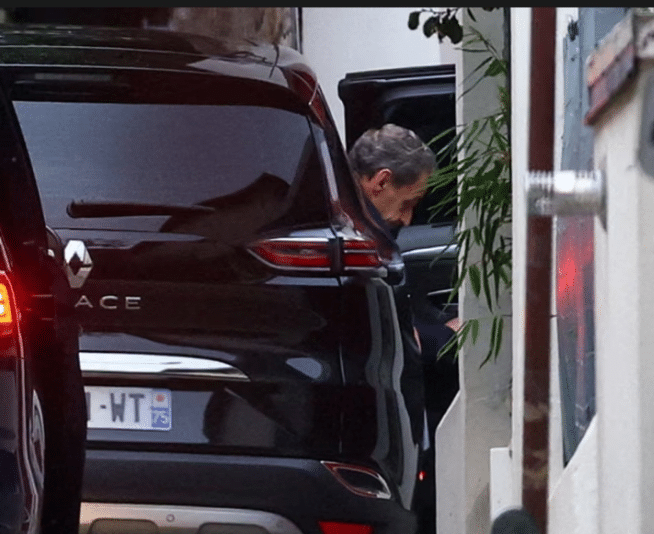
Sarkozy, accompanied by his wife Carla Bruni-Sarkozy, arrived at his Parisian residence without making a public statement, following three weeks of incarceration that he described as a “nightmare.”
The 2007 French presidential election remains central to Sarkozy’s legal battles, with a five-year sentence for criminal conspiracy tied to allegations of seeking campaign funds from the late Libyan dictator Muammar Gaddafi.
Sarkozy maintains his innocence, telling a Paris appeals court via video link that “I never had any idea or intention to ask Mr Gaddafi for any kind of financing.”
Judges initially ruled that the “exceptional gravity” of the conviction required him to enter prison while the appeals process continued, underscoring the unprecedented nature of incarcerating a former EU head of state.
Monday’s ruling allows Sarkozy to serve his sentence at home under strict judicial controls, including a prohibition against communicating with justice ministry officials and others involved in the case.
The former president, dressed in a navy suit during the video hearing, expressed gratitude toward prison staff, saying: “I want to pay tribute to all the prison staff, who are exceptionally humane.”
Sarkozy added that the experience of prison left a mark, remarking, “It’s an ordeal that has been imposed on me. I confess it’s hard, it’s very hard. It leaves a mark on any prisoner.”
During his time in La Santé, Sarkozy was held in solitary confinement for security reasons, in a nine-square-metre cell with his own shower and toilet, while bodyguards occupied a neighboring cell.
Reports indicated that he subsisted largely on yoghurts due to fears of contaminated food, although he had facilities to cook for himself, highlighting the psychological strain of incarceration.
Christophe Ingrain, Sarkozy’s lawyer, visited him daily and emphasized that the former president’s safety would be greater outside prison, citing prior death threats and disturbances from other inmates.
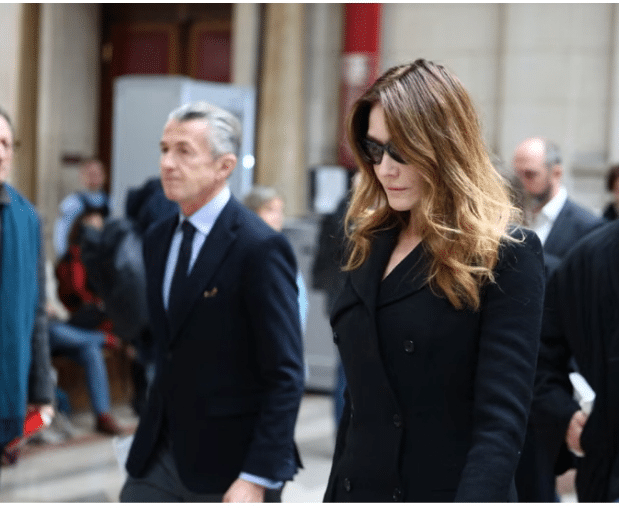
Carla Bruni-Sarkozy attended Monday’s hearing alongside Sarkozy’s two eldest sons, demonstrating family support during what he described as a “gruelling” and unprecedented chapter of his life.
Sarkozy, who served as France’s right-wing president from 2007 to 2012, became the first postwar French leader and first former EU head of state to serve prison time, marking a historic moment in French politics.
The former president’s social media account shared a video showing letters, packages, and messages sent to him while incarcerated, emphasizing the ongoing public and private support for Sarkozy.
“These gestures of solidarity remind me that the end of the story has not yet been written,” Sarkozy’s account declared, reflecting a determination to continue legal and political battles.
His trial spanned three months, with the public prosecutor asserting that Sarkozy entered a “Faustian pact of corruption with one of the most unspeakable dictators” to gain campaign funding, allegations he strongly denied.
Although acquitted of three separate charges including corruption and illegal campaign funding, the state prosecutor’s appeal means Sarkozy will face retrial on all charges next year, including the original criminal conspiracy.
Sarkozy has previously faced multiple convictions, including one that required him to wear an electronic tag for three months following a separate corruption and influence-peddling case.
He had already been stripped of France’s highest distinction, the Légion d’honneur, and these legal battles have cumulatively shaped his legacy as one of the most controversial French political figures of the 21st century.
The 2007 campaign funding scandal continues to dominate discussions of political ethics in France, highlighting how even former presidents can face significant legal consequences for alleged misconduct.
Sarkozy’s legal team emphasized that home confinement would allow him to avoid risks inside prison, including exposure to violence, threats, and psychological distress caused by isolation and nearby incidents among other inmates.
“Inside prison, the threats were real and constant. Outside, he can continue to live safely while complying fully with judicial supervision,” noted one of his lawyers, reinforcing the rationale for his conditional release.
Throughout his imprisonment, Sarkozy remained vocal about the hardship, telling the court: “I never imagined that at 70 years of age, I’d be in prison. It’s gruelling and leaves a lasting impression.”
Security measures at La Santé were stringent, with close monitoring and bodyguards, but the psychological toll of solitary confinement and restrictions on personal freedoms made the experience especially difficult.
The French justice system’s handling of Sarkozy has drawn international attention, demonstrating both the independence of courts and the political sensitivity surrounding high-profile cases involving former national leaders.
Sarkozy’s release under strict home confinement shows the balancing act between enforcing legal consequences and addressing humanitarian concerns for elderly or vulnerable prisoners.
Legal analysts note that the upcoming appeals and retrials could redefine public perceptions of Sarkozy’s tenure and the consequences for corruption, influencing political discourse across France and Europe.
Despite ongoing legal challenges, Sarkozy appears determined to remain engaged with public life, social media updates suggest, while emphasizing that his case is far from over.
The unprecedented imprisonment of a former EU leader continues to reverberate, with commentators calling it a cautionary tale about power, accountability, and the judiciary’s role in safeguarding democratic principles.
Sarkozy’s ordeal has raised questions about presidential accountability, media coverage of political trials, and the broader implications for political elites facing legal scrutiny in democratic societies.
As he adjusts to home confinement, Sarkozy will comply with restrictions on travel and communication, continuing to face an appeals process that could alter the trajectory of his convictions and future political involvement.
The former president’s experience underscores the intersection of personal resilience, public scrutiny, and legal accountability, illustrating the human dimension of high-profile legal cases.
Observers continue to debate the fairness and implications of Sarkozy’s imprisonment, home confinement, and upcoming retrials, recognizing the historic significance of a former French president navigating the criminal justice system.