New Zealand officials warn more flooding could hit North Island as man killed after heavy rain, raising urgent concerns for residents still recovering from recent severe weather.
The country’s weather bureau reported a “threat to life from dangerous river conditions, significant flooding and slips” as a deepening low-pressure system brought relentless rain and gale-force winds across large swaths of the island.
Authorities warned that the worst of the weather is expected late on Sunday, with conditions slowly easing by Monday.
The floods follow a string of extreme rainfall events that have caused widespread disruption. On Saturday, a man lost his life when his car became submerged on a highway, highlighting the dangers of driving in floodwaters.
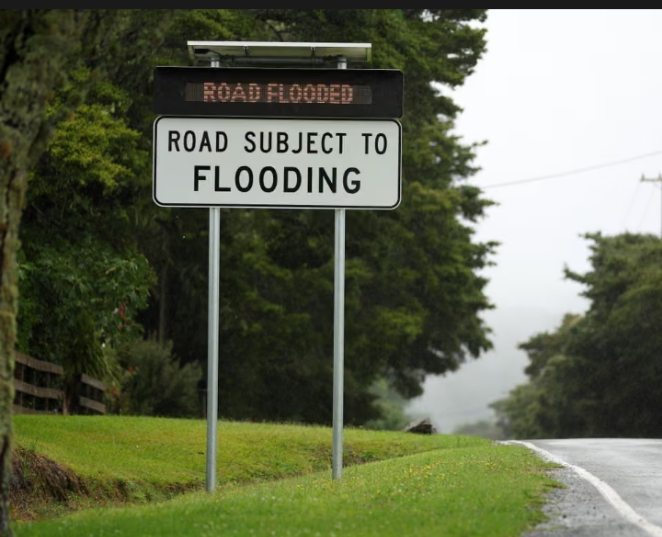
Authorities confirmed that about 80 people had been evacuated to emergency centres, and images shared on social media revealed extensive flooding in semi-rural neighbourhoods and sections of road collapsing where waters had receded.
Energy company Powerco reported that around 4,291 properties remained without electricity, compounding the difficulties for residents already dealing with home evacuations.
The districts of Waipa and Otorohanga, located 180km south of Auckland, were placed under a state of emergency as local authorities coordinated rescue and relief efforts.
Officials emphasised that these areas are particularly vulnerable due to their geography and infrastructure.
Experts link the rising frequency and severity of floods in New Zealand to human-caused climate breakdown.
Warmer air holds more water vapour, increasing the likelihood of heavy rainfall events. “Extreme rainfall is more common and more intense because of human-caused climate breakdown,” noted meteorologists, pointing out similar trends observed across Europe, Asia, North and South America, Africa, and Australia.
The North Island has faced multiple weather-related tragedies in recent months. In January, heavy rains triggered a landslide at Mount Maunganui on the east coast, killing six people and burying holiday crowds under soil and rubble.
These events underscore the growing threat from climate-related disasters, with authorities warning that residents must remain vigilant during periods of severe weather.
Local councils have urged people to avoid unnecessary travel, move vehicles to higher ground, and prepare emergency kits. Floodwaters have washed away roads, damaged bridges, and threatened homes, particularly in low-lying agricultural regions. Emergency teams remain on standby to assist residents and monitor river levels.
In addition to human and infrastructure impacts, heavy rainfall has disrupted local agriculture, with farms reporting waterlogged fields and damaged crops.
“The community is facing not just immediate threats to life, but long-term economic impacts,” said one local official. Authorities continue to assess the scale of damage as floodwaters slowly recede, but warn that further rainfall could trigger new flooding and landslides.
Meteorologists emphasised that these events are part of a broader pattern of climate breakdown, which has increased the frequency of intense storms worldwide.
In New Zealand, early warning systems and improved flood defences have helped reduce casualties, but experts caution that climate-related flooding will remain a recurring threat.
Residents in affected regions are urged to follow official updates, stay off flooded roads, and report emergencies immediately. The government has mobilised response teams and resources to support communities, while meteorologists continue to track the developing low-pressure system.
Read also: UK Mandelson cooperation request in Epstein probe raises pressure on Starmer government
New Zealand officials warn more flooding could hit North Island as man killed after heavy rain, highlighting the urgent need for preparedness, climate resilience, and community awareness in facing extreme weather events.
Authorities remind everyone that even a few centimetres of water on roads can be deadly, and residents should not underestimate the power of floodwaters.