The Nepal-Tibet flood disaster has killed at least 804 people, with more than 3,000 still missing as rescuers battle through mud, debris and the threat of further flooding across the Himalayan border region.
The disaster swept through Nepal and Tibet after a glacial collapse triggered a massive wall of water and debris, engulfing villages, destroying homes and leaving thousands of people unaccounted for.
Rescue teams have been working against time to locate survivors, including more than 100 hydropower workers believed to be trapped inside tunnels at the Trishuli 3A hydroelectric project in Nepal.
Death toll rises as thousands remain missing
The latest figures put the number of missing people at 3,048, including hundreds of foreign nationals.
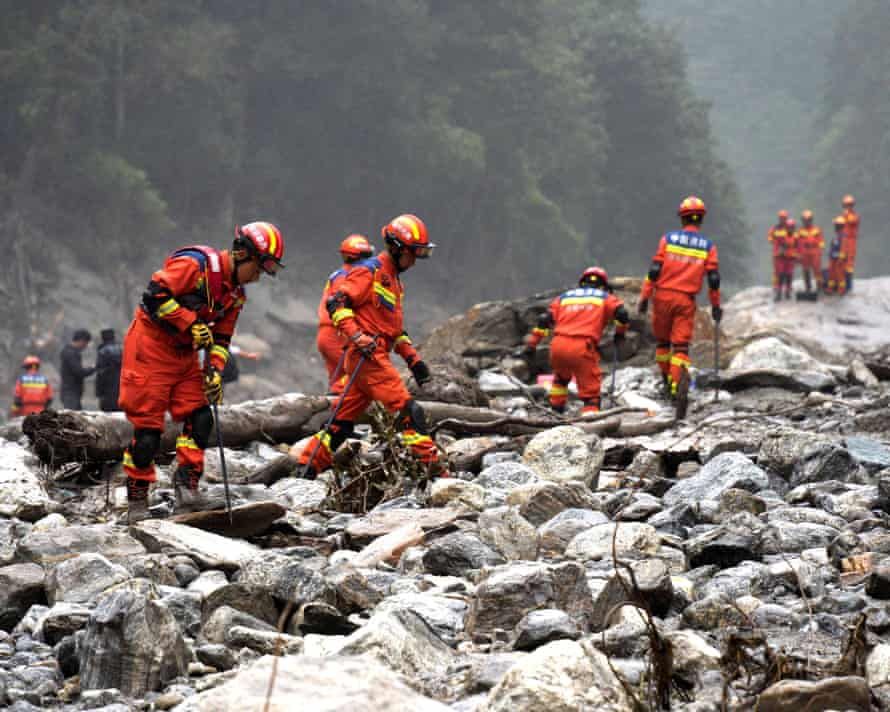
Nepal reported 788 deaths, while Chinese authorities said 16 people had died in Tibet. Bodies have reportedly been swept downstream, with some potentially carried as far as India.
Nepal has begun burying some of the recovered bodies after collecting DNA samples to allow families to identify and reclaim their relatives later.
Officials are also requesting forensic testing equipment and freezer units to preserve bodies as search and recovery operations continue.
The scale of the devastation has left entire communities struggling to comprehend what happened.
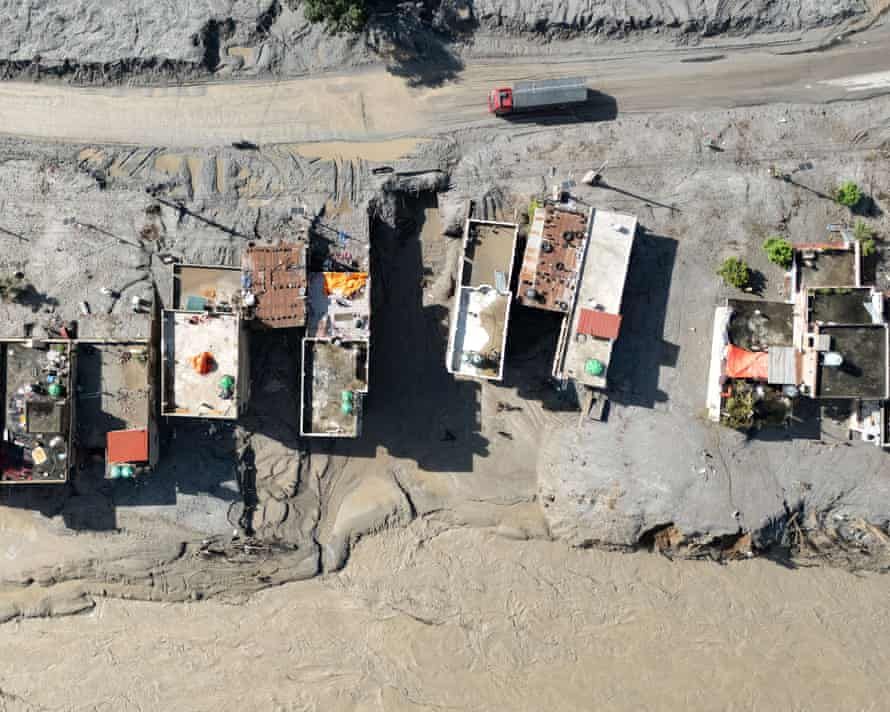
“All the settlements near the river were swept away,” Buddhi Ram Dangol told Agence France-Presse. “There is nothing left.”
Thousands rescued but many remain unaccounted for
More than 3,700 people have been rescued in Nepal, but authorities say thousands remain out of contact.
Nepal said 2,502 people, including 592 foreigners, were still unaccounted for in the country.
In Tibet, Chinese authorities reported 546 people missing, including 261 foreign nationals. Those listed included 104 Nepali citizens, 49 Indians, 33 Latvians, 18 Americans and 15 British nationals.
The figures underline the international scale of the disaster and the difficulties facing authorities attempting to establish the whereabouts of missing people.
Race to rescue trapped hydropower workers
One of the most urgent rescue operations is taking place at the Trishuli 3A hydroelectric site, where more than 100 workers are believed to be trapped inside tunnels.
In a breakthrough over the weekend, Nepal’s army succeeded in inserting a pipe into one of the tunnels.
The operation was intended to provide air to the workers while rescuers prepared to excavate the area and gain access to those trapped underground.
Home minister Sudan Gurung said: “We have already started sending air through the small opening, and we will now begin excavation work and send the rescue team inside.”
The trapped workers are among 933 hydropower workers listed as missing by Nepal’s disaster authorities.

Rescue efforts are also focused on the Trishuli 3B site as teams attempt to determine whether workers remain alive inside the flooded or damaged tunnels.
Rescuers face danger from rising water
The rescue mission itself has become increasingly dangerous because of warnings of further flooding.
Nepal’s National Disaster Risk Reduction and Management Authority warned that water levels in the Bhotekoshi river in Rasuwa had risen further.
“We have received information that the flood flow in the Bhotekoshi river in Rasuwa has increased further,” the authority said.
Flood alerts were sent directly to residents’ phones as emergency crews continued clearing roads and attempting to reconnect communities cut off by the disaster.
The warnings have forced rescuers to balance the urgent need to search for survivors against the possibility of another surge of water.
Survivors return to devastated communities
In Dhading, one of Nepal’s worst-hit areas, survivors have begun returning to destroyed homes in search of anything that can be salvaged.
But many have found little remaining after floodwaters tore through settlements along the rivers.
Govind Shreshta described the exhausting experience of repeatedly fleeing to higher ground whenever new warnings arrived.
“Sometimes they say a flood is coming, then we have to run again to higher ground, even at night,” he told the Associated Press.
“There is also rain. It’s really difficult for me. I have a 72-year-old father and 70-year-old mum. I must carry them and I am exhausted. It’s going on like this for those who are still alive.”
His account reflects the continuing uncertainty faced by communities that survived the initial disaster but remain vulnerable to further flooding.
Families desperately search for missing relatives
In Kathmandu, relatives have gathered outside the main government hospital in the hope of finding missing family members.
Many have been moving between help desks and hospital noticeboards, carrying photographs and checking lists of patients.
Dil Maya Lama travelled around 130km from Ramechhap to search for her 26-year-old brother, a driver working for a hydropower company in Rasuwa.
“I came here with the hope that I might find him,” she told the Associated Press. “There is no information about him.”
Nelza Moktan was searching for a missing cousin who also worked as a driver in Rasuwa.
“I feel hopeless. It has already been four days,” she said.
For families like theirs, the search has become a painful wait between hope and the possibility of devastating news.
Tibet rescue operation halted over further flooding fears
In Tibet, rescue operations have also been complicated by the threat of additional flooding.
Chinese authorities paused operations in the hardest-hit area of Gyirong because of concerns about a newly formed lake that could unleash more water into the affected region.
China’s state news agency Xinhua reported that 2,141 rescuers were positioned near the Gyirong site, including more than 500 in the worst-hit area.
The response in Tibet has been difficult to independently assess because Chinese authorities remain the main source of information from the region.
Nepal warns climate crisis is worsening disaster risks
Nepal’s government has linked the devastation to the growing impact of climate change and called for a stronger international response.
Foreign minister Shisir Khanal said the country was experiencing an impact disproportionate to its contribution to global greenhouse gas emissions.
“Despite having only 0.1% contribution to global emissions, people of Nepal have become major victims of climate change,” Khanal said.
The disaster was triggered by a glacial collapse, according to the US Geological Survey, which sent an enormous volume of water and debris downstream.
The event has renewed concerns about the vulnerability of Himalayan communities to climate-related hazards, particularly as melting glaciers, unstable mountain environments and extreme weather threaten settlements and infrastructure.
Reconstruction could cost billions
The immediate priority remains finding survivors and accounting for the missing, but Nepal is already facing the enormous challenge of rebuilding destroyed communities.
The government has estimated that reconstruction could cost billions of dollars.
Homes, roads, bridges and other infrastructure have been damaged or destroyed, while entire settlements near rivers have been swept away.
The disaster has also severely affected the hydropower sector, with hundreds of workers among those missing and major project sites exposed to the floods.
For survivors, however, the immediate concern is more personal: finding relatives, recovering bodies and securing somewhere safe to live.
Read also: Houthis capture strategic island as Saudi oil pipeline attack raises fears of wider Red Sea crisis
Search continues amid uncertainty
The Nepal-Tibet flood disaster has left thousands of families waiting for answers while rescuers continue to work under exceptionally difficult conditions.
In Nepal, teams are racing to reach potentially trapped hydropower workers, while soldiers and emergency personnel continue searching for bodies and survivors across devastated communities.
In Tibet, rescuers remain on alert because of the possibility of renewed flooding.
The rising death toll, thousands of missing people and destruction across the Himalayan border region have transformed the disaster into one of the most serious humanitarian emergencies to hit the area in years.
For those who survived, the next challenge will be rebuilding lives after the floodwaters have receded.
About The Author