The Nepal-Tibet border floods have left more than 1,000 tourists, travellers and other people unaccounted for, as rescue teams intensify efforts across the devastated Himalayan border region.
More Than 1,000 People Reported Missing
Chinese state media reported that 558 people remained missing after the disaster, including 260 foreign nationals, while Nepal separately listed 468 tourists and travellers as still out of contact.
The figures have raised concerns over the possible scale of the disaster, although authorities have warned that some individuals could have been included in both countries’ separate missing-person records.
China Reports 558 Missing
China’s state broadcaster CCTV reported on Thursday that 558 people were missing following the flooding, while the reported death toll remained at three.
Of those reported missing in the Chinese tally, 260 were foreign nationals, highlighting the international dimension of the disaster that struck the remote border region.
The Nepal-Tibet border floods affected an area frequented by tourists and travellers, making the identification and location of missing foreigners a major priority for authorities.
Nepal Lists 468 Travellers Out Of Contact
Nepal’s tourism authorities separately reported that 468 tourists and travellers remained out of contact 24 hours after the deadly flooding swept through the border area.
The figure included 393 foreigners and 75 Nepali citizens, according to tourism department spokesperson Suraj Ghimire, who confirmed the number to Agence France-Presse.
Ghimire said: “About 468 tourists and travellers are out of contact, among them 75 are Nepalis,” as authorities continued efforts to establish their whereabouts.
Authorities Face Challenge Over Missing Figures
One of the biggest difficulties facing officials is determining whether the figures released by China and Nepal represent completely separate groups.
Possible Double Counting Raises Uncertainty
It remains unclear whether some missing people have been recorded by authorities on both sides of the international border.
That means the apparent figure of more than 1,000 missing people cannot yet be regarded as a confirmed total of unique individuals until officials reconcile their records.
The uncertainty has nevertheless demonstrated the potentially devastating scale of the Nepal-Tibet border floods, particularly among foreign visitors travelling through the Himalayan region.
Authorities are expected to compare information gathered from border agencies, hotels, travel operators, hospitals, rescue teams and relatives searching for missing family members.
Rescue Operations Continue Amid Devastation
Emergency teams have been deployed to affected areas as rescuers search for survivors and attempt to reach communities and travellers cut off by floodwater and debris.
Mud And Floodwater Hamper Search Efforts
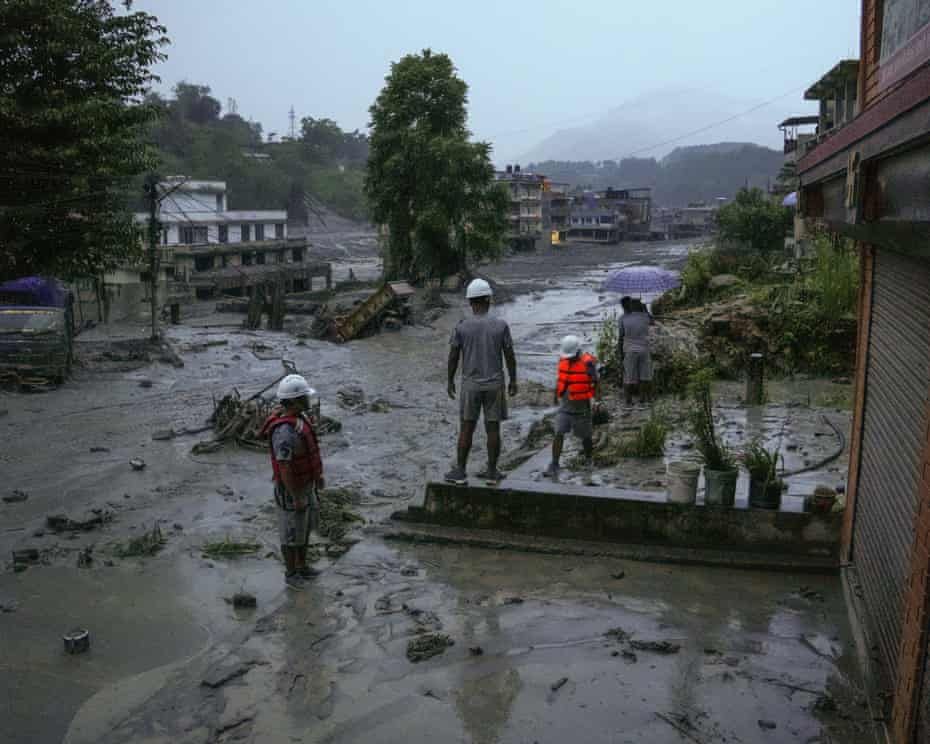
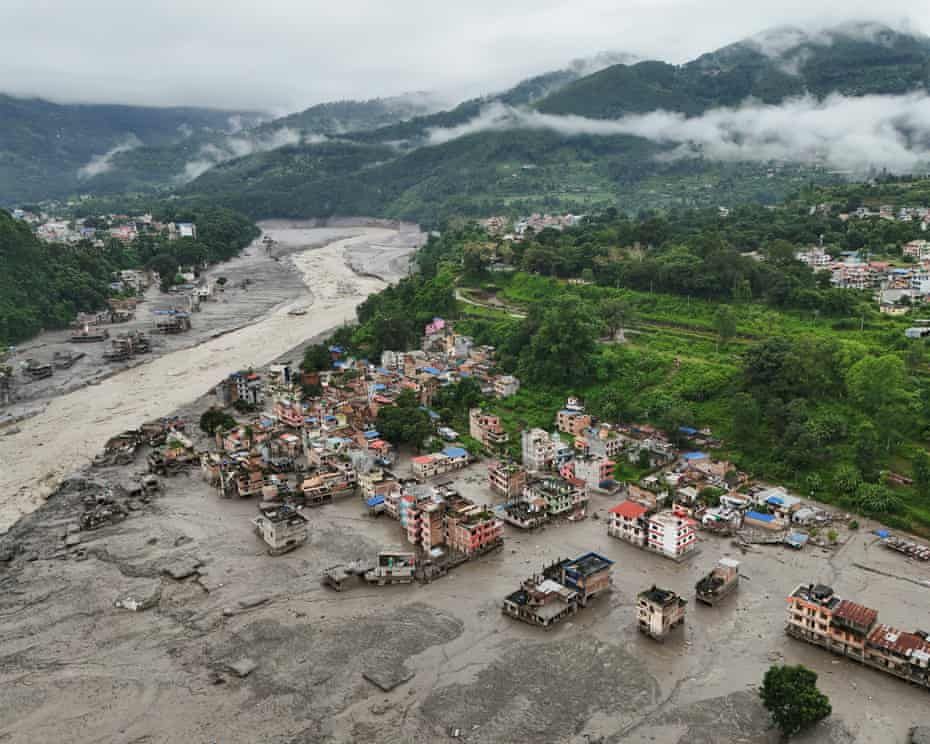
Images from the affected region showed properties covered in thick mud, while rescue workers used heavy machinery to move through areas damaged by the flash floods.
The Himalayan terrain presents additional challenges for emergency workers because difficult roads, remote settlements and damaged infrastructure can slow access to affected locations.
Rescue teams must also work carefully around unstable ground and debris while searching for people who may have been separated from their families or travel groups.
The Himalayan floods have therefore created an especially difficult emergency response, with authorities required to search large areas while simultaneously assessing damage and assisting survivors.
Foreign Travellers Among Those Missing
The large number of foreign nationals reported missing has added an international dimension to the disaster, with families and governments expected to seek information about affected citizens.
Tourists Caught In A Dangerous Border Region
The border area attracts travellers because of its proximity to the Himalayas and Tibet, but its remote geography can make emergency response particularly difficult.
Read also: John Ratcliffe Moscow visit: Trump breaks silence on CIA Chief’s surprise Moscow visit
The missing tourists in Nepal include people whose movements may be difficult to establish because communication networks and transport routes have reportedly been disrupted.
For relatives waiting for information, the lack of immediate confirmation has created significant anxiety as rescue authorities work to establish who survived and who remains unaccounted for.
Nepal’s History Of Flood And Fire Safety Concerns
The latest disaster comes amid broader concerns about emergency preparedness and safety standards in parts of the region.
Disaster Response Under Scrutiny
The scale of the Nepal flood disaster is likely to raise questions about early-warning systems, emergency evacuation procedures and the ability of authorities to respond rapidly to sudden flooding.
Remote communities and tourist routes can be particularly vulnerable when severe weather develops quickly and evacuation routes become inaccessible.
The current emergency could therefore prompt renewed discussions about disaster preparedness and coordination between local authorities and international rescue organisations.
Search For Survivors Remains The Priority
Despite uncertainty surrounding the numbers, authorities are continuing to focus on locating survivors and accounting for people who remain missing.
Families Await Information
Families of missing travellers are waiting for official updates while rescue workers continue searching affected locations and gathering information from survivors.
The border floods have created a complex international search effort because people from different countries were reportedly travelling through the region when the disaster occurred.
Authorities must identify survivors, confirm deaths and remove duplicate entries from missing-person lists before a reliable casualty figure can be established.
Until then, the reported figure of more than 1,000 missing should be treated as an apparent combined figure rather than a confirmed number of unique victims.
Death Toll Could Change As Rescue Continues
China’s state media has so far reported three deaths, but rescue operations remain ongoing and access to some affected areas may still be limited.
Final Impact Remains Unknown
Officials are expected to provide additional information as emergency workers reach more locations and establish the identities of those affected.

The Nepal-Tibet border floods have already caused significant disruption, but the final human cost may not become clear until rescue and recovery operations are completed.
For now, the priority remains saving lives, locating missing travellers, supporting survivors and providing families with accurate information about their loved ones.
As the operation continues, authorities in Nepal and China will face growing pressure to reconcile their figures and provide a clearer picture of the unfolding Himalayan floods disaster.
The international community will also be watching closely as rescue teams work against difficult terrain and potentially hazardous conditions to find those still missing.
Read more: Ireport247news
About The Author