

A pop-up ‘terror group’ who claimed responsibility has surfaced in connection with the Golders Green ambulance attack in London, prompting authorities to question whether the group is real or part of a wider online disinformation effort.
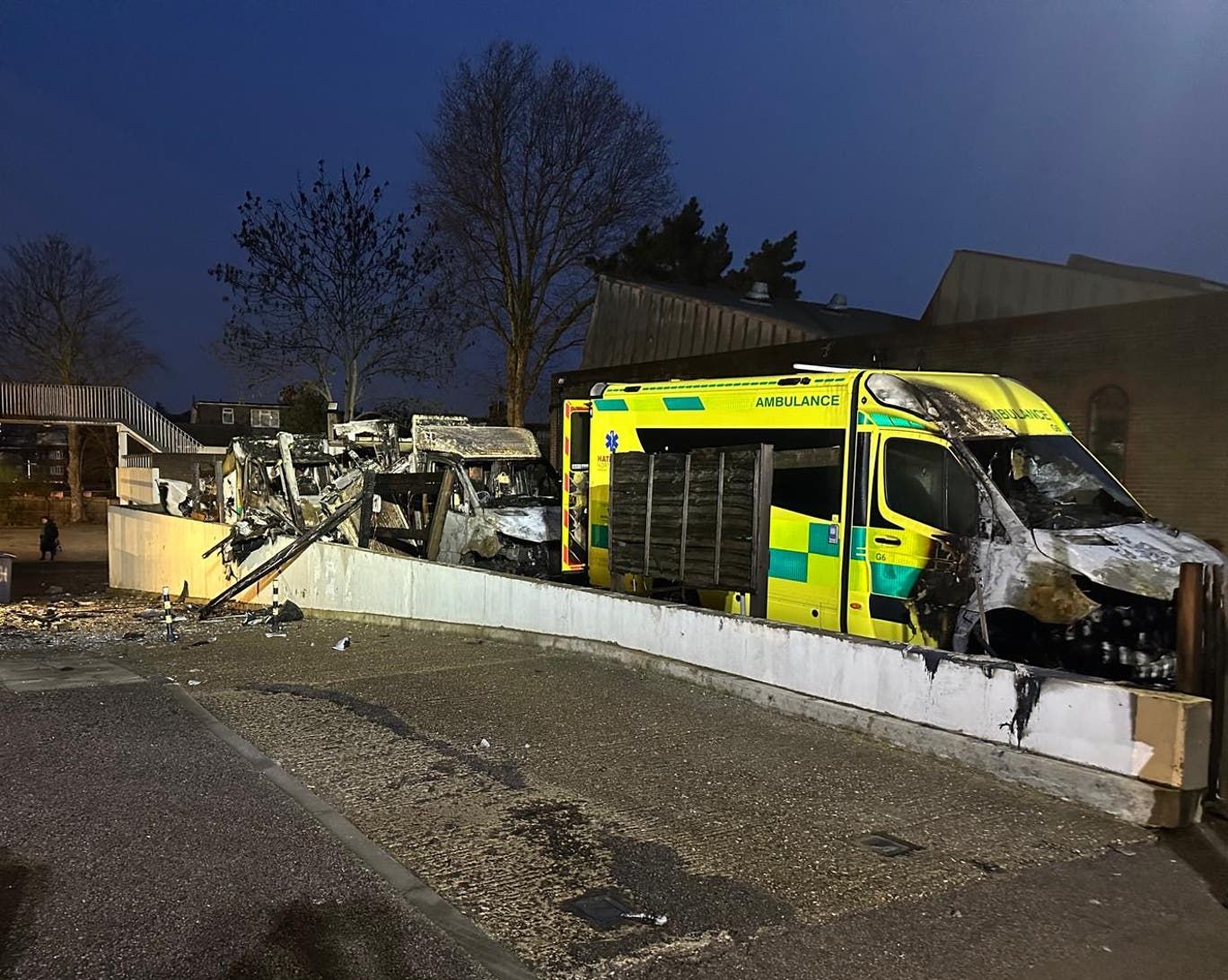
The incident involves the arson of four ambulances in Golders Green, north-west London, near a synagogue and linked to a Jewish community emergency service. The group identifying itself as Harakat Ashab al-Yamin al-Islamiya appeared on Telegram, claimed responsibility, and then disappeared, raising doubts about its authenticity.
Security experts are now examining whether the claim is credible or a fabricated digital identity. The sudden appearance and deletion of the Telegram channel has made it difficult to verify the existence or structure of the group behind the claim.

Analysts say the group’s messaging and imagery resemble those used by known regional networks, leading to speculation about possible links to broader influence operations. However, no confirmed evidence has been released to establish a direct connection.
Footage from the scene shows individuals setting fire to ambulances during the early hours of the morning. Authorities continue to investigate the attackers while also reviewing the claim made by the group.
Law enforcement officials have not classified the incident as a confirmed terrorist attack. The investigation is ongoing as they attempt to determine who carried out the arson and whether any organized group was involved.
Experts warn that modern threats increasingly involve loosely connected individuals or digitally created identities used to claim responsibility for attacks. This makes it harder for investigators to trace accountability and verify claims.
There are concerns that similar claims may have been made in relation to other incidents across Europe, though some of these reports remain unverified. This raises the possibility of coordinated disinformation intended to create fear or confusion.
Security analysts note that social media platforms, particularly Telegram, allow rapid dissemination of claims that can shape public perception quickly. The group’s short-lived presence online is being examined as part of this broader pattern.
Authorities are continuing to gather evidence, including forensic data and digital traces, to assess whether there is any real organizational structure behind the claims.
Until further findings are released, the origins and credibility of the pop-up ‘terror group’ who claimed responsibility remain uncertain, leaving open questions about the true nature of the attack and those responsible.
Further analysis of the incident suggests that rapid online claims can outpace official investigations, making it difficult for authorities to confirm or deny responsibility in real time. In this case, the brief appearance of the Telegram channel and its swift deletion have intensified scrutiny over whether the claim was meant to mislead or provoke public reaction.
Investigators are also focusing on digital patterns, including how the message spread and whether it was amplified by related channels or networks.
Understanding these patterns may help determine whether the claim was part of a coordinated effort or an isolated act of opportunistic messaging.

As the investigation continues, experts emphasize the importance of verifying information before drawing conclusions.
The combination of real-world incidents and unverified online claims highlights the growing challenge of distinguishing between authentic threats and digitally constructed narratives in modern security environments.
Read also: Lebanon displacement crisis deepens as war uproots over one million civilians
About The Author
