

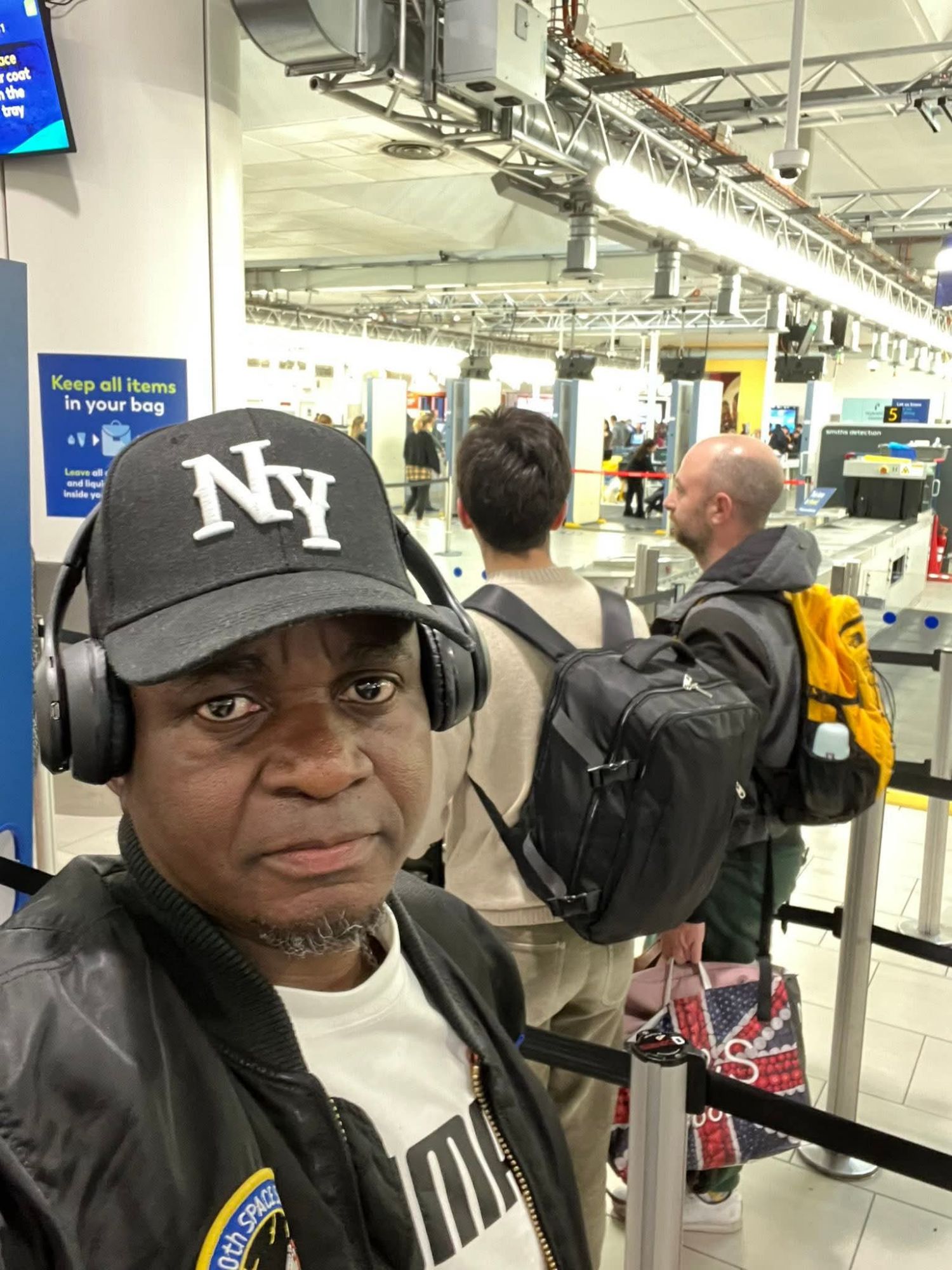
A Nigerian man has drawn widespread attention online after sharing his experience of returning from the United Kingdom due to prolonged job challenges.
His decision, which he described as necessary, has sparked conversations around migration, employment struggles, and the realities faced by foreign job seekers.
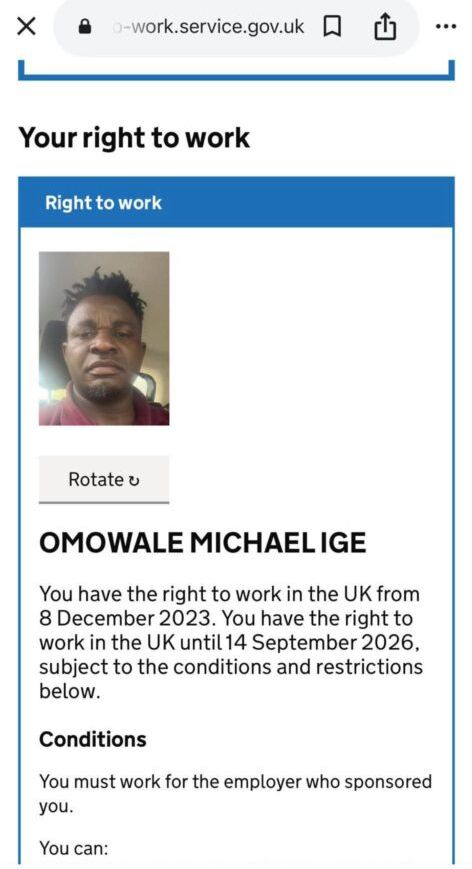
The man, identified as Omowale Michael Ige, explained that his return was not a spontaneous decision despite his qualifications and legal status.
In a post on Facebook, Ige revealed that he made the decision to come back to Nigeria one month ago, explaining that job opportunities did not materialize for him during his stay in the UK.
He noted that although he possessed a clean DBS record, a valid driving licence, 22 care certificates, and a CSTF certificate in manual handling, he still struggled to find sustainable work. He also emphasized that he had a valid right to work in the UK until September 2026.
Expressing his frustration, he stated that the job market can be unpredictable and difficult to navigate, adding that the process of securing employment is not something one can easily influence. In his words, if jobs are not available, then they are simply not available.

His post quickly drew reactions from social media users. Some commenters suggested that he should consider selling his dependent visa, given that his own visa remains valid until September 2026, implying that he still has opportunities to return to the UK if circumstances improve.
Reacting to the situation, Kayode Adeyeni Olagunju offered a different perspective. He noted that Ige’s situation does not fully represent the broader reality of working in the UK.
According to him, having a valid visa places Ige in a stronger position than many others, as he still has the possibility of working toward Indefinite Leave to Remain (ILR), which could be achievable within about a year.
Olagunju explained that once ILR is obtained, individuals gain greater flexibility in choosing employment without being restricted by sponsorship requirements.
He said, “I don’t think that fully reflects the reality of the situation in the UK right now. In your case, you still have a valid visa, which puts you in a relatively better position.
“There is still hope for you to reach Indefinite Leave to Remain (ILR) in about a year, and once you get there, you’ll have much more freedom to choose where and how you want to work without the same restrictions tied to sponsorship,” Olagunju added.
He contrasted this with his own experience, stating that his visa was nearing expiration, which forced him to intensify his search for a sponsoring employer before eventually receiving a breakthrough, for which he expressed gratitude.
He further acknowledged that while the care sector in the UK is known to have labor shortages and offers opportunities, securing a sponsored job is often more difficult than it appears, even for qualified candidates.
According to him, the challenges in the job market can be significant and discouraging.
In closing, he sympathized with Ige’s decision to return home, wishing him success in his future endeavors and hoping that new opportunities would present themselves in due course, whether in Nigeria or elsewhere.

What followed was a flood of reactions. Some were encouraging, others dismissive, and a few reflected deeply rooted misconceptions about life abroad. These responses, while varied, reveal a larger narrative about expectations versus reality.
One comment read:
“Aye mi!!! Bros can you come back, I will give you a free house in Middlesbrough, 2 months free and care jobs. You should not be in Naija with all these experience. UK license is not a joke.”
At first glance, this sounds generous and supportive. But beneath it lies a common assumption — that opportunities are readily available and that relocation is as simple as accepting an offer. The truth, however, is that migration requires structure, verified employment, financial stability, and long-term planning. Promises, no matter how well-intentioned, are not enough to rebuild a life in a foreign country.

Another set of comments focused on a recurring suggestion:
“Since you still have a valid visa till September 2026, it will be better if you can sell your dependent.”“Since you have this kind thing bro, will be wise to sell your dependent since you have valid visa till 2026.”
“Just sell your dependant bro, since you have a valid visa..”
“You should sell you dependent since you have a valid visa till 2026.”
These statements, repeated in different forms, highlight a troubling oversimplification of serious life decisions. Dependents are not liabilities to be “sold off” for convenience — they are family, responsibilities, and human lives tied to one’s journey. Such decisions are not transactional; they are emotional, ethical, and long-term.
Then came a more sarcastic and culturally loaded remark:
“Better wash ur head with the osun river bro.”
While it may appear humorous to some, it reflects a tendency to trivialize real-life struggles by attributing them to superstition rather than acknowledging systemic or economic challenges.