

Laporta reflects on the Messi relationship, expresses regret over his exit, and signals openness to reconciliation and a lasting tribute at Barcelona.
Barcelona president Joan Laporta has admitted that the breakdown in his relationship with Lionel Messi continues to weigh heavily on him, describing the situation as deeply saddening and unfinished. The Laporta Messi relationship remains one of the most emotionally charged issues surrounding the club’s recent history, reflecting both personal disappointment and institutional failure at one of football’s biggest institutions.
Speaking on Catalan television programme Pla Seqüència on La2CAT, Laporta openly acknowledged that the way Messi’s departure unfolded in 2021 caused pain and misunderstanding. While he stopped short of accepting full responsibility, the Barça president conceded that communication during the final stages of Messi’s contract negotiations was far from ideal.
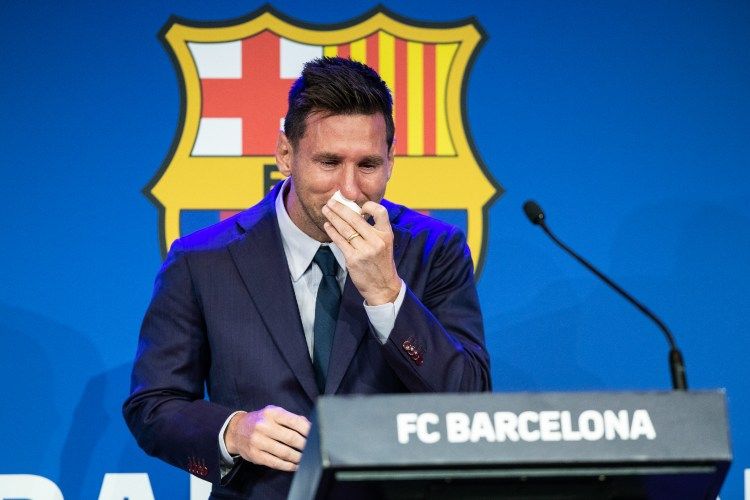
Messi’s exit shocked the football world. After more than 20 years at Barcelona and a career that delivered unprecedented success, few imagined the Argentine would leave the club in tears. Despite assurances that a new deal was close to being finalised, Barcelona’s financial collapse and La Liga’s salary cap rules made it impossible to register Messi’s contract, forcing an abrupt and emotional farewell.
Laporta admitted that Messi felt hurt by how events played out. According to the president, the Argentine believed one outcome was promised, only for reality to change suddenly. That sense of disappointment remains at the heart of the strained Laporta Messi relationship, which has yet to fully recover more than three years after the separation.
The Barcelona president revealed that direct contact between both men has been extremely limited since Messi’s departure. Laporta confirmed that he has spoken to Messi only once — during a birthday phone call. Although the conversation was described as warm and respectful, it did not progress into a deeper reconciliation. Laporta admitted that the lack of further dialogue leaves him uncomfortable and saddened.
Messi’s recent discreet visit to Barcelona also formed part of Laporta’s reflections. The president explained that the visit was unplanned and informal, organised through club security rather than the board. Messi reportedly came to the city with friends and briefly visited the Camp Nou area without notifying senior club officials. Laporta stressed that there were no expectations of a meeting or public appearance.
Despite this distance, Laporta acknowledged Messi’s enduring emotional connection to the club. He noted that Messi has consistently spoken about his love for Barcelona and how much the club still means to him. Those comments, Laporta believes, suggest that the door to reconciliation has not been completely closed.
The Laporta Messi relationship is about more than personal feelings — it represents a symbolic wound for Barcelona supporters. Messi is not just a former captain or record scorer; he is the most influential figure in the club’s history. His goals, trophies and loyalty defined an era that brought global recognition and dominance. For many fans, the manner of his exit felt like a betrayal of Barcelona’s values.
Laporta addressed this legacy directly by suggesting that Messi deserves a proper tribute from the club. He openly mentioned the possibility of a statue or another permanent honour once relations improve. According to Laporta, recognising Messi’s contribution is not optional but essential, given his unmatched impact on Barcelona’s identity.
However, the president was careful to clarify that reconciliation cannot happen unilaterally. While he expressed readiness to rebuild bridges, Laporta acknowledged that Messi must also be willing to engage. Healing the relationship, he said, would require mutual respect, patience and time.
From Laporta’s perspective, the club’s financial reality at the time left him with no viable alternative. Barcelona were drowning in debt, and previous administrations had left the club in a fragile position. Laporta insisted that the decision was driven by economic necessity rather than a lack of appreciation for Messi’s importance.
Still, Laporta admitted that perception matters as much as facts. For Messi, the sudden collapse of negotiations after months of optimism created feelings of confusion and disappointment. For fans, it reinforced the sense that the club failed to protect its greatest icon. These emotions continue to shape the Laporta Messi relationship today.
Messi himself has largely avoided direct confrontation with Barcelona’s leadership. While he has spoken openly about the pain of leaving, he has also emphasised his affection for the club, the city and its supporters. His silence on Laporta personally suggests a complex mix of respect, disappointment and emotional distance.
As Barcelona continue their rebuild — both financially and competitively — the unresolved situation surrounding Messi remains a lingering shadow. The club is renovating the Camp Nou, reshaping its squad and attempting to restore stability. Repairing ties with Messi could play a powerful role in reconnecting the institution with its supporters.
Laporta’s comments reflect a shift in tone. Rather than defending past decisions, he appears more reflective and conciliatory. By admitting sadness and expressing willingness to reconcile, he has taken a meaningful step toward addressing one of the most painful chapters in modern Barcelona history.
Whether Messi will respond remains uncertain. But for fans, the hope of closure — through dialogue, recognition and respect — is still alive. The Laporta Messi relationship may never return to what it once was, but it could still evolve into a story of dignity, reconciliation and shared legacy.
Read more news at: ireport247news.com
About The Author


