

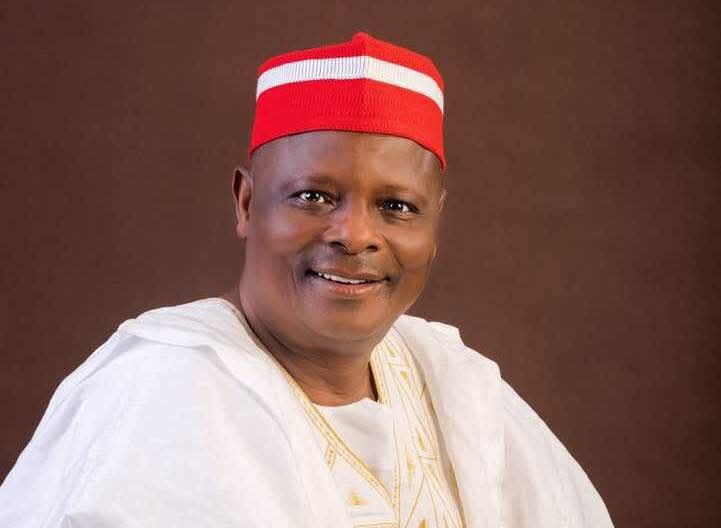
Kwankwaso’s political camp has rejected reports of his planned exit from the NDC, insisting rumours surrounding Kano candidate disputes lack credibility.
Former Kano State Governor Rabiu Musa Kwankwaso has become the subject of fresh political speculation following reports that he may be considering leaving the Nigeria Democratic Congress (NDC) amid disagreements over the party’s candidate selection process in Kano State.
However, leaders of the Kwankwasiyya movement have moved swiftly to dismiss the claims, describing them as unfounded rumours that have gained traction primarily through social media platforms.
The development has generated significant interest within political circles, particularly because of Kwankwaso’s influence in Kano politics and his standing as one of the country’s most prominent opposition figures.
Speaking on behalf of the Kwankwasiyya movement, spokesperson Habeeb Saleh Mohammed insisted that there is no truth to reports suggesting that Kwankwaso intends to sever ties with the NDC.
According to him, the movement has not held any meeting or discussion where such a proposal was considered.
He maintained that the reports being circulated online should not be mistaken for official information, stressing that members of the movement remain focused on strengthening the party ahead of future political contests.
The clarification comes against the backdrop of controversy surrounding the compilation of candidate lists for elective positions in Kano State.
Reports had alleged that several candidates associated with the Kwankwasiyya faction were either removed or replaced due to disagreements over an alleged power-sharing arrangement within the party.
Political observers have interpreted the reports as a sign of growing tensions within the NDC.
Nevertheless, Mohammed argued that there is no evidence linking the candidate list issue to any decision by Kwankwaso to leave the party.
He explained that the faction conducted its primary elections in accordance with the timetable issued by the Independent National Electoral Commission (INEC).
According to him, the process was transparent, lawful, and broadly accepted by party stakeholders.
The primaries, which were held on May 29, reportedly followed a series of consultations aimed at building consensus among party members.
Mohammed noted that the consultations helped produce candidates for various positions without generating significant disputes or opposition from aspirants.
He further stated that the exercise proceeded smoothly and reflected the democratic principles that guided the party’s internal processes.
As a result, the names of successful candidates were compiled and forwarded to the appropriate party authorities for further action.
According to the Kwankwasiyya spokesperson, once the list was submitted, the responsibility for reviewing and approving candidates shifted to the party’s leadership structure.
He emphasized that any subsequent decision regarding the list should not automatically be interpreted as a rejection of the faction or its political influence.
The emergence of the controversy has nevertheless renewed public attention on the political future of Kwankwaso.
Over the years, Kwankwaso has built a formidable political network through the Kwankwasiyya movement, which enjoys considerable support across Kano State and parts of northern Nigeria.
His supporters view him as a key political figure capable of shaping electoral outcomes, while opponents acknowledge his enduring influence within the region’s political landscape.
As a result, reports concerning his political affiliations often attract widespread public interest.
Despite the rumours, Mohammed insisted that Kwankwaso remains committed to the party and that there is no indication of an impending departure.
He described the speculation as part of the political rumours that frequently emerge whenever disagreements arise within major political organisations.
The spokesperson also urged party members and supporters to rely on verified information rather than social media narratives.
He argued that misinformation can create unnecessary tension and distract attention from more important political and governance issues.
The controversy gained further momentum after reports referenced a document allegedly signed by Kano State NDC Chairman, Hon. Hussaini Isah Mairiga.
The document was said to contain details relating to adjustments made to the state’s candidate list.
While the authenticity and implications of the reported document continue to generate debate, leaders of the Kwankwasiyya movement have maintained that such developments do not signify a breakdown in relations between Kwankwaso and the NDC.
Analysts believe the situation highlights the challenges political parties often face during candidate selection processes, particularly in states where multiple influential blocs compete for representation and influence.
Such disputes are common in party politics and do not necessarily result in defections or major internal crises.
For now, the Kwankwasiyya movement appears determined to reassure supporters that Kwankwaso remains firmly within the party.
The group’s leadership insists that the focus remains on political engagement, party unity, and preparations for future electoral activities rather than speculation about possible defections.
As discussions continue, many political observers will be watching closely to see whether the candidate list controversy evolves into a larger dispute.
However, based on the position publicly expressed by the Kwankwasiyya faction, reports of Kwankwaso’s planned exit from the NDC remain unconfirmed and unsupported by any official evidence.
- Related news:
Peter Obi speaks on Pastor Adeboye criticism, calls for youth action

Keyamo labels NDC 2027 Southern presidency plan ‘political 419′

Ganduje support cannot save Yusuf in Kano politics, says Kwankwaso