
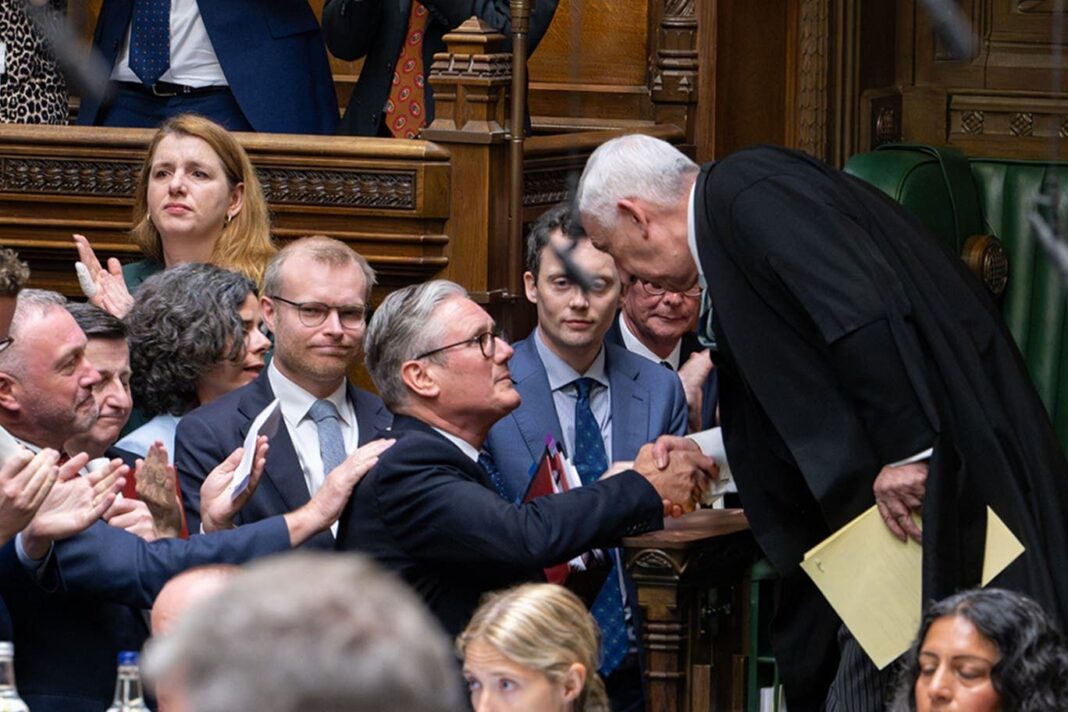

Keir Starmer final PMQs was marked by warm wishes, standing ovations and rare displays of emotion as the prime minister left the despatch box for the last time. The chamber, usually defined by sharp exchanges, softened on Wednesday as MPs from across the House reflected on Sir Keir’s time at Number 10 and the personal cost of public office.
The Speaker opened the tributes, praising the outgoing prime minister for his “steadfast support for Ukraine” and for steering the country through a turbulent period. Sir Keir responded by listing what he called the defining achievements of his government, often glancing up to the galleries where his family watched. He spoke of economic stability, improvements to the NHS and investment in tackling child poverty, before turning to foreign policy.
“We have transformed our international standing in the world, whether through our reset of relations with the EU, or through our leadership on the coalition of the willing or on the Strait of Hormuz,” he said. The line drew nods from Labour benches and quiet acknowledgment from Conservatives.
The mood was less combative than usual, but not without lightness. With England due to face Argentina in the World Cup semi-final later that evening, one MP told Sir Keir he had been given a “red card” by his own party. The prime minister replied jovially: “I don’t care what the score is tonight, as long as we win.” Laughter rippled through the chamber, a brief release before the more emotional moments that followed.
Starmer Farewell Speech Thanks Team And Family
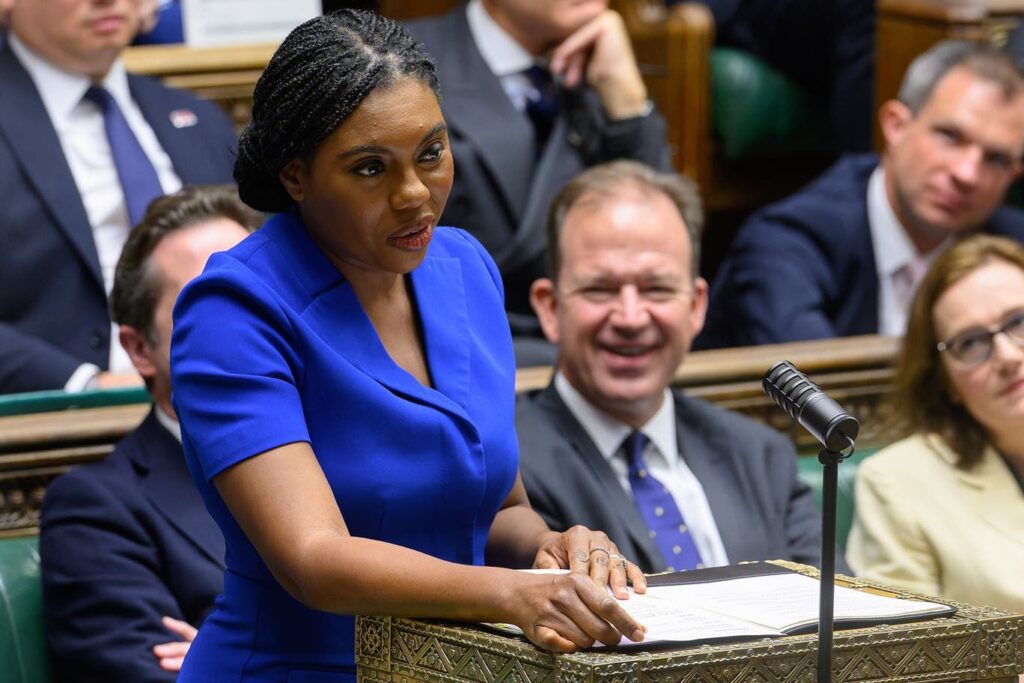
The central theme of the session quickly became personal. Conservative leader Kemi Badenoch, known for her pointed exchanges with Sir Keir, chose a different tone for his last appearance.
In her final question, she led with tribute rather than attack. “I know how much his wife and children mean to him, and they are in the gallery today,” she said. “As everyone here knows, our families make a huge sacrifice for our choice to enter public life. So I hope he will allow me to draw our time together to a close by thanking them for the love and support they have given him during his time in office.”
Sir Keir was visibly moved. He thanked Ms Badenoch not just for her words in the chamber, but for her private kindness during some of the darkest moments of his premiership.
“We have had robust exchanges across this despatch box, but she has extended kindness to me privately and at very difficult times,” he told MPs. “Including when there was an attempt to burn down our family home, which deeply affected my family, she reached out to me. And when my brother died of cancer, she reached out to me privately… and I thank her for that and the tribute that she’s just made to my wife and children, who mean the world to me.”
The admission drew silence, then applause. It was a reminder that behind the political sparring are families who live with the consequences of public life.
Sir Keir’s voice broke as he turned to his own team. “Being prepared to walk through fire for me,” he said of his staff and ministers. Chancellor Rachel Reeves was seen barely holding back tears in the front bench. Labour MP Carolyn Harris, delivering what would be his last question, was overcome with emotion.
“Your service and your leadership has allowed children to grow up in a fairer Britain,” she said through tears. “We stand tall on the world stage, and every day we see his decency and his courage shine through.”
House Of Commons Tributes Mark End Of An Era
The tributes were not limited to party lines. The House also paused to remember former Conservative minister Ann Widdecombe, who had been murdered earlier in the week. Sir Keir described her as “a distinguished politician with deep convictions and a vivid and fearless character” and recommended a permanent tribute in Parliament.
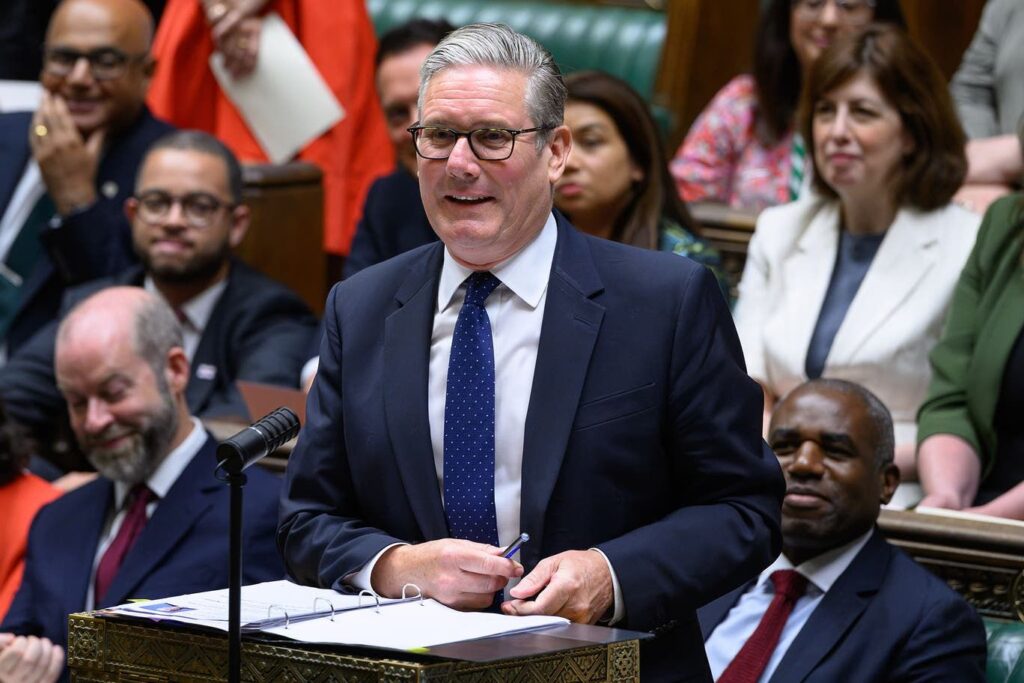
He used his closing remarks to frame the transition ahead. “Every prime minister knows when they take up the torch, the day will come when they have to pass it on. This is the end of my political journey,” he said. He pledged “wholehearted support” to incoming prime minister Andy Burnham, adding pointedly: “privately if asked for – not publicly when not asked for.”
Then came his final words. Looking directly at his wife and children in the gallery, he said: “To my wife and children, I love you. Goodbye.”
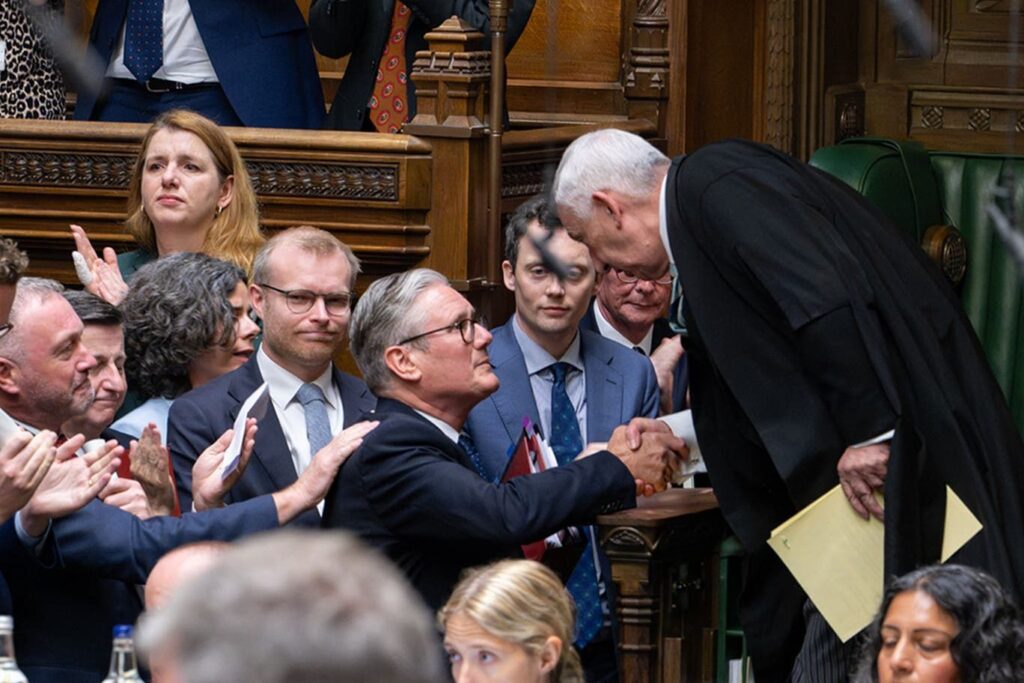
The chamber rose. MPs clapped, many standing. Sir Keir shook hands with Speaker Sir Lindsay Hoyle, who had earlier led the tributes, and left the chamber as prime minister for the final time. The applause continued long after he had gone.
The session captured two sides of Sir Keir’s tenure. On policy, he pointed to domestic reforms and a more active UK role abroad. On character, colleagues recalled a leader who valued loyalty, who could be tough in debate but generous in private.
Kemi Badenoch’s decision to soften her approach was noted by MPs as significant. In a Parliament often defined by confrontation, her tribute and Sir Keir’s response set a different tone for a handover. “It wasn’t about scoring points today,” one Labour backbencher said afterward. “It was about acknowledging what it costs to do this job.”
Internationally, Sir Keir leaves with a record he was keen to defend. The reset with the EU, leadership in Ukraine support, and a visible UK role in responding to the crisis in the Strait of Hormuz were all cited as evidence that Britain had regained influence. Domestically, he will be judged on NHS waiting times, the economy and child poverty initiatives he highlighted in his last answers.
As he walked out, the galleries stood too. The moment was less about politics and more about closure. For five years he had occupied the most scrutinized office in the country. On Wednesday, the House chose to mark the exit with gratitude rather than division.
“Goodbye” was not just to his family, but to the chamber itself. And the response, a resounding standing ovation, suggested that even in a divided Parliament, there is still room to recognize service. According to reporting by The Independent, the final PMQs ended not with jeers, but with tears, thanks, and a chamber united in applause for a prime minister leaving office.
About The Author


