The Jimmy Lai fraud conviction overturned ruling has delivered an unexpected legal breakthrough for the imprisoned media tycoon and pro-democracy campaigner Jimmy Lai, after a Hong Kong appellate court quashed earlier fraud convictions linked to lease violations.
The decision marks a rare judicial win for Lai, whose broader legal battles have come to symbolise the city’s dramatic political transformation under Beijing’s tightening grip.
The appellate court ruled that prosecutors had failed to prove beyond reasonable doubt that Lai and his co-defendant had made false representations in relation to the use of office space rented by his now-defunct newspaper, Apple Daily.
The case centred on allegations that a consultancy firm connected to Lai improperly occupied space designated for publishing operations, in breach of lease agreements.
While a lower court had previously accepted that the arrangement constituted fraud, the higher court concluded that the legal threshold for deception had not been met.
Lai, 78, had been sentenced in 2022 to five years and nine months in prison over the fraud charges and fined HK$2m. The earlier judgment accused him of concealing the consultancy’s presence within the premises and described the media organisation as being used as a “protective shield.”
Thursday’s ruling, however, dismantled that conclusion, determining that the evidence did not sufficiently establish criminal intent or deliberate misrepresentation.
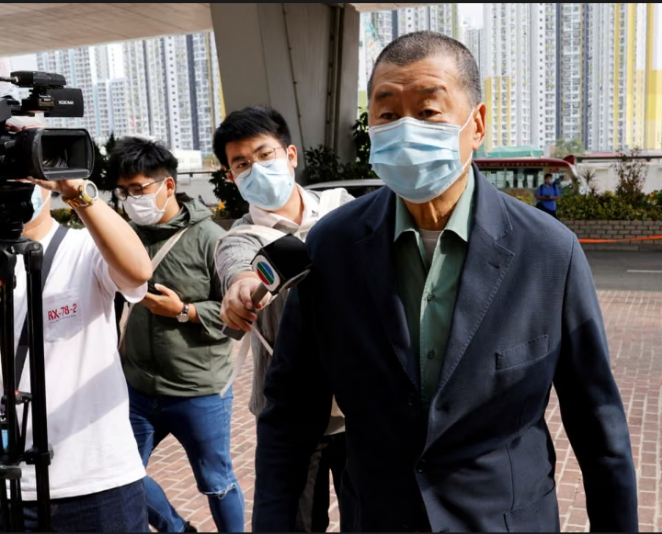
Despite the overturned convictions, Lai will remain behind bars. Earlier this month, he was sentenced to 20 years’ imprisonment in a separate case brought under the Beijing-imposed national security law. That sentence — the harshest handed down under the legislation to date — stems from allegations related to collusion with foreign forces and other national security offences.
Judges had ordered that only two years of the fraud sentence would run concurrently with the national security term, with the remaining 18 years to be served consecutively. The successful appeal could therefore marginally reduce his overall incarceration period, though it does not alter the scale of the national security penalty.
Lai’s legal odyssey began more than five years ago when he was first arrested under the sweeping security legislation introduced by Beijing in 2020 following months of mass protests in Hong Kong. Since then, numerous pro-democracy politicians, activists and media figures have been prosecuted, imprisoned or forced into exile.
Critics argue the law has fundamentally reshaped the territory’s civil society landscape, sharply curtailing press freedom and political dissent.
International reaction to Lai’s imprisonment has been sustained and vocal.
The UK foreign secretary, Yvette Cooper, has called for his release on humanitarian grounds, noting his British citizenship and asserting that he was punished for exercising freedom of expression.
In the United States, former president Donald Trump has publicly stated his intention to raise Lai’s case during a forthcoming visit to China, where he is scheduled to meet President Xi Jinping.
The White House has confirmed the trip, adding diplomatic weight to the growing international dimension of the case.
Chinese and Hong Kong authorities have consistently defended both the national security prosecution and earlier fraud charges, insisting that the proceedings reflect the rule of law rather than political targeting.
Officials maintain that the security legislation is essential to restoring stability and safeguarding national sovereignty after the unrest of 2019.
Separately on Thursday, another case underscored the law’s expanding reach. A Hong Kong court sentenced Kwok Yin-sang, father of overseas activist Anna Kwok, to eight months in prison for attempting to deal with financial assets connected to a person designated as an “absconder” under the security law.
Anna Kwok, who is based in Washington and associated with the Hong Kong Democracy Council, is among dozens of overseas activists sought by Hong Kong authorities.
The prosecution of her father marks the first conviction under provisions criminalising financial dealings linked to individuals accused of national security offences abroad.
For Lai, the fraud appeal represents a narrow but symbolically potent reprieve. His trajectory — from self-made entrepreneur and publisher to imprisoned dissident — has often been described as mirroring the arc of Hong Kong itself: a city once celebrated for its vibrant press and independent judiciary, now navigating a profoundly altered political order.
Read also: Rio city councillor murder: Brazilian politician brothers convicted in landmark case
While the appellate decision trims one chapter of his legal ordeal, the broader struggle over civil liberties, media independence and the future of dissent in Hong Kong remains unresolved.
About The Author