A Japanese tourist tragically died Friday night after falling seven metres from the Pantheon wall in central Rome, as emergency crews rushed to the scene amid shocked onlookers.
The 69-year-old man had been visiting Rome with his daughter when he reportedly became unwell, lost his balance, and plunged onto the moat below, according to police statements.
Rescuers had to force open a gate on Via della Palombella to reach the Japanese tourist, who was pronounced dead at the scene. Authorities immediately opened a formal investigation.
“The Japanese tourist was sitting on the wall when he became ill,” a Rome police spokesperson said. “This tragedy underscores the importance of vigilance at historic sites and crowded monuments.”
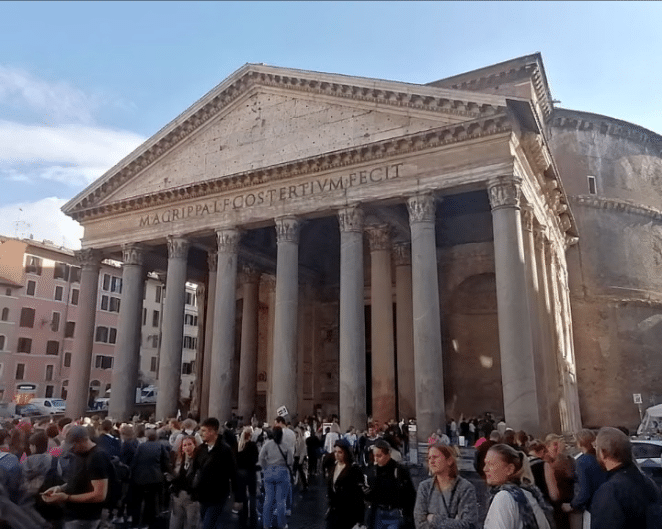
The Pantheon, built by Emperor Hadrian nearly 2,000 years ago, remains one of the city’s most visited landmarks. Tourists often sit or rest on the Pantheon wall despite safety warnings.
A ticketing system introduced in 2023, charging €5, has not deterred visitor numbers. Over four million tourists visited the Pantheon in 2024, with crowds frequently gathering near the Pantheon wall.
Tourist safety in Rome has come under intense scrutiny following other fatal incidents. In March, a Spanish woman died after falling from a high wall near the Spanish Steps, authorities reported.
Earlier this year, Scottish tourist Grant Paterson died in a suspected gas explosion at rented accommodation in central Rome, highlighting ongoing safety and infrastructure concerns for international visitors.
Local guides stressed the need for education and caution at historical sites. Marco Rinaldi, a professional guide, said, “Visitors must be careful when resting on walls. This Japanese tourist tragedy shows clear safety risks.”
The Pantheon wall, like many ancient structures in Rome, is vulnerable to erosion and structural wear. Experts warn that climbing or sitting on walls dramatically increases accident risk.
Eyewitnesses described chaotic scenes as emergency personnel arrived. Some tourists nearby expressed shock and grief, emphasizing that physical barriers or clearer signage could prevent accidents like this Japanese tourist fatality.
The Japanese Embassy in Rome confirmed it is providing support to the victim’s family. “We are deeply saddened by this tragic event,” an embassy spokesperson said, calling for increased visitor safety measures.
Authorities are reviewing structural integrity, emergency access, and crowding patterns to prevent future incidents. Historic walls like the Pantheon wall were not built to handle thousands of visitors simultaneously.
The Italian tourism ministry noted that Rome has seen a post-pandemic surge in arrivals, reaching a record 22.2 million in 2024. This influx strains public safety measures at historic monuments.
Officials stressed that balancing access with protection is essential. “Visitors must respect barriers and guidelines,” a ministry spokesperson said, “to avoid tragedies similar to this Japanese tourist death.”
Families, guides, and local organizations have called for improved signage, physical barriers, and better public education around the Pantheon wall to prevent similar accidents in the future.
Authorities also suggested awareness campaigns targeting international visitors. “A momentary lapse, sudden illness, or loss of balance on these ancient walls can prove fatal,” said a Rome police officer involved in the investigation.
Rome remains a top international destination, attracting millions drawn to historic landmarks, but the tourist’s death underlines ongoing risks in crowded areas where safety precautions are sometimes insufficient.
The incident also reignites debate over the management of visitor behavior at ancient sites. Officials may consider additional measures at the Pantheon wall, including restricted access to high-risk areas during peak hours.
In the wake of this tragedy, the tourist’s family and visitors alike are urging greater awareness of potential dangers at historic monuments. Authorities are calling for vigilance to prevent further fatalities.
As Rome continues to host millions of tourists yearly, the city faces a delicate challenge: preserving heritage, ensuring visitor enjoyment, and preventing deadly accidents like the fall of this tourist.
About The Author