

Israel’s recognition of Somaliland has ignited intense diplomatic backlash worldwide, with governments and regional organisations warning the decision threatens sovereignty, stability, and established international legal norms.
The announcement marked a historic shift in foreign policy, positioning Israel as the first nation to formally recognise Somaliland as an independent and sovereign state.
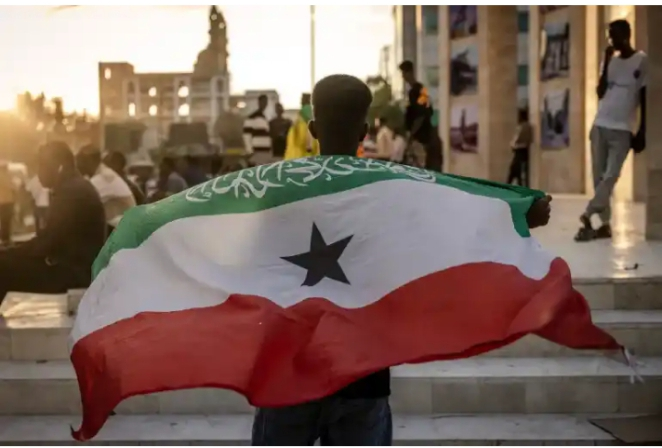
Somaliland, situated in northern Somalia, declared independence in 1991 after the collapse of Somalia’s central government and years of devastating civil conflict.
Since then, Somaliland has maintained relative stability, established functioning institutions, and held multiple elections, contrasting sharply with prolonged insecurity elsewhere in Somalia.
Despite these developments, international consensus has consistently upheld Somalia’s territorial integrity, leaving Somaliland without formal recognition from the global community.
Israel’s decision immediately drew condemnation from Somalia’s federal government, which described the move as a direct assault on national sovereignty.
Somali officials warned that recognising Somaliland undermines decades of diplomatic efforts aimed at preserving unity and rebuilding state authority after years of conflict.
Authorities in Mogadishu expressed fears that the decision could embolden separatist movements and destabilise fragile regions across Africa.
The African Union responded firmly, reiterating its long-standing position that Somaliland remains an integral part of the Federal Republic of Somalia.
African leaders cautioned that unilateral recognitions risk setting dangerous precedents that could unravel borders established at independence throughout the continent.
The African Union Commission emphasised that respect for territorial integrity remains essential for peace, stability, and cooperative relations among member states.
Arab states also voiced strong opposition, with the Arab League condemning Israel’s move as a violation of international law.
Arab League officials warned that unilateral recognition of breakaway regions constitutes unacceptable interference in the internal affairs of sovereign states.
The organisation stressed that preserving national unity is a cornerstone of regional stability and international order.
The Gulf Cooperation Council joined the chorus of criticism, describing Israel’s recognition as a grave infringement on Somalia’s sovereignty.
GCC leaders warned that the decision could heighten tensions in the strategically sensitive Horn of Africa region.
They noted that increased geopolitical rivalry could undermine security in vital maritime routes connecting global trade networks.
European governments reacted with caution, reaffirming support for Somalia’s territorial integrity while urging dialogue between Somali authorities and Somaliland leaders.
European Union officials stressed the importance of peaceful engagement to address long-standing political disputes without undermining regional stability.
The controversy has reignited global debate over the criteria for statehood and the legitimacy of secessionist claims.
Supporters of Somaliland’s recognition argue that decades of self-governance justify international acknowledgment.
Critics counter that selective recognition weakens international law and risks encouraging fragmentation in already fragile states.
Analysts note that Israel’s decision may reflect broader geopolitical calculations rather than purely legal considerations.
Somaliland’s strategic location along the Gulf of Aden adds significant geopolitical weight to the recognition.
The region sits near vital shipping lanes linking Europe, Asia, and the Middle East, making it a focal point for security interests.
Observers suggest that growing competition among global and regional powers has increased interest in Somaliland’s ports and infrastructure.
Somaliland’s leadership welcomed Israel’s recognition, describing it as validation of decades of state-building efforts.
Officials in Hargeisa expressed hope that the move would open doors to broader international engagement and investment.
However, regional neighbours remain cautious, fearing escalation of diplomatic tensions and internal divisions.
Somalia’s allies reiterated that any future resolution regarding Somaliland must occur through dialogue within Somalia’s constitutional framework.
They emphasised that sustainable peace depends on inclusive political processes rather than external endorsements.
The recognition has also sparked debate within international institutions about consistency in applying principles of self-determination.
Some diplomats argue that international responses often reflect political interests rather than universal legal standards.
Others warn that abandoning established norms could erode trust in multilateral institutions.
Public opinion across Africa has largely aligned with continental leaders, stressing unity over fragmentation.
Civil society groups warned that renewed tensions could distract from urgent humanitarian and development challenges.
The Horn of Africa already faces overlapping crises, including conflict, climate shocks, and economic instability.
Critics fear that diplomatic disputes could divert attention and resources from addressing these pressing issues.
Israel has defended its decision as a sovereign foreign policy choice aligned with national interests.
Officials insist that recognition does not negate respect for regional peace or dialogue.
Nevertheless, diplomatic fallout continues to mount, with calls for Israel to reconsider its stance.
Some governments have urged mediation to prevent further deterioration of relations.
International legal experts caution that the precedent could complicate future conflict resolution efforts worldwide.
They stress that recognition decisions carry long-term consequences beyond immediate political gains.
The unfolding situation highlights deep tensions between self-determination and territorial integrity in global politics.
As reactions continue, the future of Somaliland’s international status remains uncertain.
Read also: 2025: The world in retrospect and 2026 Projections — Is global war on the horizon?
What is clear is that Israel’s recognition has reshaped diplomatic conversations far beyond the Horn of Africa.
World capitals continue to weigh the implications for international law, regional stability, and future recognition disputes.
The episode underscores how single diplomatic decisions can reverberate across continents, redefining alliances and testing global norms.


