

Israel becomes first country to recognise Somaliland, delivering a historic diplomatic breakthrough that reshapes Horn of Africa politics after three decades of international isolation.
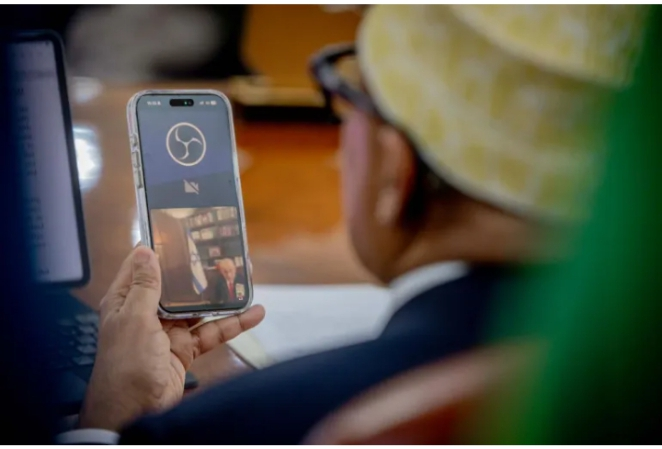
Israel becomes first country to recognise Somaliland following a joint declaration signed by Prime Minister Benjamin Netanyahu and President Abdirahman Mohamed Abdullahi, signalling full diplomatic relations.
The announcement marks the first time a United Nations member state has formally recognised Somaliland since it declared independence from Somalia in 1991 after state collapse.
Netanyahu described the agreement as aligned with the spirit of the Abraham Accords, framing the move as part of Israel’s expanding regional and international diplomatic outreach.
Somaliland’s leadership hailed the recognition as a long-awaited validation of its political stability, democratic institutions, and relative peace compared with conflict-affected southern Somalia.
For more than thirty years, Somaliland has functioned as a de facto state, maintaining its own government, security forces, currency, and electoral processes without formal recognition.
Despite its self-governance, the international community has consistently upheld Somalia’s territorial integrity, leaving Somaliland diplomatically isolated and excluded from global institutions.
Israel’s recognition therefore represents a dramatic departure from long-standing international consensus on Somalia’s sovereignty and borders established after independence in 1960.
Somalia’s federal government reacted swiftly, calling the move a violation of international law and announcing urgent consultations to determine an appropriate diplomatic response.
A senior Somali official said the cabinet convened emergency talks, reflecting deep concern that the decision could encourage further fragmentation within the already fragile Somali state.
Somalia’s foreign minister coordinated with counterparts from Egypt, Turkiye, and Djibouti, who jointly reaffirmed their commitment to Somalia’s unity and territorial integrity.
Egypt’s foreign ministry warned that recognising breakaway regions sets a dangerous precedent undermining the United Nations Charter and the foundations of international order.
The statement emphasised that respect for sovereignty and borders remains essential for global stability, particularly in regions already prone to conflict and political volatility.
Regional organisations also voiced opposition, with the Gulf Cooperation Council condemning Israel’s recognition as a serious breach of Somalia’s sovereignty.
The GCC secretary-general described the move as inconsistent with international law, urging respect for Somalia’s internationally recognised borders and political unity.
In contrast, Israeli officials framed the decision as pragmatic and mutually beneficial, highlighting security cooperation, economic potential, and strategic interests in the Red Sea region.
Israeli Foreign Minister Gideon Saar said the agreement followed a year of dialogue, culminating in a decision to exchange ambassadors and open embassies.
Saar added that Israel would immediately institutionalise cooperation across sectors including trade, technology, agriculture, and security coordination.
President Abdirahman Mohamed Abdullahi, known as Cirro, welcomed the recognition as a historic moment and expressed readiness to join the Abraham Accords framework.
Cirro said the partnership would advance shared interests, enhance regional peace, and deliver tangible benefits for both Somaliland’s citizens and Israeli partners.
Somaliland’s quest for recognition has long rested on its claim to colonial-era borders corresponding to the former British Somaliland protectorate.
Supporters argue that Somaliland voluntarily united with Italian-administered Somalia in 1960 and therefore retains the right to withdraw from that union.
They also point to Somaliland’s relative stability and repeated democratic elections as evidence of its readiness for statehood recognition.
Critics counter that unilateral recognition risks destabilising Somalia further, emboldening separatist movements and weakening efforts to rebuild a unified state.
Somaliland’s eastern regions remain contested, with some clans opposing secession and maintaining loyalty to the Somali federal government.
These internal divisions complicate Somaliland’s narrative of unity and raise concerns about potential future conflicts if international recognition expands.
Israel’s decision may nevertheless embolden Somaliland’s leadership to intensify diplomatic outreach to other countries seeking strategic footholds in the Horn of Africa.
In recent years, Somaliland has cultivated ties with the United Arab Emirates, hosting Emirati investments and security cooperation at the port of Berbera.
It has also established unofficial relations with Taiwan, defying Beijing’s objections in exchange for development assistance and political support.
The Abraham Accords context is significant, as they reflect a shift toward transactional diplomacy driven by strategic and economic considerations.
Prominent figures within the United States Republican Party have advocated closer ties between Israel and Somaliland, viewing the region as a reliable partner.
Senator Ted Cruz has repeatedly urged Washington to recognise Somaliland, citing its stability and strategic location along key maritime routes.
Former president Donald Trump signalled openness to the idea earlier this year, describing Somaliland as a complex issue under active consideration.
However, the United States has not formally altered its long-standing policy supporting Somalia’s territorial integrity, maintaining cautious distance from recognition debates.
Analysts say Israel’s move could test Washington’s position, especially if recognition becomes linked to broader regional or security arrangements.
The announcement comes amid declining US engagement in Somalia, alongside increasingly critical rhetoric from Trump toward Somali leadership.
Controversially, reports earlier this year suggested potential recognition deals tied to plans involving displaced Palestinians, prompting strong regional opposition.
Egypt, Turkiye, Somalia, and Djibouti jointly rejected any proposals involving forced displacement of Palestinians, reaffirming international consensus against such actions.
Ethiopia’s earlier attempt to secure sea access through a recognition deal with Somaliland illustrates the geopolitical stakes surrounding the region.
That initiative collapsed under diplomatic pressure, highlighting the sensitivity of Somaliland’s status among African and Middle Eastern states.
Experts caution that Israel’s recognition could encourage other autonomous regions to seek similar transactional recognition arrangements.
Jethro Norman of the Danish Institute for International Studies said the move may embolden centrifugal forces within Somalia’s federal system.
Somalia already operates as a highly decentralised federation, with states exercising significant autonomy amid ongoing constitutional disputes.
Puntland and Jubaland have both withdrawn from aspects of the federal system, citing electoral and governance disagreements with Mogadishu.
A Puntland official welcomed the development cautiously, suggesting that strategic patience could yield political dividends over time.
Such reactions underscore the complex internal dynamics Israel’s recognition may intensify within Somalia’s fragmented political landscape.
Read also:Polish jets intercept Russian Reconnaissance plane near NATO airspace
For Somaliland, the recognition represents validation after decades of diplomatic frustration, potentially unlocking investment and international engagement.
For Somalia, it poses a serious challenge to sovereignty, unity, and the fragile progress made toward national reconciliation.
The broader Horn of Africa region may also feel ripple effects, as states reassess alliances, recognition norms, and strategic partnerships.
Whether Israel’s move remains an isolated case or triggers a cascade of recognitions will shape the future of Somaliland’s long quest for statehood.
For now, Israel becomes first country to recognise Somaliland, altering diplomatic realities and reopening debates over sovereignty, self-determination, and international law.
About The Author


