Beirut, Lebanon – Israel’s continued attacks on Lebanon this week have renewed fears that Hezbollah’s disarmament plans may collapse. The strikes target areas in southern Lebanon and the Bekaa Valley.
The United Nations Interim Force in Lebanon (UNIFIL) reports over 10,000 ceasefire violations by Israel since November 2024. Airspace violations reached 7,500, while ground violations totaled 2,500, according to the UN peacekeeping mission.
Israel also maintains control over five points in southern Lebanon, despite promises to withdraw troops. On Monday, four villages were evacuated forcibly before Israeli airstrikes targeted suspected Hezbollah and Hamas positions.
More attacks followed on Tuesday, with Israel claiming to target Hezbollah operatives in southern Lebanon. These strikes come amid ongoing efforts by the Lebanese government to disarm the group south of the Litani River.
Since October 2023, Israel’s military operations in Lebanon have killed over 4,000 people, causing mass displacement. Between September and November 2024, more than 1.2 million people fled following evacuation warnings issued by Israel.
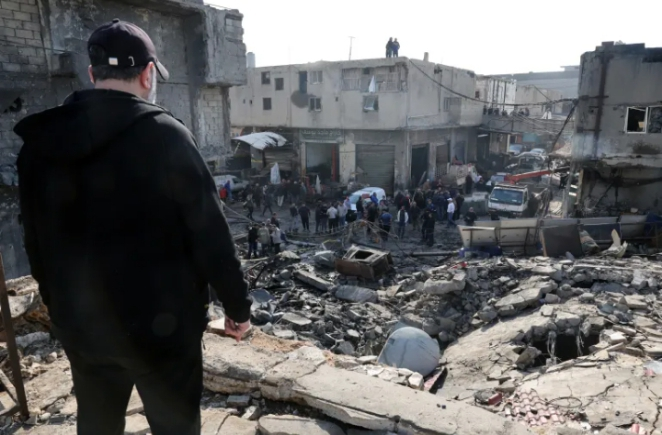
The World Bank estimates Lebanon needs $11 billion for reconstruction and recovery. Hezbollah’s leadership suffered heavily during the war, including the death of longtime leader Hassan Nasrallah, weakening the group’s military capabilities.
In August 2025, Lebanon approved a plan for the Lebanese Armed Forces (LAF) to disarm Hezbollah. The move aimed to strengthen state authority and comply with U.S. and Israeli pressure for weapons control.
Hezbollah has repeatedly rejected disarmament demands, arguing Israel has not respected the ceasefire. Naim Qassem, Nasrallah’s successor, said on January 3, 2026, that arms control under Israeli aggression is not in Lebanon’s interest.
Despite partial disarmament south of the Litani River, Hezbollah still maintains weapons near Israeli-occupied points. Lebanese officials stress that the army’s operations were limited to areas safe from Israeli strikes.
The second phase of disarmament plans targets territory between the Litani and Awali Rivers, roughly 40 kilometers north of the Israeli border.
Cabinet discussions are scheduled to determine the next steps for Hezbollah and Palestinian militias.
Prime Minister Nawaf Salam emphasized government priorities: ending Israeli strikes, removing troops from occupied points, and repatriating Lebanese detainees held by Israel. Salam pledged to continue reforms and expand state authority.
Analysts warn Lebanon has few options to pressure Israel. Diplomatic appeals to international allies can limit escalation, but meaningful progress on disarmament requires concrete security guarantees and measurable Israeli restraint.
Political analyst Qassem Kassir stated that Israel must halt attacks and release prisoners before Hezbollah considers full disarmament. Reconstruction of war-damaged areas is also essential before implementing phase two.
Failure to address these prerequisites could trigger confrontation, according to Kassir. Analysts fear that proceeding while Israel continues striking may provoke aggressive responses from Hezbollah, risking wider instability.
Hezbollah remains weakened but not defeated. It can still challenge domestic authority and assert political influence. Phase two of disarmament may transform from a technical measure into a broader political struggle.
Salamey added that the Lebanese Army could face friction and localized resistance if disarmament proceeds while Israel attacks. Hezbollah may resist indirectly through political obstruction or limited escalation with Israel.
The combination of Israeli strikes and domestic disarmament pressures leaves Lebanon vulnerable. Analysts warn that miscalculation or delays could lead to severe consequences, with heightened risk of conflict along the border.
Ultimately, Lebanon must balance external pressure from Israel and the U.S. with Hezbollah’s refusal to disarm. Any phase-two implementation without Israeli de-escalation could destabilize national cohesion.
Observers caution that Israel’s strategic messaging through military operations undermines Lebanon’s authority claims and complicates disarmament efforts. Hezbollah’s constituency views continued attacks as justification to retain weapons for protection.
Lebanon’s government faces a delicate path: pursuing disarmament, restoring state authority, and managing relations with Hezbollah while ensuring Israel does not exploit delays to expand operations.
Read also: Russia sends naval vessel to escort oil tanker actively pursued by U.S. forces
UNIFIL continues to monitor the situation, noting that any disruption in disarmament progress could escalate hostilities. Analysts emphasize the need for verifiable progress and international oversight to reduce risk of miscalculation.
Hezbollah’s future weapons strategy hinges on Israeli behavior and Lebanon’s reconstruction progress. Phase two is thus not merely a security measure but a litmus test for regional stability and state authority.
About The Author