Israel has deported 32 foreign activists who had joined Palestinian olive farmers during the annual harvest, amid escalating violence and settler intimidation across the occupied West Bank.
According to Israeli media, the activists were detained near the Nablus-area town of Burin last week, where they had been supporting Palestinian olive farmers facing repeated attacks.
Authorities cited a military decree banning all non-labourers from farmland during harvest season, a move that rights groups say deliberately restricts protection for vulnerable olive farmers.
The Israeli daily Israel Hayom reported that the group was accused of violating this military order while assisting locals who have endured settler assaults throughout the season.
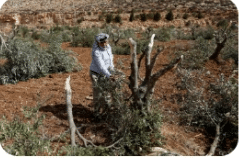
The Colonization and Wall Resistance Commission said the Israeli army and settlers had carried out 158 attacks against olive farmers since the start of the 2025 harvesting period.
Violations ranged from beatings and shootings to mass arrests and arson, with 74 incidents directly targeting olive groves, including the uprooting or burning of hundreds of trees.
According to the commission, 765 olive trees have been destroyed this season, depriving Palestinian families of critical income from their olive farmers’ cooperatives and small-scale presses.
The United Nations warned that Palestinian olive farmers face “a heightened risk” during this year’s harvest, as Israeli settlers increasingly act with impunity under army protection.
“Settler violence has skyrocketed in scale and frequency,” said Ajith Sunghay, head of the UN Human Rights Office in the Palestinian territory, in a statement issued on Tuesday.
“Two weeks into the 2025 harvest, we have already seen severe attacks by armed settlers against Palestinian men, women, children and foreign solidarity activists,” he added.
Sunghay stressed that between 80,000 and 100,000 Palestinian families rely on the olive harvest for their livelihoods, calling the targeting of olive farmers “an assault on a community’s lifeline.”
A joint statement by Israeli Interior Minister Yariv Levin and National Security Minister Itamar Ben-Gvir on Wednesday confirmed the deportations and announced a 99-year entry ban on the activists.
Authorities alleged that the group was linked to the Union of Agricultural Work Committees (UAWC), a Palestinian organisation Israel has controversially labelled as affiliated with “terror groups.”
Neither the activists’ identities nor their nationalities were disclosed, and Israel did not specify to which countries they would be deported following their detention near Nablus.
Human rights organisations condemned the deportations as an attempt to silence witnesses documenting violence against olive farmers in one of the world’s longest military occupations.
“Expelling foreign observers is a calculated move to hide settler crimes and intimidate olive farmers who depend on international presence for protection,” said a Ramallah-based rights advocate.
Reports of settler attacks have surged since the war in Gaza began last year, with more than 1,000 Palestinians killed by Israeli forces or settlers in the West Bank since October 2023.
The UN documented 757 settler attacks causing casualties or property damage in the first half of 2025 alone — a 13 percent rise compared with the same period last year.
Many incidents involve coordinated assaults by armed settlers, often escorted by Israeli soldiers, targeting olive farmers during harvest time in areas like Nablus, Hebron, and Ramallah.
On Sunday, a settler raid in Turmus Aya was caught on camera, showing Israeli settlers beating olive farmers and activists with clubs. One woman was seriously injured and hospitalised.
Earlier this month, at least 36 people, including journalists, were injured when settlers attacked Palestinian olive farmers in Beita, torching vehicles and vandalising harvested produce.
The UN Office for the Coordination of Humanitarian Affairs (OCHA) said settler groups have destroyed farmland, uprooted trees and sprayed chemicals across thousands of hectares of Palestinian orchards.
According to OCHA, this pattern of destruction aims to “undermine the economic resilience” of olive farmers and push Palestinian families off their ancestral land.
Israeli forces, meanwhile, often fail to intervene or actively assist settlers, witnesses say, leaving olive farmers exposed to escalating threats during the crucial few weeks of harvest season.
In some villages, farmers must coordinate access to their own land with Israeli military officials, receiving only limited “permits” to enter areas surrounded by settlements.
“This system of control is designed to suffocate us,” said Khaled Abu Falah, a farmer from near Ramallah. “Even harvesting our olives has become an act of resistance.”
The olive tree, a symbol of Palestinian identity and endurance, remains a central pillar of rural life. Many olive farmers have cultivated the same trees for generations, dating back centuries.
Israeli settlers, numbering over 700,000 across 150 settlements and 128 illegal outposts in the West Bank and East Jerusalem, continue expanding into agricultural land.
Armed settlers frequently act with impunity, protected by soldiers who either look away or join in assaults on Palestinian olive farmers and their property.
In addition to physical attacks, settlers have burned crops, poisoned livestock, and vandalised equipment used by olive farmers, worsening an already precarious agricultural economy.
Rights organisations say Israel’s actions violate international law, including the Fourth Geneva Convention, which prohibits the occupying power from destroying private property.
“Every olive tree cut down is a violation of humanitarian law,” said Randa Mousa of Al-Haq, a Palestinian rights NGO. “This is part of a larger policy to dispossess olive farmers.”
The European Union has repeatedly called on Israel to restrain settler violence, while several Western diplomats privately admit they rely on reports from activists now being deported.
Israel’s interior ministry insists the deportations were necessary for “security reasons,” accusing the activists of “provoking friction” between settlers and Palestinian olive farmers.
But critics argue that deporting witnesses only emboldens aggressors. “Israel wants to control not only the land but also the narrative,” said Nadia Barghouti, an analyst in Ramallah.
For now, Palestinian olive farmers say they will continue their harvests under guard, hoping that international observers will one day be allowed to return to ensure safety and documentation.
“The olives don’t wait for politics,” said Abu Falah, gazing at his uprooted grove. “Even if they destroy our trees, we’ll replant — this land remembers everything.”
As another violent harvest season unfolds, the fate of these olive farmers mirrors the broader struggle of Palestinians living under occupation, determined to defend their heritage despite overwhelming odds.
About The Author