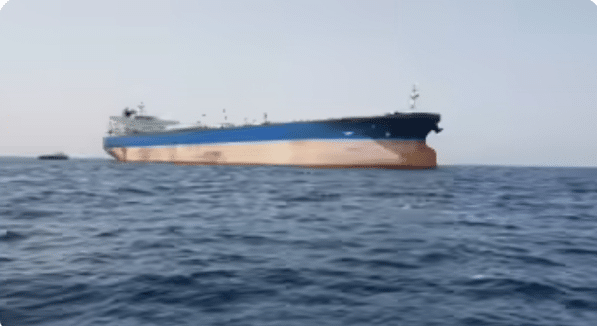
Tehran, Iran – The Islamic Revolutionary Guard Corps (IRGC) confirmed the seizure of the Cyprus-registered tanker Talara near Iranian waters, citing a judicial order and national security considerations.
The Marshall Islands-flagged vessel was carrying 30,000 tonnes of petrochemicals when intercepted near the Strait of Hormuz, a critical passage for global oil and gas transportation.
Iranian authorities accused Talara of violating regulations by transporting unauthorized cargo, emphasizing the seizure aligned with legal duties and court orders issued by the country’s judicial system.
Talara, operated by Cyprus-based Columbia Shipmanagement, had departed from the United Arab Emirates for Singapore, losing contact along its route, prompting security agencies to intervene for the crew’s safety.
The IRGC stated the operation was executed successfully, highlighting Iran’s commitment to protecting territorial waters and ensuring that foreign vessels comply with Iranian maritime regulations.
Western intelligence confirmed the interception, with the United States and United Kingdom monitoring the situation, reflecting heightened geopolitical sensitivity around Iranian naval activities in the Gulf.
British agencies reported tracking the vessel, and the United Kingdom Maritime Trade Operations identified the incident near Khor Fakkan, describing it as “state activity” carried out by Iran’s naval forces.
Flight-tracking data indicated a US Navy MQ-4C Triton drone monitored the area for hours during the seizure, highlighting continued surveillance by Western powers over critical shipping lanes.
US Central Command acknowledged awareness of the operation, emphasizing commercial vessels’ rights to unimpeded navigation while carefully avoiding direct attribution of blame for the seizure.
This marks the first significant interdiction in the Strait of Hormuz by Iranian forces in over a year, underscoring Tehran’s renewed assertiveness in maritime operations within this vital corridor.
In July 2024, the IRGC seized a Togo-flagged, UAE-managed tanker southwest of Bushehr, claiming the vessel was systematically involved in fuel smuggling, violating Iran’s maritime regulations.
Earlier in April 2024, IRGC commandos rappelled from helicopters onto a Portuguese-flagged container ship linked to an Israeli billionaire following Israeli airstrikes in Syria targeting Iranian military facilities.
Historical context shows Iran’s naval actions often respond to external pressures, including US sanctions and targeted strikes on Iranian nuclear or military sites in the region.
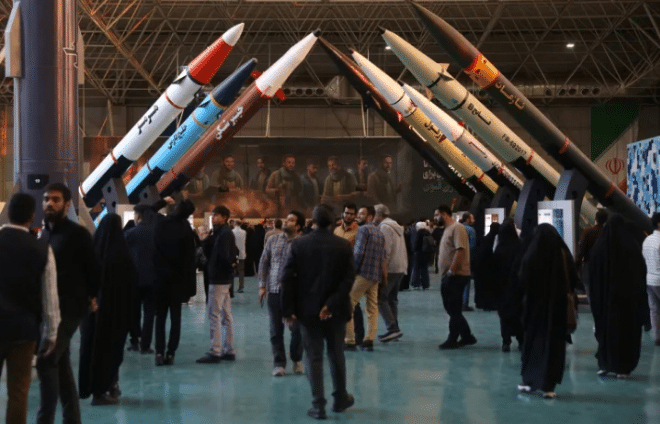
The Talara seizure coincided with an exhibition in Tehran showcasing missiles, drones, and other military technologies, signaling Iran’s strategic focus on both defensive and offensive capabilities.
The Strait of Hormuz remains a global chokepoint, through which roughly 20 percent of the world’s oil trade and one-third of liquefied natural gas exports pass, demonstrating its enormous strategic significance.
Tehran has repeatedly threatened to close the waterway in response to foreign pressures, illustrating the leverage it maintains over critical energy transit routes in the Gulf region.
US withdrawal from the 2015 nuclear deal in 2018 escalated tensions, leading to sanctions and numerous maritime incidents, highlighting the fragile security environment in the Persian Gulf.
The IRGC emphasized that Talara’s seizure was lawful and necessary, citing judicial orders to reinforce Iran’s sovereignty and protect national resources from unauthorized foreign activity.
Experts argue that the incident reflects an intersection of maritime law, strategic deterrence, and regional signaling, showcasing Tehran’s operational capabilities in controlling foreign shipping near its waters.
The operation demonstrates Iran’s ability to monitor, intercept, and redirect foreign vessels in strategic areas, reinforcing its authority over maritime approaches and compliance with judicial directives.
Analysts warn that such maritime incidents increase the potential for regional escalation, prompting heightened vigilance by Western navies and intelligence agencies patrolling the Strait of Hormuz.
Shipping companies are advised to exercise caution in the Gulf, as unpredictable interventions can affect navigation, insurance costs, and supply chain stability in global energy markets.
Talara’s cargo of high-sulfur gas oil underscores the economic significance of intercepted vessels, as petroleum products remain central to maritime trade and global energy security concerns.
The IRGC framed the seizure as lawful and necessary, portraying Iran as both a protector of national resources and a vigilant guardian of strategic maritime corridors.
Past Iranian operations include the 2019 limpet mine attacks on commercial ships and the 2021 drone strike in the Arabian Sea, reinforcing a pattern of assertive naval activity in response to foreign threats.
Seizures have historically served as both negotiation leverage and retaliatory measures, illustrating the political and strategic motives underpinning Iran’s naval operations.
Talara’s deviation from its original course toward Iran demonstrates the IRGC’s operational control and capability to enforce judicial directives against vessels perceived as violating national regulations.
International maritime law guarantees freedom of navigation, yet national security concerns often complicate the balance between legal rights and sovereign territorial claims, as Iran’s actions illustrate.
The Talara seizure is expected to influence regional diplomacy, with Western powers monitoring the Gulf closely and considering adjustments to naval deployments in response to future Iranian operations.
Shipping analysts caution that any escalation in the Strait of Hormuz could disrupt global energy markets, affecting oil prices, trade flows, and broader economic stability worldwide.
Iran’s strategy combines assertive maritime operations with public signaling, demonstrating sovereignty, deterring interference, and maintaining readiness for potential regional escalations in response to foreign pressures.
The maritime operation underscores Tehran’s long-term objective to assert influence over strategic shipping lanes, highlighting the global significance of energy transit corridors and geopolitical leverage.
Talara’s interception reaffirms Iran’s ability to execute complex naval maneuvers, blending legal justification with military precision to enforce compliance and national regulations.
Regional observers note that such operations reflect growing confidence in Iran’s maritime capabilities, alongside readiness to confront Western military and economic pressures in the Gulf.
The incident highlights how geopolitical tensions in the region remain closely tied to international energy security, demonstrating the broad global implications of Iran’s assertive naval strategy.
Previous confrontations, including Israeli and US attacks on Iranian nuclear facilities, have prompted Tehran to increase surveillance, missile production, and drone capabilities, underscoring its commitment to strategic deterrence.
Talara’s seizure comes amid Iran showcasing advanced military hardware, demonstrating both operational readiness and a clear signal to regional and global actors regarding its naval enforcement capabilities.
Iranian officials have maintained that such operations are conducted strictly in accordance with law, emphasizing adherence to judicial oversight and the protection of sovereign rights over territorial waters.
The IRGC’s statement reiterates the importance of legal justification in maritime operations, reinforcing Tehran’s position that international law does not preclude national security measures in critical zones.
The Talara incident also illustrates the heightened sensitivity surrounding energy transport routes, with any perceived threat to navigation potentially triggering diplomatic or military responses from affected nations.
Experts suggest that Iran’s assertiveness in maritime operations serves both defensive and signaling purposes, aiming to secure territorial waters while demonstrating capacity to deter foreign intervention.
Historical precedents, such as the Greek tanker seizures in 2022, reveal a pattern of reciprocal actions, where naval enforcement and diplomatic negotiations intersect in the Gulf’s high-stakes energy corridor.
The Talara seizure is part of a broader strategy by Iran to reinforce maritime sovereignty, ensure compliance with legal frameworks, and signal readiness to defend economic and strategic interests.
Maritime security in the Strait of Hormuz remains a global concern, with energy markets, shipping companies, and regional actors closely monitoring Iran’s naval capabilities and enforcement policies.
The IRGC emphasizes that each interception is conducted with careful planning, operational precision, and strict adherence to both national laws and judicial authorization.
Talara’s capture highlights Iran’s operational maturity in controlling maritime approaches and demonstrates how naval power can be combined with legal oversight to assert authority.
Observers predict that future operations may continue, reflecting Iran’s dual objectives: safeguarding resources and leveraging geopolitical influence to negotiate from a position of strength.
In conclusion, the IRGC’s seizure of Talara near Iranian waters represents a combination of legal authority, strategic intent, and operational capability, signaling Tehran’s enduring control over critical maritime corridors.
About The Author