

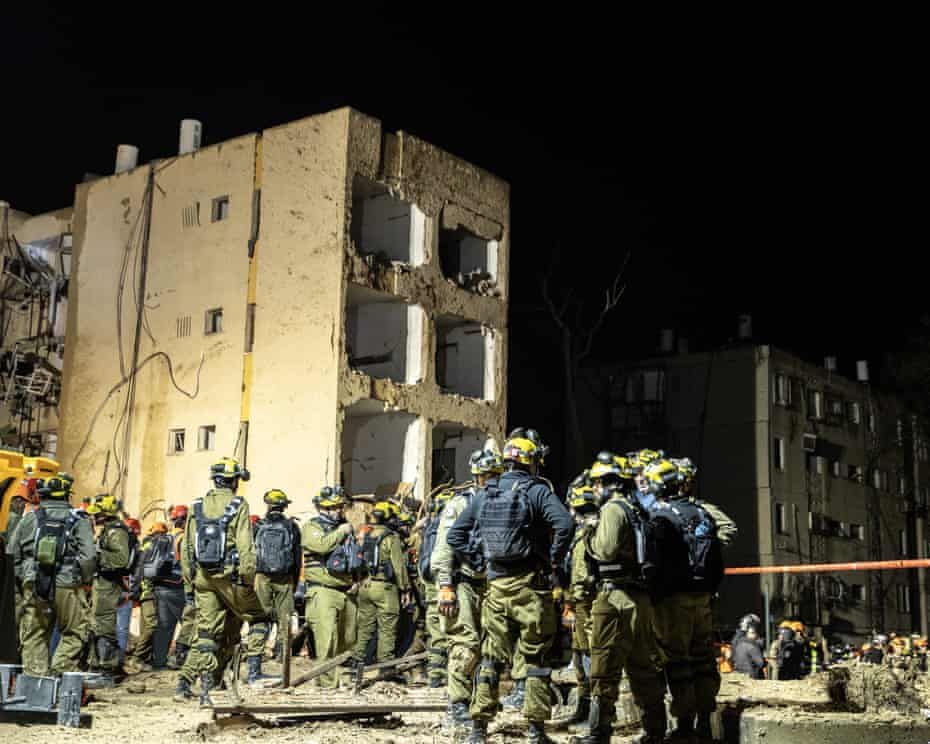
The Iranian missile hits Israel leaving 100 wounded marked one of the most intense moments in the ongoing conflict, as strikes penetrated defenses and caused widespread destruction across southern regions.
Authorities confirmed that over one hundred individuals were injured after missiles launched from Iran struck key locations within Israel during overnight attacks.
Emergency responders described scenes of devastation, with buildings damaged and debris scattered across residential neighborhoods following what officials called a “direct missile hit” on civilian infrastructure.
In the town of Arad, dozens sustained injuries, including several reported in serious condition, as rescue teams worked urgently to assist victims trapped beneath rubble and collapsed structures.
Another strike in Dimona caused additional casualties, drawing attention due to the area’s strategic significance and proximity to sensitive facilities long associated with national security concerns.
Footage from the aftermath showed large craters and twisted metal, illustrating the force of the explosions that overwhelmed parts of Israel’s missile defense systems.
Military officials acknowledged that the missiles “slipped through” protective measures, raising concerns about vulnerabilities in defense capabilities during sustained attacks.
A spokesperson confirmed that multiple sites were affected, with casualties reported across different locations as emergency services responded simultaneously to numerous distress calls.
Among the injured was a young child in critical condition, highlighting the human toll of the escalating conflict and prompting widespread public concern.
Israeli leadership reacted swiftly, with Prime Minister Benjamin Netanyahu vowing to respond “on all fronts” against Iranian aggression.
Netanyahu described the strikes as unacceptable, emphasizing that Israel would take decisive action to protect its citizens and deter further attacks.
Shortly after the missile strikes, Israeli forces reportedly launched retaliatory operations targeting sites within Iran, escalating the cycle of confrontation between the two nations.
Iranian officials stated the attacks were in response to earlier strikes on its nuclear facilities, framing the missile launches as part of a broader retaliation strategy.
The Islamic Revolutionary Guard Corps claimed responsibility for targeting multiple locations, including military sites and strategic positions linked to opposing forces.
Analysts suggest the escalation reflects a dangerous shift toward more direct and destructive engagements between the adversaries.
The strikes have heightened fears of a broader regional conflict, with neighboring countries closely monitoring developments and reinforcing their own defenses.
Reports indicated additional tensions in nearby regions, including warnings issued to countries hosting foreign military operations linked to the conflict.
International reactions have called for restraint, urging both sides to de-escalate and avoid actions that could lead to widespread instability.
Humanitarian agencies expressed concern over civilian casualties, emphasizing the urgent need for protection of non-combatants amid ongoing hostilities.
Medical facilities in affected areas faced significant pressure, treating large numbers of injured individuals while managing limited resources during emergency conditions.
Residents described moments of panic as explosions echoed across communities, forcing many to seek shelter during the attacks.
The breach of missile defenses has prompted questions about preparedness and the evolving nature of modern warfare technologies.
Security experts warn that continued escalation could lead to more sophisticated attacks, increasing risks for civilian populations across the region.
The targeting of areas near sensitive facilities has raised alarm among international observers regarding potential strategic implications.
Global leaders have reiterated calls for diplomacy, emphasizing the importance of preventing further escalation through dialogue and negotiation.
Markets reacted to the developments, reflecting concerns over instability in a region critical to global energy and trade systems.
The attacks also influenced political discourse worldwide, with leaders weighing responses to the rapidly evolving situation.
Social media platforms were flooded with images and accounts from affected areas, amplifying global awareness of the crisis.
Observers note that the conflict’s intensity has reached a new level, with both sides demonstrating increased military capabilities.
The psychological impact on civilians remains significant, as communities grapple with fear and uncertainty following repeated attacks.
Experts highlight the importance of international mediation efforts to prevent the situation from spiraling further out of control.
Diplomatic channels continue to operate, though progress remains uncertain amid strong rhetoric and ongoing military actions.
The strikes underscore the fragile security environment in the Middle East, where longstanding tensions can quickly escalate into large-scale confrontations.
As both nations exchange warnings and actions, the possibility of wider regional involvement remains a pressing concern.
The situation continues to evolve rapidly, with global attention focused on preventing further loss and stabilizing the region.
Read also: UK fury over Iran missile attack on Diego Garcia military base sparks escalation fears
Will the Iranian missile hits Israel leaving 100 wounded incident trigger a broader regional war, or can diplomatic efforts succeed in halting the escalating cycle of retaliation?
About The Author
