

Iran Trump nuclear deadline tensions have escalated dramatically after the United States issued Tehran with a fresh 10-day ultimatum to reach a nuclear agreement, while simultaneously moving a powerful concentration of military forces into the Middle East.
The warning, delivered by US president Donald Trump, follows the collapse of high-stakes diplomatic talks and has intensified fears that a long-simmering dispute could soon tip into open conflict if diplomacy fails.
The ultimatum was announced after intensive negotiations between Washington and Iran concluded in Geneva without a breakthrough.
While officials on both sides initially sought to strike an optimistic tone, it soon became clear that fundamental disagreements remain unresolved, particularly over uranium enrichment limits, international inspections and the sequencing of sanctions relief.
Trump, speaking in Washington, said Iran “cannot have a nuclear weapon” and warned that the coming days would determine whether diplomacy succeeds or collapses entirely.
“Good talks are being had, but it’s proven over the years that it’s not easy to make a meaningful deal with Iran,” he said. “We have to make a meaningful deal — otherwise bad things happen.”
The stark language marked a significant escalation in tone and underlined growing frustration inside the White House. Trump indicated that Iran would soon “find out” what happens if talks fail, a remark widely interpreted as a reference to possible military action.
Senior US officials later confirmed that the 10-day window represents what the administration sees as a final opportunity for Tehran to present acceptable concessions before Washington considers alternative options.
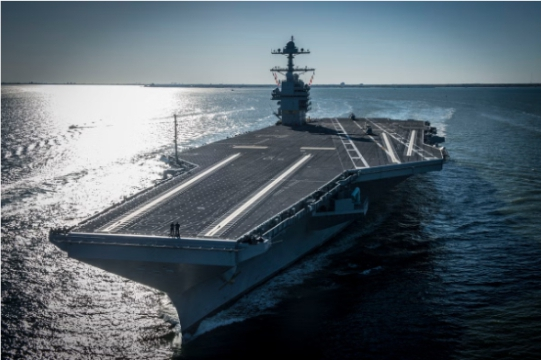
Backing up the diplomatic pressure, the United States has rapidly expanded its military presence across the region. More than a dozen warships have been redeployed to strategic positions, including aircraft carrier strike groups led by the USS Abraham Lincoln and the USS Gerald R. Ford.
Advanced fighter aircraft such as F-35s, F-22s and F-16s have been moved to regional airbases, supported by long-range aerial refuelling tankers that extend their operational reach. Submarines capable of launching cruise missiles are also believed to be operating in the area, while missile defence systems have been placed on heightened alert.
US defence officials insist the deployments are defensive and designed to deter escalation, but analysts say the scale and visibility of the build-up are intended to send an unmistakable signal to Tehran.
The message, they argue, is that Washington is no longer relying on diplomatic pressure alone. By combining talks with a show of force, the administration hopes to compel Iran to compromise while maintaining the option of military action if negotiations collapse.
In Tehran, the reaction has been defiant. Iranian leaders have accused Washington of negotiating in bad faith and attempting to impose terms through intimidation.
Senior officials warned that any attack on Iranian territory would trigger retaliation against US forces and allies throughout the region.
Earlier in the week, Iran conducted large-scale military drills in the Strait of Hormuz, a strategically vital waterway through which roughly a fifth of the world’s oil supply passes. The exercises were widely seen as a reminder of Iran’s ability to disrupt global energy markets if conflict erupts.
Despite the heated rhetoric, Iranian diplomats maintain that they are still open to an agreement, provided it respects what they describe as Iran’s legitimate rights under international law.
They argue that Tehran’s nuclear programme is civilian in nature and accuse the US of exaggerating the threat for political purposes.
However, Western officials remain sceptical, citing past instances where Iran restricted access to inspectors or expanded enrichment activities beyond agreed limits.
The collapse of the Geneva talks has placed additional strain on an already volatile regional environment. Israel has repeatedly warned that it will not tolerate a nuclear-armed Iran and has hinted that it could act independently if diplomacy fails.
Gulf Arab states, while publicly urging restraint, are quietly preparing for the possibility of escalation, concerned that any conflict would spill across borders and disrupt trade and energy exports.
Inside Washington, the debate over how far to push Iran is intensifying. Some senior advisers argue that the military build-up has already succeeded in forcing Tehran back to the negotiating table and warn that further escalation risks triggering a wider war.
Others believe that only the credible threat of force will persuade Iran to accept strict limits on its nuclear activities. According to officials familiar with the discussions, Trump has not yet made a final decision and continues to weigh the potential costs and consequences of military action.
Public opinion in the United States is also divided. While many Americans support preventing Iran from acquiring nuclear weapons, there is limited appetite for another Middle Eastern war.
Critics warn that a strike on Iran could provoke retaliation against US troops, trigger attacks on shipping and energy infrastructure, and draw Washington into a prolonged conflict with unpredictable outcomes. Supporters of a tougher stance counter that allowing Iran to edge closer to nuclear capability would pose an even greater long-term risk.
European allies, who played a central role in earlier nuclear agreements with Iran, have urged both sides to step back from confrontation. Diplomats from France, Germany and the UK have called for renewed talks and warned that military escalation would undermine regional stability.
Russia and China have also weighed in, with Moscow offering to help broker a compromise by taking custody of enriched uranium as part of a potential deal, and Beijing warning against actions that could destabilise global markets.
As the 10-day deadline approaches, the atmosphere is increasingly tense. US officials say they are still awaiting a formal written proposal from Iran outlining how it intends to address Washington’s concerns.
Tehran, for its part, insists it will not negotiate under threat and has demanded concrete guarantees that sanctions will be lifted if an agreement is reached. The gap between the two sides remains wide, and time is rapidly running out.
Whether the Iran Trump nuclear deadline ultimately leads to a diplomatic breakthrough or a dangerous escalation now depends on decisions made in the coming days.
Read also: South Korea Yoon Suk Yeol life sentence shakes Democracy
For now, the combination of stalled talks, mounting military deployments and uncompromising rhetoric has placed the Middle East on edge, with the world watching closely to see whether diplomacy can still avert conflict.
About The Author


