

Iran FM denies executions of protesters amid rising regional tension, as Tehran responds to claims by US President Donald Trump about halted killings and executions.The foreign Minister, Abbas Araghchi rejected these allegations in the face of continuous international concerns and US rhetoric.
Speaking in a televised interview, Araghchi stated that claims of planned hangings were false, stressing that “there is no plan for executions at all” under Iran’s current response.
His remarks followed comments by Donald Trump, who said he had been told that killings of demonstrators in Iran had stopped, signalling a possible easing of tensions.
The statements came at a delicate moment, with fears of a renewed US-Iran confrontation growing after weeks of nationwide protests and sharp diplomatic exchanges.

Trump, who has repeatedly threatened military action, told reporters he had received “very good assurances” from sources inside Iran regarding halted executions.
While Trump did not identify those sources, he suggested the situation would be closely monitored before any further US decisions were taken.
Newsmen in Washington noted that Trump’s tone appeared noticeably softer than in previous days, when military threats were openly discussed.
“This signals a cooling-off period, at least rhetorically,” the correspondent explained, adding that the administration appeared to be reassessing its options.
Political analysts say Trump may be seeking a face-saving exit from escalating tensions without committing the United States to another prolonged Middle East conflict.
Sina Toossi, a senior fellow at the Center for International Policy, described Trump’s remarks as a strategic pause rather than a full policy shift.
“He has always balanced threats with negotiation,” Toossi said, cautioning that military options were still “very much on the table.”
Trump’s history of pressuring Iran through sanctions and threats has shaped expectations that his statements may serve multiple political objectives simultaneously.
Despite the softer language, the US has quietly taken precautionary steps, including withdrawing some personnel from Al Udeid Air Base in Qatar.
The move followed warnings from Iranian officials that US bases in the region could be targeted if Washington launched strikes against Iran.
British forces were also reported to have reduced their presence, reflecting wider concerns among Western allies about regional escalation.
Iran, for its part, has insisted it remains ready to defend itself against any foreign aggression, particularly from the US and Israel.
The commander of Iran’s Islamic Revolutionary Guard Corps, Mohammad Pakpour, said the country was at “the height of readiness” to respond decisively.
In a statement broadcast on state television, Pakpour accused Washington and Tel Aviv of fuelling unrest inside Iran through covert interference.
He went further, describing Trump and Israeli Prime Minister Benjamin Netanyahu as responsible for violence affecting Iranian youth.
Araghchi echoed that stance, telling Fox News that Iranian authorities had restored control following what he called “terrorist operations” during protests.
“After several days, calm has returned,” the foreign minister said, adding that the government was firmly managing the situation nationwide.
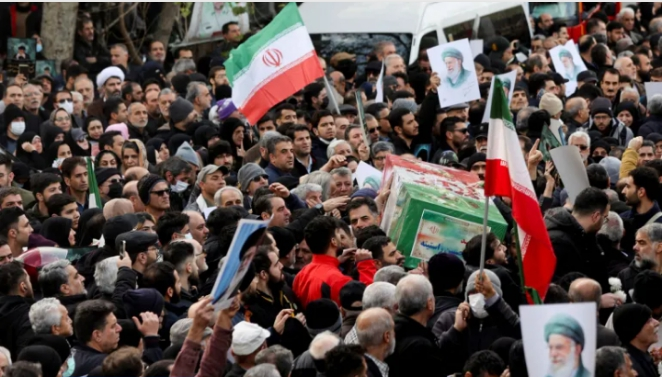
However, reports from inside Iran suggest widespread anxiety among civilians, particularly in major cities affected by security crackdowns.
News correspondents in Tehran reported that memories of last year’s brief conflict with the US and Israel remain fresh for many Iranians.
“People feel the shadow of war,” the correspondent said, noting concerns about how renewed conflict would disrupt everyday life.
Read also: Only Trump can stop Putin from threatening Europe – Polish President warns
The protests initially began in December, sparked by economic grievances including currency devaluation and rising living costs.
What started as shopkeeper demonstrations quickly evolved into broader antigovernment protests across multiple provinces.
Iranian state media has acknowledged casualties but blamed violence on what it described as armed and terrorist groups.
According to official figures, more than 100 security personnel have been killed during the unrest.
Opposition groups and independent activists dispute those figures, claiming far higher civilian casualties, including large numbers of protesters.
The US-based Human Rights Activists News Agency reported that over 2,400 protesters had been killed, though verification remains difficult.
Human rights organisations have raised serious concerns about the use of lethal force against demonstrators.
Amnesty International said it reviewed evidence suggesting mass unlawful killings during the protests, describing the situation as unprecedented.
The group claimed security forces used live ammunition against mostly peaceful protesters and bystanders.
Iranian authorities have strongly rejected those allegations, accusing rights groups of bias and misinformation.
Meanwhile, Iran continues to experience a near-total telecommunications blackout, limiting independent reporting and verification.
Monitoring group NetBlocks said the shutdown had lasted more than 144 hours, severely restricting internet access nationwide.
The information blackout has intensified international scrutiny and calls for transparency from Tehran.
Despite denials of planned executions, Western governments remain cautious, warning that Iran’s actions will continue to shape diplomatic responses.
Barbara Slavin of the Stimson Center said Trump appears conflicted between seeking a swift political win and avoiding prolonged warfare.
“He wants results without a quagmire,” she said, predicting limited action rather than full-scale intervention.
As tensions simmer, regional states have issued advisories urging citizens to exercise caution amid uncertainty.
While rhetoric has softened for now, analysts warn that miscalculation on either side could rapidly reverse the current calm.
For ordinary Iranians, the priority remains stability, economic relief, and an end to fear overshadowing daily life.
Whether diplomatic restraint holds may determine whether the crisis de-escalates or slides toward confrontation once again.
About The Author


