Iran begins 40-day mourning – Iran has officially begun 40 days of mourning following the killing of Supreme Leader Ayatollah Ali Khamenei in coordinated strikes by the United States and Israel.
President Masoud Pezeshkian condemned the operation as “a great crime,” emphasizing the unprecedented impact of this attack on Iran’s leadership. The statement confirmed a seven-day public holiday alongside the mourning period, signaling both grief and national defiance.
Reports indicate that top security officials, including Khamenei’s immediate family, were killed in Saturday’s attacks. The deaths mark the most severe blow to Iran’s governance since the 1979 Islamic Revolution.
The scale of the strikes has shocked both domestic and international observers, highlighting the high stakes in US-Israeli military strategy targeting Tehran’s leadership.
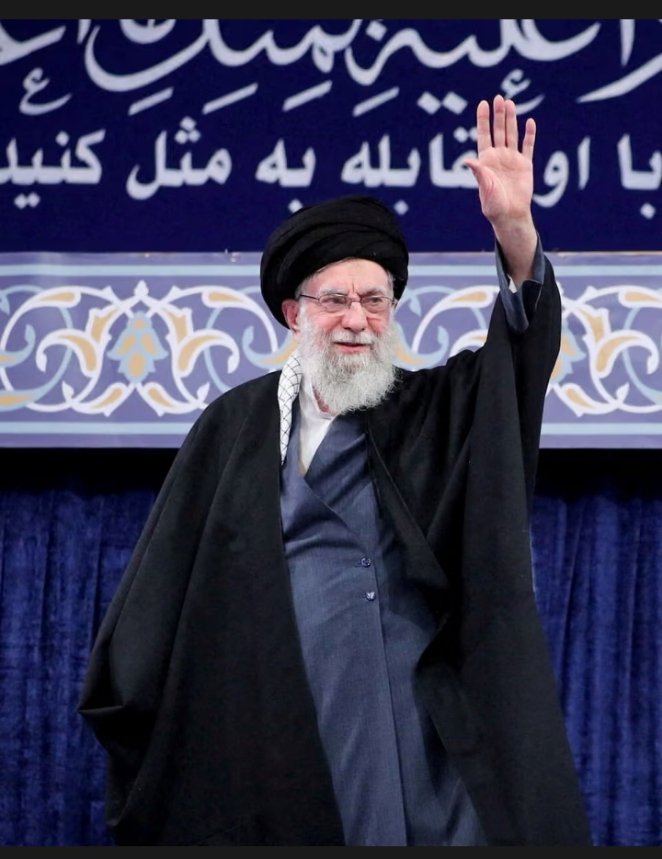
Citizens poured into Tehran’s streets following the announcement, with gatherings in major squares reflecting both public mourning and political tension. Al Jazeera’s Tohid Asadi noted, “There will be expected ceremonies,” pointing out the expected public displays of grief occurring even as bombardments continue in some regions.
Footage aired by state media shows mourners at the shrine of Imam Reza Shrine, with several collapsing in visible sorrow, illustrating the depth of national trauma.
Protests erupted beyond Iran’s borders, particularly in Iraq, where three days of public mourning were declared. Demonstrators in Baghdad’s fortified Green Zone clashed with security forces, attempting to mobilize toward the US Embassy.
Verified videos show protesters waving flags and chanting slogans, while some blocked traffic at key entrances, emphasizing the regional ramifications of Khamenei’s killing.
In Pakistan, a protest in Karachi escalated into violence, with demonstrators targeting the US consulate, setting fires, and smashing windows. Witnesses reported nine casualties, underscoring that the impact of the attacks on Iran extends far beyond its borders.
Meanwhile, Reuters reports celebrations in Tehran, Karaj, and Isfahan, highlighting divisions within Iranian society regarding the leadership and its policies.
Iran’s official IRNA news agency confirmed a temporary leadership council to manage state affairs. The three-person body includes the president, the chief of the judiciary, and a Guardian Council jurist, and will oversee the nation until a new supreme leader is elected. This transition underscores the fragility of Iran’s central power structure and raises questions about the continuity of command amid ongoing attacks.
Ayatollah Ali Khamenei assumed power in 1989 following the death of Ayatollah Ruhollah Khomeini, a decade after the Islamic Revolution.
While Khomeini was seen as the ideological driver of the revolution, Khamenei strengthened Iran’s military and paramilitary apparatus, consolidating both domestic control and regional influence, making his death a profound strategic loss.
In retaliation, the Islamic Revolutionary Guard Corps (IRGC) launched strikes against 27 bases hosting US forces across the region, including Israeli facilities in Tel Aviv.
Explosions were reported in Qatar and the UAE, while heightened security alerts were issued across multiple Gulf states. The IRGC vowed revenge, demonstrating Tehran’s determination to signal strength despite its leadership crisis.
US President Donald Trump warned on social media that Iran would face “a force that has never been seen before” if it retaliated further. The threats underline the escalating tensions in the region and the potential for further military escalation involving multiple Middle Eastern nations.
Analysts warn that these statements could fuel more retaliation rather than contain it.
Harlan Ullman, chairman of the strategic advisory firm Killowen Group, said the US may have miscalculated by targeting Khamenei.
He stated, “Decapitation only works when you get all the leaders, and I don’t think that we got all the leaders.” His assessment suggests that the strikes may provoke prolonged instability rather than immediate resolution, as Iran retains capable command structures.
Iranian media reported that at least 201 individuals were killed in the joint attacks across 24 provinces, with casualties including civilians. In southern Iran, 148 were killed and 95 wounded in a strike on an elementary girls’ school in Minab.
The toll continues to rise, reinforcing the humanitarian impact of the offensive alongside its strategic objectives.
The international reaction has been mixed, with protests in New York against US strikes on Iran and renewed debates over war powers legislation.
Analysts note that Trump’s operations largely benefit Israel strategically, even as US domestic political divisions remain evident. Republican support for the strikes contrasts with opposition from some Democrats and the antiwar MAGA wing, illustrating the polarizing nature of military intervention.
The 40-day mourning period in Iran follows longstanding Shi’ite traditions and reinforces the symbolic significance of Khamenei’s death.
Ceremonies at mosques, public squares, and shrines are expected to blend religious commemoration with political messaging, signaling unity and resistance amid ongoing conflict. Iran’s state media emphasizes national grief and calls for steadfastness in the face of foreign aggression.
Tensions also affect strategic transit routes, notably the Strait of Hormuz, a vital corridor for oil and gas exports. Analysts warn that ongoing hostilities could disrupt shipping and energy supplies, with global economic consequences. The combination of military, political, and economic pressures positions the region on a knife-edge of escalation.
The attacks have reverberated across Iranian society, prompting debates about succession, leadership legitimacy, and the resilience of political institutions. The temporary council faces the challenge of maintaining order while preparing the ground for a new supreme leader.
Observers note that how Iran navigates this transition will determine both domestic stability and its posture toward regional adversaries.
Regional powers are closely monitoring the situation, including Gulf states that host US assets, amid fears of cross-border attacks. Explosions in Doha, Dubai, and Manama reflect the expanding scope of retaliation and underline Iran’s capacity to project force beyond its immediate borders, demonstrating that the conflict is not confined to Tehran alone.
Protests, mourning, and celebrations have illustrated a deeply divided response among Iranian citizens. While some demonstrate anger and grief at the loss of leadership, others view the event as an opportunity for change.
These divergent reactions reveal underlying social and political tensions, which could influence Iran’s trajectory in the coming months.
The US-Israeli operation, the largest strike on Iran since 1979, highlights both the risks and limitations of targeted decapitation strategies.
Analysts caution that the removal of a single figure, even one as influential as Khamenei, does not eliminate Iran’s military or political capacities. Retaliatory capabilities remain robust, ensuring that escalation remains likely.
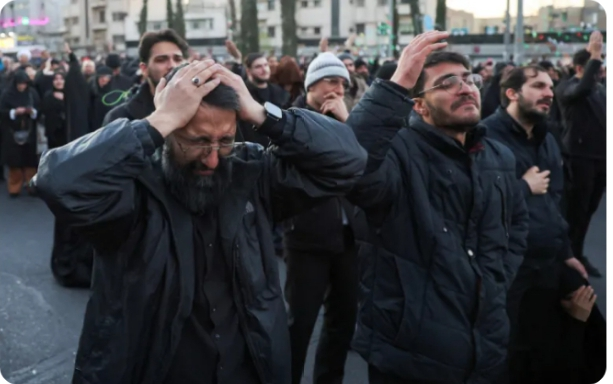
Iran’s military response, combined with civilian unrest and regional protests, suggests that the consequences of Khamenei’s death will extend far beyond a ceremonial mourning period.
Each day of retaliation, public grief, and geopolitical maneuvering increases the likelihood of further conflict, with global implications for security and energy markets.
As Iran observes the 40-day mourning period, the world watches closely. Political analysts warn that the interim council must navigate leadership succession, domestic protests, and regional hostilities, while maintaining strategic deterrence against US and Israeli pressure. How Tehran responds will shape the balance of power in the Middle East for years to come.
Read also: Iran retaliation strategy under US-Israel war leaves Tehran with few viable options as regime fights for survival
About The Author