

India’s call for stronger global adaptation efforts at COP30 contrasts sharply with the government’s decision to allocate zero rupees to its own climate adaptation fund for two consecutive years.
Shabir Ahmad, a resident of Indian-administered Kashmir, watched relentless rainfall erase his home, describing the experience as “a nightmare unfolding in real time,” highlighting the urgent need for support as disasters intensify across India.
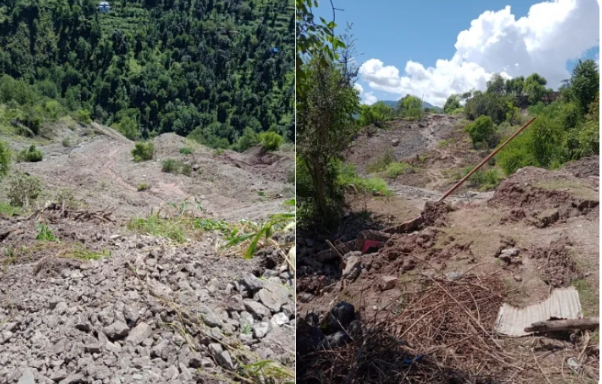
In Kashmir’s Reasi district, families devastated by a powerful landslide say the state’s retreating financial commitment to climate security has left them dangerously exposed to increasing monsoon damage.
India’s delegation at COP30 urged world leaders to treat Brazil’s summit as the “COP of adaptation,” but millions displaced by climate disasters question the sincerity of that diplomatic messaging.
More than 32 million Indians were displaced by climate-related events between 2015 and 2024, yet domestic funding streams crucial for building resilience remain either frozen, reassigned, or completely defunded.
Government records show that India’s climate adaptation fund steadily declined before dropping to zero, even as extreme rainfall, landslides, and floods continue destroying homes in vulnerable rural and coastal communities.
During COP30 discussions, Environment Minister Bhupender Yadav called for dramatically increasing adaptation finance, insisting “commitments must translate into real actions,” a message critics say rings hollow given the government’s choices.

The stalled funding has paused dozens of approved resilience projects, leaving states unable to implement climate-proofing measures originally designed to reduce displacement and protect vulnerable families.
Activist Raja Muzaffar Bhat called the government’s stance “a moral failure,” accusing officials of “announcing lofty pledges abroad while abandoning people who face recurring disasters.”
In Bihar’s Darbhanga district, constant flooding has displaced residents repeatedly, forcing families like Sunita Devi’s to migrate from temporary camp to temporary camp, carrying only basic documents for survival.
Floods in Bihar affected more than 1.7 million people this year alone, submerging hundreds of villages and amplifying desperation among families unable to access resilience schemes once meant to stabilize lives.
Cyclone-exposed communities in Odisha, where rising seas swallow coastal villages, say the disappearance of dedicated adaptation funds has erased their final source of government-backed environmental security.
Fisherman Ramesh Behera said, “The sea swallowed my home and fields,” describing how erosion forced him into distress migration and how a missing safety net worsened hardships for coastal families.
In Tamil Nadu’s Nagapattinam district, saltwater intrusion has destroyed paddy fields, prompting young farmers like Revathi Selvam to abandon agriculture and consider migrating to urban centres for survival.
Residents of the Sundarbans Islands in West Bengal have seen homes and farms consumed by rising seas, with communities saying they feel “invisible” within national climate planning and budgeting priorities.
A former NAFCC official said many approved projects were never implemented due to dwindling allocations, leaving regions unprepared despite clear scientific warnings and mounting human displacement.
The absence of a climate adaptation fund has stripped state governments of essential tools to shield families living on the front lines of climate-induced emergencies, worsening long-term vulnerabilities.
In Himachal Pradesh, cloudbursts and landslides have left young workers like Arjun Thakur jobless, homeless, and unsure whether devastated mountain towns will ever rebuild or regain their tourism-driven economies.
Experts warn that domestic underfunding undermines India’s credibility at COP30, weakening its argument that wealthy nations must mobilize billions in adaptation finance for vulnerable developing countries.
Civil society groups emphasise that adaptation requires robust local investment, arguing that communities burdened by extreme climate shocks should not depend solely on unpredictable foreign funding pledges.
Bhat described India’s climate displacement as “the world’s next major humanitarian crisis,” accusing authorities of “abandoning their duty to those suffering the heaviest consequences of climate extremes.”
Climate Action Network South Asia warns that up to 45 million people in India could be forced to migrate by 2050, a threefold increase that signals unpreparedness across multiple regions.
Environmental experts say internal migration hotspots will expand without sustained investment in resilience, adding that disappearing funds expose citizens to continuous cycles of destruction and rebuilding.
Activists argue that India’s claim of championing adaptation globally is incompatible with defunding a domestic mechanism explicitly created to reduce future vulnerability in climate-stressed communities.
Former project officials say the climate adaptation fund was crucial because it responded quickly, supported varied sectors, and funded community-level resilience initiatives before larger crises unfolded.
In Kashmir’s Sarh village, families still sheltering in damaged government buildings say they feel abandoned, insisting the state must prioritise both rebuilding and long-term protection.
Ahmad said, “If we don’t get land and shelter soon, we will become refugees within our own land,” summarising widespread fear spreading through disaster-affected communities.
He described the government’s handling of climate-related devastation as “a declaration that we may drown but cannot rebuild,” reflecting frustration among displaced households.
Experts warn that weakened adaptation capacity may intensify existing social inequalities, disproportionately harming poor families and deepening economic strain across India’s diverse climate-vulnerable regions.
In hilly regions, deforestation, unplanned construction, and increased rainfall combine dangerously, causing recurring disasters that local officials say could have been mitigated through sustained adaptation programmes.
Environmental analysts point out that a functioning climate adaptation fund could have reduced infrastructure losses by supporting early-warning systems, improved drainage, and community-level adaptation plans.
Disaster-affected communities across India say that while international advocacy is important, it cannot replace the urgent domestic responsibility to rebuild lives already shattered by climate shocks.
Despite repeated invitations, government ministries did not respond to questions regarding the budget cuts, leaving experts concerned about a widening gap between rhetoric and reality.
Critics argue that India risks long-term socio-economic instability if climate resilience remains underfunded, warning that mass displacement will strain cities already grappling with housing and infrastructure deficits.
Humanitarian groups insist that adaptation must become a core component of national planning, not a sidelined issue, especially as extreme weather patterns intensify across the country.
As families continue enduring devastating losses, the gap between India’s international climate narrative and its domestic funding choices becomes a central point of scrutiny among researchers and activists.
Residents across disaster-hit regions fear that delayed action will only magnify future destruction, with communities forced to rebuild repeatedly without meaningful institutional support.

India’s political leadership now faces mounting pressure to revive the climate adaptation fund, restore climate resilience programmes, and align its COP30 messaging with tangible domestic action.
While COP30 debates continue, millions displaced by floods, landslides, and rising seas hope leaders will match their words with commitments that protect them from worsening climate threats.

