Ilhan Omar denounces Donald Trump as tensions flare after the president labels Somali immigrants “garbage,” igniting intense backlash across the Minnesota Somali community and prompting widespread condemnation of his racially charged remarks.
The confrontation erupted after Trump delivered extended anti-Somali rhetoric during a televised cabinet meeting, where he repeatedly disparaged Somali immigrants and specifically singled out Omar with unusually personal criticisms.
Omar responded swiftly on social media, calling Trump’s fixation “creepy” and saying his behavior reflected desperation, warning that dangerous rhetoric can inflame hostility against vulnerable immigrant communities.
Trump escalated the conflict further by insisting Somali immigrants contribute nothing, portraying them as burdens despite extensive evidence documenting their economic contributions and community involvement across Minnesota.
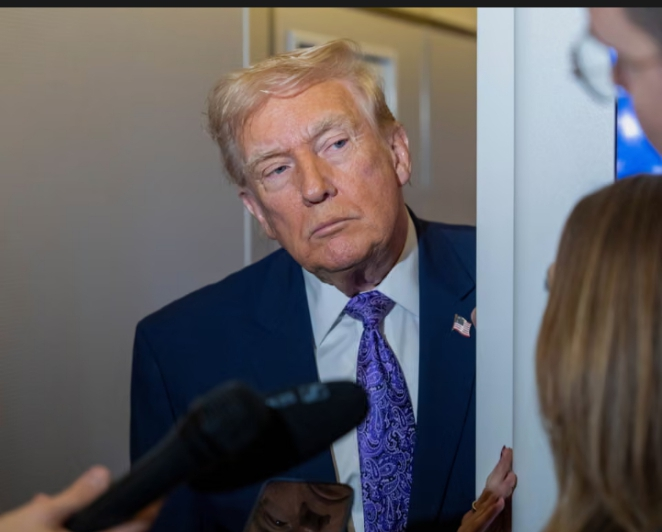
The Minnesota Somali community expressed alarm at Trump’s latest comments, saying the president’s language fuels discrimination, fear and misperceptions already faced by Somali refugees integrating into American society.
Advocates accused Trump of deploying racially charged remarks to distract from mounting political challenges, noting his pattern of using divisive messaging whenever policy failures attract public scrutiny.
Omar, a former child refugee from Somalia’s civil war, emphasized her community’s resilience while denouncing Trump’s divisive posture as harmful, irresponsible and deeply out of step with American democratic values.
Researchers and community leaders highlighted that Somali Americans display increasing economic mobility, contradicting the negative stereotypes reinforced through Trump’s harsh claims during his immigration crackdown announcements.
Minnesota business groups reiterated Somali entrepreneurship’s importance, citing expanding small businesses that contribute significantly to local employment and broader regional economic stability.
Trump, however, continued linking the recent National Guard shooting in Washington, DC, to immigration policy failings, despite no evidence connecting Somali refugees to the high-profile crime.
The president insisted the fatal shooting validated his calls for tougher measures, using the incident as justification to intensify anti-Somali rhetoric while advancing broader immigration crackdown plans.
Omar countered that exploiting tragedies to demonize immigrants is morally unacceptable, accusing Trump of manipulating fear to justify policies that punish innocent families seeking stability.
Observers noted Trump’s messaging has grown increasingly aggressive, with advisers reportedly encouraging him to double down on immigration hardline themes resonating with segments of his political base.
Civil rights organizations warned that Trump’s inflammatory language could encourage harassment or violence, urging political leaders to reaffirm their commitment to dignity, inclusion and measured public discourse.
Local Minnesota officials condemned Trump’s comments, defending the Minnesota Somali community as a vital part of the state’s cultural fabric and criticizing federal rhetoric that places vulnerable residents at risk.
Omar reminded the public that Somali refugees often arrived with trauma, rebuilding lives through perseverance, demonstrating the potential of supportive community networks and opportunity-driven policies.
Many immigration analysts believe Trump’s language reflects a strategic choice to reassert control over national conversations, pushing attention away from ongoing policy setbacks.
Trump insisted he does not personally know Omar, yet his repeated mentions suggested fixation, prompting commentators to argue his remarks appear intentionally provocative rather than policy-focused.
Political observers emphasized that criticizing elected officials is part of democratic debate, but reducing entire communities to insults undermines credibility and erodes essential civic norms.
Omar’s supporters say her background symbolizes American possibility, highlighting how refugees can rise to prominent leadership roles through determination, civic engagement and dedication.
The dispute intensified when Trump mocked Omar’s religious attire, comments widely condemned as bigoted and unnecessary escalations beyond legitimate political disagreement.
Omar described these personal attacks as calculated attempts to otherize Muslim Americans, arguing they reflect a broader pattern of discriminatory messaging from Trump’s administration.
Muslim advocacy groups denounced Trump’s language, emphasizing that faith-based targeting contradicts long-standing American principles protecting religious liberty and pluralistic expression.
Trump faced criticism after calling Minnesota’s governor “seriously retarded,” a remark quickly condemned as disrespectful and emblematic of increasingly inflammatory White House communication.
The White House defended Trump’s phrasing as unscripted frustration, though critics argued such explanations normalize disrespect and degrade public discourse.
Immigration experts said Trump’s new executive actions, including suspending migration from “third-world” countries, disproportionately affect families from nations with longstanding U.S. partnerships.
These sweeping immigration crackdown measures triggered legal challenges, with civil liberties groups arguing they violate constitutional protections and exceed presidential authority.
Somali American families reported rising anxiety amid uncertainty surrounding their residency status, fearing targeted enforcement linked to Trump’s anti-Somali rhetoric.
Local community centers in Minneapolis said they have expanded outreach, offering legal resources and mental health support to Somali residents rattled by Trump’s comments.
Omar urged her constituents not to succumb to fear, emphasizing collective strength and the importance of civic participation despite escalating political hostility.
She argued that condemning injustice remains essential, stating that dissenting voices must remain loud when leaders weaponize prejudice for political advantage.
Trump’s long-standing antagonism toward Omar traces back to early criticisms she leveled against his policies, with both figures representing opposite poles of the national political landscape.
During his first term, Trump implemented the widely contested travel ban affecting several Muslim-majority countries, including Somalia, fueling tensions with immigrant communities nationwide.
Omar frequently challenged the ban, calling it discriminatory and counterproductive, arguing it isolated communities whose cooperation is essential to national unity and security.
The administration’s more recent enforcement surges in Minnesota raised concerns that Somali residents were being disproportionately targeted for immigration checks.
Federal agencies denied profiling charges, but affected families claimed they experienced unusual levels of surveillance coinciding with Trump’s hostile national messaging.
Minnesota lawmakers demanded transparency regarding enforcement criteria, expressing concern that political directives may influence operational decisions within immigration agencies.
Trump maintained that strict enforcement protects Americans, despite studies showing immigrants commit crimes at lower rates than native-born citizens across multiple demographics.
Omar emphasized that policy solutions should rely on facts, not fear, and warned that demonizing entire communities only weakens public trust and cooperation.
Advocates encouraged lawmakers to focus on improving integration support, workforce training and educational access for Somali immigrants rather than amplifying stereotypes.
Community organizations highlighted Somali American success stories, including entrepreneurs, students, healthcare workers and civic leaders driving Minnesota’s progress.
Omar said these contributions contradict Trump’s depiction of Somali immigrants as burdens, urging the public to evaluate facts rather than absorb inflammatory political narratives.
Political scientists noted Trump’s communication style often revolves around conflict creation, using public controversy to energize supporters while pressuring opponents.
Some strategists believe targeting Omar allows Trump to rally specific audiences, though such tactics risk alienating moderate voters seeking stability and decency.
The broader debate underscores enduring tensions over immigration, identity and politics, issues repeatedly weaponized during contentious election cycles.
Omar concluded that leaders must elevate unity over division, arguing that America’s strength lies in diversity, compassion and unwavering commitment to equality.
She reaffirmed her duty to defend marginalized communities, vowing to confront misinformation and resist policies that threaten immigrant families.
Political analysts expect the confrontation between Omar and Trump to shape national discussions as elections approach, influencing debates over leadership qualities and national values.
Omar’s allies believe public backlash against Trump’s comments reveals widespread fatigue with his aggressive tone and willingness to demean entire communities.
The Minnesota Somali community remains resolute, emphasizing resilience despite political headwinds, committed to contributing positively while advocating for fair treatment and respect.
Observers say Trump’s remarks mark another escalation in a years-long feud likely to remain central to national political discourse.
Federal lawmakers continue urging the administration to tone down divisive rhetoric and prioritize constructive solutions addressing underlying economic and security concerns.
Community members emphasize they seek peaceful lives, economic opportunity and belonging, aspirations undermined when leaders portray them as threats.
Trump appeared unconcerned by the backlash, doubling down on his messaging during subsequent speeches, insisting he merely speaks “hard truths.”
Omar countered that truth requires accuracy and dignity, rejecting narratives rooted in prejudice rather than evidence or constructive policy reasoning.
Public reaction remains sharply divided, reflecting deep political polarization shaping national discourse around immigration and belonging in modern America.

As tensions persist, advocates continue pushing for de-escalation, urging leaders to engage responsibly and avoid rhetoric that dehumanizes groups seeking refuge and opportunity.
Omar insisted she will not back down, framing this moment as a test of national conscience, demanding Americans reject hatred and embrace shared humanity.
About The Author