Yoruba Nation activist Igboho visits the Olubadan in Ibadan as part of reconciliation efforts and peaceful reintegration, advancing regional stability through dialogue.
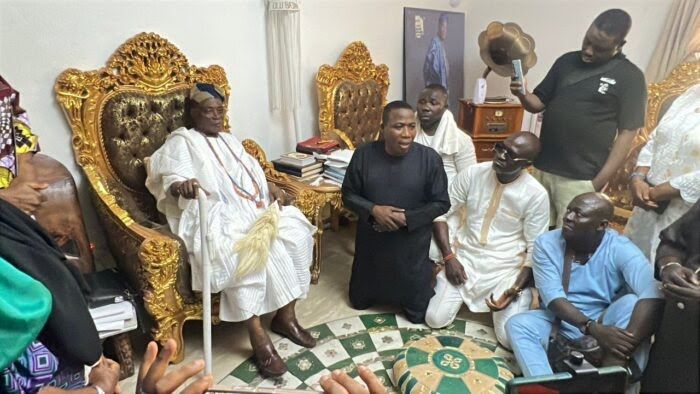
Yoruba Nation activist Chief Sunday Adeyemo, widely known as Sunday Igboho, made a high‑profile visit on Monday to the Olubadan of Ibadanland, Oba Rashidi Adewolu Ladoja.
The meeting came shortly after the Federal Government removed Igboho’s name from its list of wanted individuals, marking a hopeful step forward for both the agitator and the wider South‑West region.
The gesture, carried out at the Olubadan’s Bodija residence, was not merely ceremonial but deeply symbolic. For many observers, it represents the potential for lasting dialogue between citizens and authorities following years of tension.
At the heart of this development are traditional leaders whose quiet diplomacy helped pave the way for a resolution that prioritises regional stability over confrontation.
Igboho’s return to Nigeria had been clouded in uncertainty since 2021, when his relationship with the federal government deteriorated sharply.
That year, under the administration of the late President Muhammadu Buhari, he was declared wanted and had his bank accounts frozen amid allegations involving the stockpiling of arms and ammunition.
This move ignited national debate and propelled Igboho into international headlines.
On July 1, 2021, security operatives from the Department of State Services (DSS), backed by military personnel, launched an operation on his residence in the Soka area of Ibadan.
The aftermath saw several of his aides arrested, two killed, and Igboho himself forced into exile — a rupture that stirred unrest across several states of the South‑West.
For many supporters of the Yoruba Nation, the raid and its consequences have remained a focal point of grievance and political discourse.
However, in recent months, there has been a noticeable shift. President Bola Tinubu’s government took the decisive step of lifting the sanctions against Igboho after extensive advocacy by influential traditional rulers.
At the forefront of these reconciliation efforts was the Olubadan, whose reputation as a revered elder statesman allowed him to engage parties at all levels with credibility and respect.
A source close to the reconciliation process explained that Oba Ladoja played a central role in bridging communication gaps between Igboho’s camp and federal authorities.
His strategy was rooted in patience and perseverance, focusing on mutual respect and the avoidance of public dispute.
This approach, officials say, was motivated by a shared desire for peaceful reintegration and prosperity for the Yoruba region.
During the visit, the monarch greeted Igboho and members of his entourage with warm words and solemn advice.
The Olubadan underscored that traditional leaders serve as custodians of communal peace, tasked with defusing tensions before they escalate into open conflict.
He articulated a message of unity and reiterated the importance of dialogue in navigating complex political issues.
“Conflict yields only regret, but understanding fuels progress,” Oba Ladoja remarked.
“Our people deserve leaders who listen and speak in harmony. Let this meeting be a milestone for genuine reconciliation and lasting regional stability.”
This counsel was echoed in his appeal to Igboho to embrace the opportunity for a fresh chapter in his public life.
The monarch advised him to act with restraint and responsibility, reminding him that leadership often requires patience and strategic engagement rather than confrontation.
“You have been given another chance,” he added.
“Use this occasion wisely. Let the spirit of dialogue guide your next steps — not just for yourself, but for the unity and development of the entire South‑West.”
In his response, Igboho reflected on the toll of his years in exile and expressed heartfelt gratitude to the Olubadan for his unwavering support.
He described the traditional ruler’s intervention as not only timely but deeply personal — a gesture that strengthened his resolve to return home with dignity.
“I never anticipated that Kabiyesi would stand so firmly with me,” Igboho said.
“At times of despair, his guidance was a reminder that peace with honour is better than conflict without end.”
He also acknowledged the outpouring of support from Yoruba communities both within Nigeria and across the diaspora.
According to Igboho, his return has been met with joy and optimism, as many view it as a reaffirmation of identity and collective dignity.
Political analysts have noted that this development holds broader implications for national cohesion.
The involvement of traditional institutions like the Olubadan underscores their relevance in modern governance, particularly in mediating disputes that formal political channels may struggle to resolve.
The Yoruba Nation movement itself — with its complex mix of cultural assertion and political ambition — continues to stimulate conversations about decentralisation, resource control, and cultural rights.
Yet, for now, the focus remains on consolidation rather than confrontation.
Elders, civil society figures, and regional leaders have all welcomed the effort toward peaceful reintegration, emphasising the need to prioritise constructive engagement over divisive rhetoric.
As the meeting concluded, the Olubadan offered prayers for Igboho and his family, wishing them health, wisdom, and peace of mind.
He urged that the chapter close with harmony and forgiveness, sending a message that healing — both personal and political — is possible when guided by empathy and mutual respect.
“Nigeria’s strength lies in its diversity,” Oba Ladoja noted.
“True leadership recognises this truth and seeks unity through conversation, not conflict.”
The encounter between Igboho and the Olubadan, while rooted in centuries‑old traditions, may yet chart a new path for how civic disputes are addressed in contemporary Nigeria — one where dialogue, cultural leadership, and peaceful reintegration become central pillars of progress.
About The Author