ICE protest arrests in Minnesota returned to the national spotlight after a US appeals court allowed immigration agents to arrest and pepper-spray peaceful demonstrators during ongoing protests statewide.
The ruling marks a significant legal shift, temporarily overturning restrictions imposed by a federal judge who sought to limit aggressive enforcement tactics against protesters.
In a decision welcomed by the Trump administration, the eighth US circuit court granted an emergency request from the justice department late Wednesday.
The court’s administrative stay pauses a preliminary injunction that had constrained Immigration and Customs Enforcement operations during public demonstrations across Minnesota.
Those restrictions were imposed last week by US district judge Katherine Menendez, who raised constitutional concerns over ICE conduct toward protesters.
Menendez ruled federal agents were unlawfully retaliating against individuals exercising their first amendment rights through peaceful assembly and public dissent.
Her injunction barred ICE from pepper-spraying protesters, arresting participants without cause, and stopping vehicles absent reasonable suspicion.
The judge warned that unchecked enforcement tactics created what she described as a “chilling effect” on constitutionally protected protest activity.
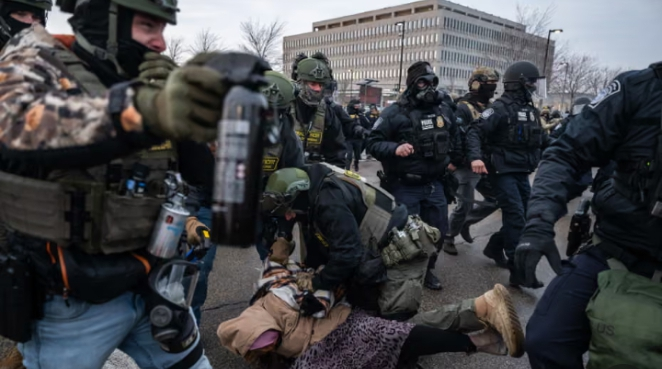
However, the appeals court’s intervention now permits ICE agents to resume contested crowd-control measures pending further legal review.
Justice department lawyers argued the injunction undermined federal authority and exposed officers to potential harm during volatile protest situations.
In court filings, the government maintained agents acted lawfully and responded only to perceived threats during rapidly evolving confrontations.
A homeland security spokesperson insisted federal officers “used force solely in self-defense while enforcing immigration law responsibilities.”
Critics dispute that characterization, pointing to videos showing masked agents detaining unarmed protesters using pepper spray and tactical restraints.
Civil liberties advocates argue the ruling sets a troubling precedent for protest policing under expansive federal enforcement powers.
The legal battle unfolds amid heightened political attention, as Vice-President JD Vance prepares for a high-profile visit to Minneapolis.
According to the White House, Vance plans meetings with community leaders and remarks focused on “restoring law and order” in the city.
Minnesota has become a flashpoint following weeks of demonstrations against intensified ICE operations across urban and suburban neighborhoods.
Public anger escalated after the fatal shooting of Renee Good, a 37-year-old mother of three, by a federal immigration agent.
Her death triggered protests statewide, with demonstrators demanding accountability, transparency, and an immediate review of ICE deployment strategies.
Federal officials say the agent involved acted in self-defense, though investigations remain ongoing and contested by local authorities.
Governor Tim Walz condemned the federal response, calling the deployment of thousands of agents an unconstitutional overreach into state affairs.
Walz described the operation as a “federal invasion” that undermined trust, escalated tensions, and violated residents’ civil liberties.
Minneapolis mayor Jacob Frey echoed those concerns, warning federal actions risked destabilizing already strained community-police relations.
Despite criticism, the Trump administration has doubled down, framing enforcement actions as necessary to combat disorder and protect officers.
Supporters argue the appeals court ruling restores balance by allowing federal agents to respond decisively during unpredictable protest environments.
Legal experts note administrative stays are temporary, meaning the underlying constitutional questions remain unresolved.
The case is expected to return quickly to appellate review, where judges will assess whether Menendez’s injunction was legally justified.
If reinstated, the injunction could again restrict ICE protest policing tactics across Minnesota and potentially influence other jurisdictions.
Meanwhile, protests continue, with organizers pledging to demonstrate peacefully despite fears of arrest or chemical crowd-control measures.
Several advocacy groups say the ruling discourages civic participation by raising personal risks for demonstrators exercising lawful dissent.
“The message is clear,” one protest organizer said. “Speak out, and you may face force from the federal government.”
Law enforcement unions, however, welcomed the ruling, arguing officers require flexibility when protests escalate unexpectedly.
They contend that limiting tools such as pepper spray puts agents at unnecessary risk during tense confrontations.
The justice department has also subpoenaed prominent Minnesota Democrats, accusing them of obstructing federal immigration operations.
Those subpoenas have intensified political fallout, framing the dispute as a broader struggle between federal authority and state resistance.
Civil rights attorneys warn such actions blur the line between lawful enforcement and political retaliation.
As legal proceedings continue, Minnesota remains at the center of a national debate over protest rights and immigration enforcement.
Read also: Tearful testimony deepens Prince Harry Daily Mail trial
Observers say the outcome could reshape how federal agencies engage demonstrators nationwide under future administrations.
For now, ICE protest arrests Minnesota stand as a defining test of constitutional protections during politically charged enforcement campaigns.
About The Author