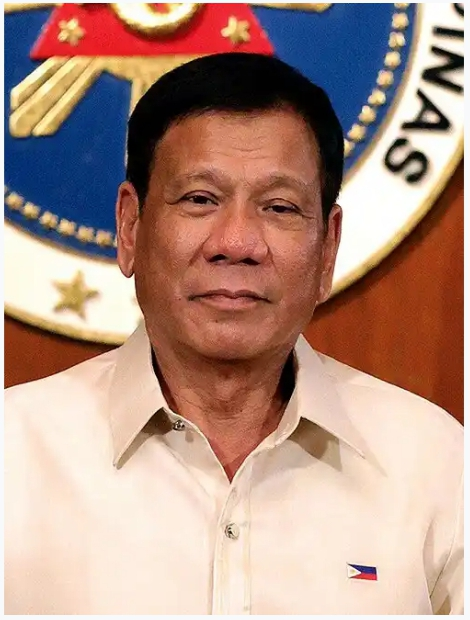
The International Criminal Court (ICC) is set to hold a landmark hearing to determine whether former Philippine President Rodrigo Duterte should face trial for alleged crimes against humanity committed during his violent antidrug crackdown. The four-day “confirmation of charges” hearing starts Monday at 09:00 GMT in The Hague.
Judges will assess whether the evidence against Duterte is strong enough to proceed to a full trial. Human rights groups say this hearing is a critical milestone for justice, offering hope to survivors of the Philippines’ brutal drug campaign.
The 80-year-old former president will not be physically present in the courtroom after the ICC granted a defense request to waive his right to appear. Judges had earlier ruled Duterte fit to participate, citing medical evaluations confirming he could effectively exercise his procedural rights.
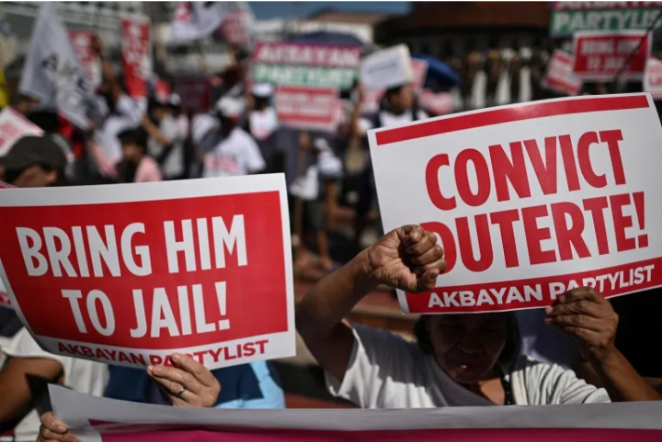
Families of victims have described the hearings as a “moment of truth.” Llore Pasco, mother of two men killed in 2017, told newsmen that the world must witness accountability for Duterte and others involved in the Philippines’ extrajudicial killings.
“I feel nervous but hopeful,” Pasco said. “This is the time for justice. We are praying the ICC will hear the cry of the victims and hold perpetrators accountable.”
Luzviminda Siapo, who lost her 19-year-old son in 2017, described Duterte as the “brains” behind the killings. She expressed cautious optimism that the hearing could pave the way for justice for victims of the country’s six-year Philippine drug war.
The ICC’s charges allege that Duterte participated in at least 76 murders between 2013 and 2018. Legal experts note that the actual death toll could be far higher, with estimates reaching as many as 30,000 during nationwide antidrug operations under his administration.
The three counts of crimes against humanity against Duterte are carefully detailed. The first count involves 19 killings between 2013 and 2016 during his time as mayor of Davao City. The second relates to 14 murders of so-called “high value targets” after Duterte became president in 2016.
Read also: Trump tariff deals: US vows to honour UK trade agreement despite new 15% global levy
The third charge covers 43 killings during nationwide operations targeting lower-level alleged drug users or pushers. Lawyers representing victims argue that a full trial could encourage other families to come forward, further exposing the scale of alleged abuses under Duterte’s leadership.
Duterte denies all charges. His lawyer, Nicholas Kaufman, emphasized that the former president does not recognize the ICC’s authority. In letters to the court, Duterte has consistently maintained his innocence and expressed pride in his controversial legacy.
Duterte was president of the Philippines from 2016 to 2022, a period marked by an aggressive antidrug campaign that drew international condemnation. In March of last year, he was arrested in Manila on an ICC warrant, then flown to the Netherlands and placed in the court’s detention facility at Scheveningen Prison.
During his initial hearing, Duterte appeared frail and disoriented, participating via videolink. Despite his absence from the current hearing, the proceedings continue under the ICC’s jurisdiction, which applies to crimes allegedly committed in the Philippines between 2011 and 2019, even though the country formally withdrew from the court in 2019.
The ICC case marks a reversal of fortune for Duterte, who has repeatedly denounced the court and dismissed its authority. Supporters remain fiercely loyal, arguing his tough approach to crime made the Philippines safer, while critics emphasize the extrajudicial killings and human rights abuses linked to his administration.
Two demonstrations are registered in The Hague on Monday. One group of activists advocates for victims, demanding justice for alleged extrajudicial killings, while another shows support for Duterte, emphasizing his enduring popularity at home.
Human Rights Watch called the hearing “a critical step in ensuring justice for victims of the Philippines’ war on drugs,” highlighting the international significance of holding a former head of state accountable for crimes against humanity.
The first count of killings, involving 19 victims in Davao City, allegedly saw Duterte act as a co-perpetrator while still mayor. Prosecutors argue that these murders demonstrate a pattern of sanctioned violence predating his presidency, setting the stage for further nationwide abuses.
The second count, concerning 14 high-profile killings during Duterte’s presidency, targets so-called “high value targets” accused of involvement in drug trafficking. Lawyers emphasize that even targeting criminals does not excuse violations of international law.
The third count spans 43 killings during “clearance” operations across the Philippines. Victims’ families describe these operations as indiscriminate and brutal, claiming that many victims were ordinary citizens or low-level drug offenders, highlighting systemic abuse under Duterte’s Philippine drug war.
Duterte’s defiance remains steadfast. In letters to the court, he accused the ICC of “kidnapping” him in collaboration with current President Ferdinand Marcos Jr., a former political ally, and Vice President Sara Duterte. He has repeatedly rejected the court’s jurisdiction while claiming pride in his national security achievements.
Observers note that Duterte is the first Asian former head of state to face ICC proceedings, raising the stakes for international law and accountability. Many experts believe the outcome could set a precedent for holding leaders accountable for extrajudicial killings globally.
The ICC hearing also allows victims to tell their stories. Catholic priest Father Flavie Villanueva joined relatives in memorializing those killed in the drug war, emphasizing the need for reconciliation and justice in the Philippines.
While Duterte retains domestic popularity, public opinion is sharply divided. Supporters laud his anti-crime policies, while critics, including families of victims, highlight widespread abuse, alleging that the Philippine drug war caused unnecessary deaths and violated human rights.
Legal analysts expect the ICC to issue a written decision within 60 days after the hearing, determining whether there is sufficient evidence for Duterte to face trial. The court’s decision will be closely watched by international human rights groups and governments worldwide.
For families like Pasco and Siapo, the hearing represents hope that justice may finally be served. “We have waited for years,” Siapo said. “This is our chance to see that those responsible for our loved ones’ deaths are held accountable.”
The ICC case against Duterte underscores the tension between domestic political support and international legal norms. It demonstrates the global reach of human rights law and the challenges of balancing national sovereignty with accountability for crimes against humanity.
Duterte’s trial, if confirmed, could also encourage victims and families in other countries to seek justice for similar state-sanctioned violence. Experts warn that the outcome may influence international standards on prosecuting former leaders for serious human rights abuses.
With hearings underway, the world watches as the ICC evaluates the evidence and hears testimonies that could reshape accountability for political leaders. Duterte’s actions, legacy, and alleged extrajudicial killings are now under global scrutiny.
As the Philippines reflects on its controversial past, the ICC hearing is widely regarded as a historic moment for justice, potentially providing closure for families and signaling that even powerful leaders may face consequences for alleged crimes against humanity.
About The Author