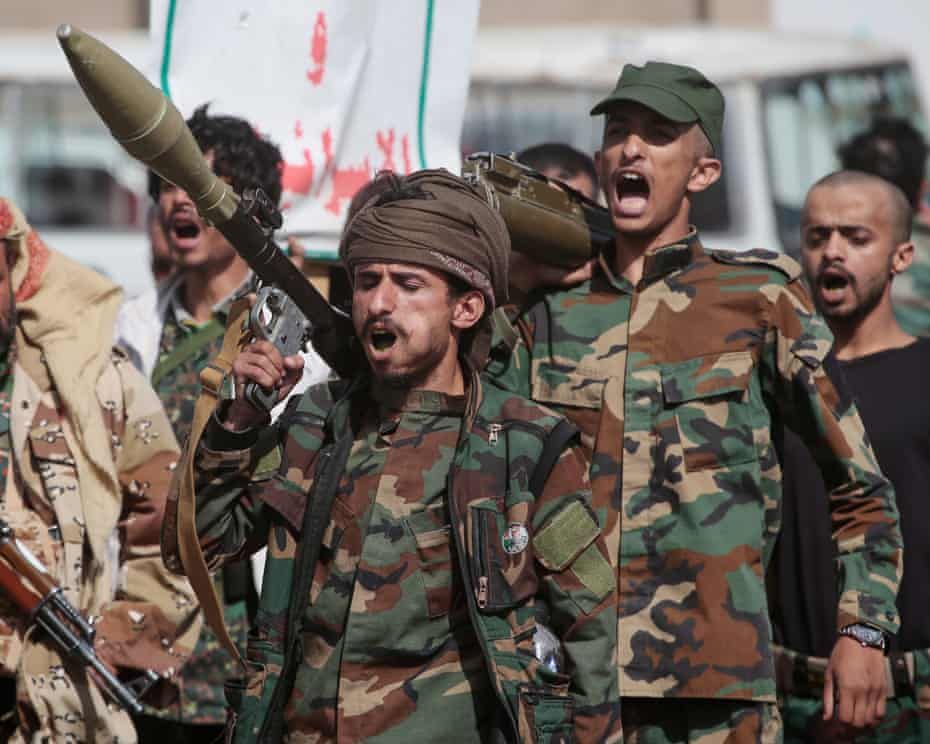
The Houthi advance in Yemen has forced nearly 50,000 civilians from their homes as the Iran-backed group seizes territory along the Red Sea coast, raising fears of a return to full-scale civil war.
Aid workers say entire villages have been emptied, while families trapped close to frontline fighting face dwindling food supplies, disrupted roads and limited access to humanitarian assistance.
Nearly 50,000 Yemenis Displaced
The United Nations International Organization for Migration said 46,000 people had been displaced across the Taiz and Hodeidah governorates following the latest escalation.
For many families, the displacement is not new. Some have now been forced to abandon their homes for a second or even third time after years of conflict and instability.
Joe Lowry, the IOM’s Middle East and north Africa spokesperson, said the scale of the humanitarian crisis was increasing rapidly.
“The scale of displacement is increasing rapidly,” Lowry said.
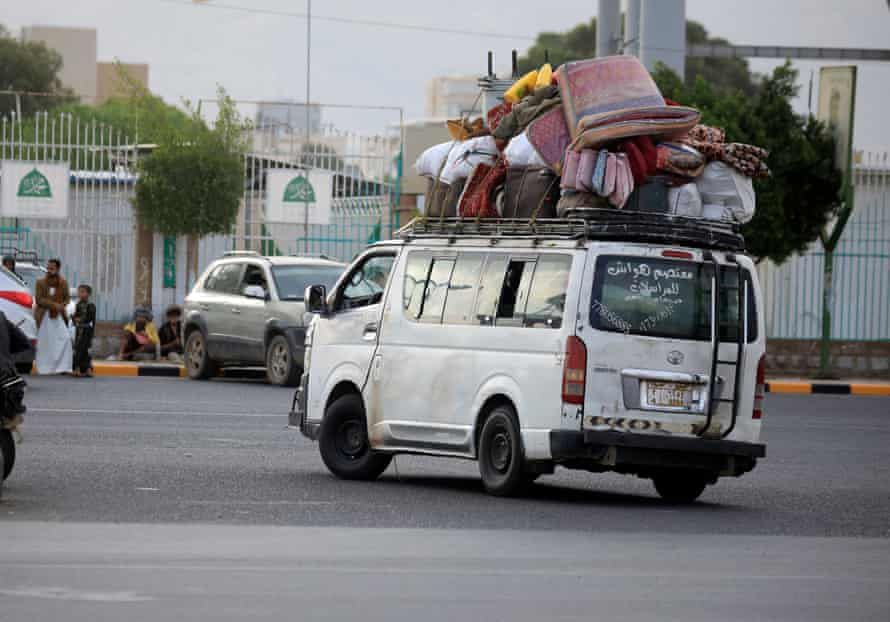
Large numbers of people have been seen leaving affected areas carrying whatever belongings they could save. Fighting has cut important roads, while telephone communications have been disrupted in some locations.
“Civilians are bearing the brunt of renewed frontline warfare, airstrikes, shelling, and large-scale displacement,” Lowry said.
He said many people had been forced to leave suddenly because of shelling and advancing frontlines.
“Many of those fleeing have arrived with very few belongings after leaving suddenly, due to shelling and frontline advances,” Lowry said.
The immediate humanitarian needs include emergency shelter, cash assistance, food, drinking water, household supplies, healthcare and protection services.
Families Trapped as Fighting Spreads
The situation remains highly unpredictable, with territorial control changing rapidly and aid organisations struggling to maintain access to affected communities.
Lowry said humanitarian workers were constantly having to reassess their movements as the conflict developed.
“It’s a highly fluid and uncertain situation marked by rapid territorial changes, population movements and growing concern among communities about further escalation,” he said.
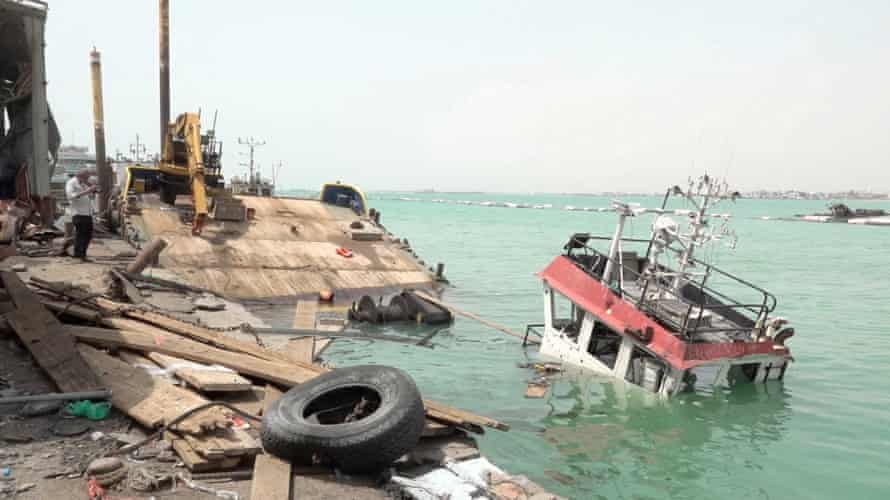
The crisis became particularly severe after Houthi forces captured the strategic port city of Mocha on the Red Sea coast.
Residents fled the city after attacks damaged civilian infrastructure, with some leaving in the middle of the night.
Mohamed, 46, who escaped Mocha, described the atmosphere as “apocalyptic”.
Another resident, Mujahid Tahami, said some families were victims of “looting by gangs as they tried to flee” towards the southern government-held city of Aden.
Some residents managed to escape on motorbikes, while others were left behind because they could not get out in time.
Why the Houthi Advance Matters Beyond Yemen
The Houthi advance in Yemen is not simply another episode in the country’s long-running civil war. The latest fighting is unfolding around one of the world’s most important maritime chokepoints.
The Houthis have seized key areas and islands along the western coast in what appears to be an effort to establish a direct presence near the Bab al-Mandab strait.
The narrow waterway, roughly 20 miles wide, connects the Red Sea with the Gulf of Aden and provides a crucial shipping route between Asia and Europe.
The strategic importance of Bab al-Mandab means that developments in Yemen can have consequences far beyond the country itself.
Bab al-Mandab and Global Trade
A prolonged conflict around the strait could threaten international shipping and energy supplies.
If the Houthis were able to close the chokepoint, ships could be forced to take much longer routes around the southern tip of Africa, adding thousands of nautical miles to journeys between Asia and Europe.
The fighting has already contributed to rising oil prices, with crude moving above $100 a barrel after trading closer to $80 for weeks.
That makes the latest escalation a concern not only for Yemen but also for global markets and countries dependent on stable international trade routes.
Yemen Risks Returning to Full-Scale War
The latest fighting represents the most significant violence in Yemen since the UN-brokered peace process produced relative calm in 2022.
The country has endured years of devastating conflict between the Houthis and forces aligned with the internationally recognised Yemeni government, which has received backing from Saudi Arabia and the United States.
Hundreds of people have reportedly been killed in the latest fighting, increasing fears that the conflict could again develop into a full-scale civil war.
The earlier war killed about 150,000 people and pushed millions towards famine and humanitarian catastrophe.
Hans Grundberg, the UN special envoy for Yemen, warned that the country had entered “a new and more dangerous phase of war”.
“This renewed war should alarm us all,” Grundberg told an emergency UN Security Council meeting.
He warned that the latest conflict could destroy the relative calm Yemen had experienced for more than four years.
“It effectively marks the end of the relative calm that Yemen has experienced for over four years since the UN-brokered truce,” Grundberg said.
The UN envoy also warned that the fighting could spread beyond Yemen’s borders and become intertwined with the wider regional conflict.
“It not only threatens to plunge Yemen into a prolonged and expanding war, but also risks yet again dragging the country into the wider and unresolved regional confrontation, with global repercussions,” he said.
Regional Powers Fuel Yemen’s Crisis
Yemen’s conflict has repeatedly become a battleground for regional powers, including Saudi Arabia, Iran and the United Arab Emirates.
The competing interests of these countries have contributed to the rise of powerful armed groups and complicated efforts to achieve a lasting political settlement.
The Houthis are backed by Iran, while forces supporting the Yemeni government have received backing from the US and Saudi Arabia.
The renewed violence is also taking place amid heightened regional tensions linked to the wider US-Israeli conflict with Iran.
Analysts have long criticised Washington and its allies for placing too much emphasis on security operations while giving insufficient attention to diplomacy and development.
The United States spent much of the 21st century conducting drone operations against Sunni al-Qaida militants in Yemen, but paid less attention to the Houthi insurgency until the group seized the Yemeni capital in 2014.
Humanitarian Crisis Deepens
The renewed fighting comes as Yemen is already facing one of the world’s worst humanitarian crises.
A UN humanitarian report released last month warned that the country, with a population of about 40 million, was experiencing a deepening malnutrition crisis.
Roughly half the population was facing acute food insecurity across the country.
“Years of conflict, economic deterioration, displacement, climate-related shocks and regional tensions have steadily weakened livelihoods and household resilience,” the UN report warned.
The organisation also said declining humanitarian funding and operational constraints were reducing the ability of aid agencies to respond at the scale required.
The latest displacement therefore risks placing an even greater burden on communities that have already endured years of poverty, hunger and repeated displacement.
‘It’s a Catastrophe’
For civilians who have escaped the fighting, reaching safety has not ended the trauma.
Mohammed Khudairi, who fled to a displacement camp made up of wood-and-straw huts near Khokha, said the violence was continuing.
Read more: Trump 9/11 memorial speech defending Iran war sparks controversy at 25th anniversary ceremony
“It’s a catastrophe, and the attacks are ongoing,” Khudairi said.
“We managed to leave, but others remain trapped there.”
His account reflects the wider fear surrounding the Houthi advance in Yemen: civilians are once again being pushed from their homes while a strategically important region becomes increasingly entangled in a wider Middle Eastern confrontation.
With tens of thousands already displaced and the fighting continuing to shift rapidly, the danger is that Yemen’s fragile period of relative calm could give way to another prolonged war — with consequences for both its people and the global economy.
About The Author