A Hong Kong university has expelled student Miles Kwan following his public campaign demanding accountability for a deadly fire at a local apartment complex, the school announced Friday.
The disciplinary committee cited “multiple acts of misconduct” in terminating Kwan’s enrollment, sparking criticism from human rights observers and student groups across the region.
Kwan, 24, had become a prominent figure after distributing flyers calling for an independent investigation into a fire that killed 168 residents in November, the deadliest residential fire in Hong Kong since 1980. He argued that officials responsible for building oversight and emergency response should be held accountable.
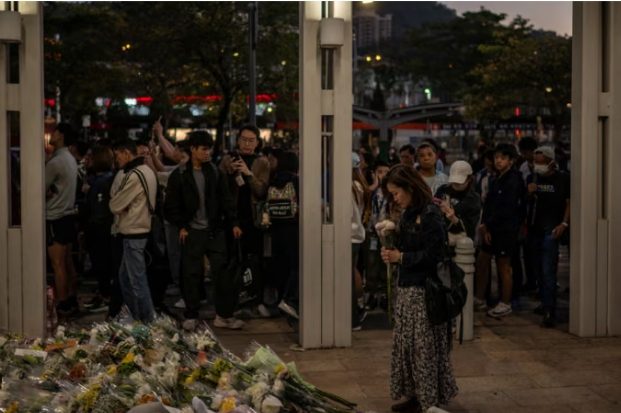
Last year, Kwan was detained for two nights by the city’s national security police for alleged “seditious intent,” after organizing peaceful efforts to raise public awareness about the fire’s aftermath and possible government negligence. His detention drew international attention to Hong Kong’s strict national security policies.
Upon his release, the Chinese University of Hong Kong (CUHK) conducted a disciplinary review that led to his case being referred to a student discipline committee.
The panel ultimately decided to expel Kwan due to accumulated demerits from previous incidents, the university confirmed in an official statement.
CUHK’s statement emphasized that the school does not comment on individual cases. However, it clarified that students receiving three demerits for disciplinary infractions could face termination from studies. Kwan’s supporters argued the decision represented a suppression of dissenting voices rather than a neutral application of academic rules.
Kwan contended that his expulsion was unrelated to his 2025 arrest but rather stemmed from remarks criticizing the university’s disciplinary committee. He reportedly called the panel a “kangaroo court” and a “disgrace,” which contributed to demerits being assigned against him.
The student’s disciplinary record also included a 2023 charge for “criminal damage” related to stickers he placed on lamp-posts in 2022, marking the anniversary of the Tiananmen Square crackdown. Kwan had completed the academic requirements for graduation and was scheduled to receive his degree in March.
“It is shameful of CUHK to use graduation certificates to suppress former students,” Kwan stated. “You can take away qualifications, but you cannot take away dignity.” His comments have been widely circulated online, prompting discussions on academic freedom in Hong Kong.
Kwan’s campaign emerged following the tragic fire at the Wang Fuk Court housing estate in Tai Po district. Survivors and local residents criticized the response of authorities, citing insufficient safety regulations and inadequate resettlement support for affected families.
The petition led by Kwan and other activists called for thorough government accountability, an independent inquiry into potential corruption, and review of construction and safety oversight for residential buildings. Public support for the initiative grew rapidly after the fire, highlighting citizen demands for transparency.
Authorities in Hong Kong announced the creation of a judge-led “independent committee” to investigate the blaze, aiming to address public concerns about safety failures and regulatory shortcomings. However, critics questioned whether the committee could operate without political influence or pressure from municipal authorities.
Human rights organizations have decried Kwan’s expulsion as an example of broader restrictions on free expression and student activism in Hong Kong universities.
Academic freedom advocates emphasize that students should be allowed to raise concerns about public safety and governance without fear of punishment.
Observers noted that Kwan’s case reflects ongoing tensions in Hong Kong between government oversight and civil society activism. Students who openly challenge authorities or call for independent investigations often face legal and disciplinary consequences, a situation some critics see as chilling dissent.
Kwan’s supporters have organized rallies and online campaigns to draw attention to his expulsion and highlight the need for transparency in student disciplinary processes. These campaigns argue that the university’s actions undermine trust in educational institutions and public accountability.
Analysts suggest that the case could set a precedent for how other universities in Hong Kong handle student activism, particularly concerning politically sensitive topics. There are growing concerns that disciplinary measures may be used as a deterrent against advocacy or civic engagement.
Meanwhile, affected residents of Wang Fuk Court continue to seek support and recognition for losses suffered during the November fire. Advocacy groups stress the importance of independent oversight and proper compensation for families impacted by such tragedies.
The public debate surrounding Kwan’s expulsion has drawn attention from media outlets worldwide, framing the story as part of the larger discussion on Hong Kong’s evolving political and social landscape, especially regarding civil liberties.
Some international legal experts argue that Kwan’s expulsion raises questions about due process, proportionality of punishment, and the ability of students to express dissenting opinions in academic environments. These critiques have intensified calls for review of university policies.
Kwan’s legal team indicated that they are exploring avenues to appeal the disciplinary decision. While the university maintains its stance, potential challenges in Hong Kong courts may test the limits of student rights and administrative discretion in higher education.
The case also highlights the role of social media and public engagement in shaping narratives around student activism. Online petitions, petitions, and campaigns have amplified Kwan’s message and raised awareness about the fire’s tragic consequences and systemic safety issues.
Local residents who supported Kwan’s petition have expressed frustration at the perceived lack of accountability, stressing that both the university and city authorities should address safety concerns and governance failures transparently.
Academic observers emphasize the delicate balance universities must maintain between maintaining discipline and respecting students’ rights to participate in civic discourse, noting that Kwan’s situation exemplifies the challenges involved.
As Hong Kong authorities continue to investigate the fire and monitor student activism, the story of Miles Kwan is likely to remain a focal point in discussions about freedom of expression, student rights, and government accountability in the region.
The university’s decision has fueled ongoing debates on how disciplinary actions are applied and whether policies adequately protect students’ right to voice concerns without fear of disproportionate consequences.
Supporters of Kwan argue that the principles of justice, transparency, and dignity should prevail, even in cases where students openly criticize institutional authorities.
Public pressure continues to mount for independent oversight and reconsideration of punitive measures.
With graduation season approaching, Kwan’s situation underscores the tension between academic recognition and disciplinary enforcement, raising ethical questions about withholding qualifications as a form of punishment.
Ultimately, the expulsion of Miles Kwan demonstrates the complex intersection of student activism, public safety advocacy, and administrative authority within Hong Kong’s educational institutions, highlighting the need for continued scrutiny and dialogue.
Read also: High Court rules Palestine Action terror ban unlawful in landmark judgment
About The Author