The Hezbollah response to Israeli strike escalated dramatically after the killing of Haytham Ali Tabtabai, with Naim Qassem warning Lebanon must prepare for potential large-scale confrontation.
Qassem denounced the assassination as a heinous crime and declared Hezbollah would respond at a strategically chosen moment, reinforcing the group’s position that deterrence requires firm, calculated retaliation.
He framed the killing as deliberate provocation designed to destabilize Lebanon, arguing Israeli operations increasingly target leadership structures to weaken resistance capabilities and trigger broader conflict.
Qassem insisted Hezbollah will not act impulsively, emphasizing a disciplined strategy balancing national security, political realities, and Lebanon’s fragile social and economic landscape still recovering from years of crisis.
He stated that Lebanon must coordinate its defensive posture, combining its army, civilian resilience, and resistance infrastructure to confront Israeli aggression effectively without descending into uncontrolled warfare.
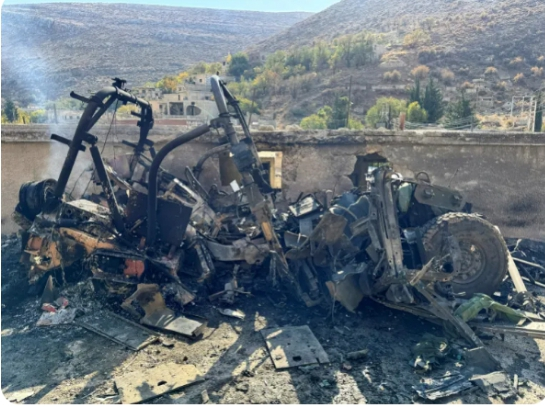
According to Qassem, war is possible but not inevitable, though Israel’s continued strikes significantly increase the likelihood of miscalculation that could drag Lebanon into prolonged conflict.
His speech underscored widespread Lebanese fear following the Beirut strike, which many viewed as a dangerous escalation after months of relative calm in the capital.
Hezbollah maintains it has respected the 2024 ceasefire, accusing Israel of systematic violations, targeted killings, and near-daily bombardments that undermine regional stability and provoke unavoidable retaliation.
Qassem argued that Israel deliberately seeks to stretch Hezbollah’s defensive resources by attacking across multiple fronts, heightening pressure on Lebanon’s institutions and testing political cohesion nationwide.
He accused Israel of pursuing provocative military strategies aimed at engineering uncertainty inside Lebanon, particularly by targeting areas long considered relatively secure from aerial strikes.
Tabtabai, a major strategist within Hezbollah’s military command, was reportedly meeting aides to plan future operations when the strike occurred, revealing significant intelligence penetration by Israel.
Qassem said the loss, though painful, would not weaken Hezbollah’s operational strength, emphasizing the organisation’s deep bench of experienced commanders capable of absorbing battlefield shocks.
He declared that Israel’s leadership miscalculates if it believes assassinations can disrupt Hezbollah’s chain of command, arguing such attacks instead strengthen internal unity and resolve.
Israeli spokesperson Avichay Adraee responded by criticizing Lebanon’s army, claiming Hezbollah circumvents security efforts and secretly expands its weapons stockpiles despite international disarmament pressures.
Adraee framed Hezbollah as manipulative, alleging it hides military assets within civilian zones while exploiting political divisions to avoid accountability for escalating regional tensions.
Hezbollah rejects these accusations, insisting its weapons remain essential for national defense as long as Israel occupies disputed border points and continues unauthorized military operations.
Qassem reiterated that disarmament discussions are impossible while Israel conducts strikes on Lebanese territory, describing weapon retention as a non-negotiable component of national protection.
Near-daily Israeli strikes on southern Lebanon have intensified public anxiety, with the assassination widely perceived as a deliberate shift in Israel’s rules of engagement.
Residents said the Beirut attack shattered a period of relative quiet, reinforcing fears that renewed large-scale conflict could erupt without meaningful warning or international mediation.
Analysts argue Israel aims to pressure Hezbollah into overreaction, potentially provoking a conflict that reshapes regional alignments and tests Lebanon’s internal political durability.
Qassem warned that Lebanon cannot remain passive under continuous assault, asserting that prolonged patience should not be mistaken for weakness or willingness to endure further attacks.
He condemned Israel’s refusal to halt operations even near heavily populated civilian zones, calling the strikes reckless and destabilizing with unacceptable humanitarian consequences.
Thirteen people were killed in another Israeli strike on a Palestinian refugee camp days earlier, intensifying outrage within Lebanon and renewing calls for international investigation.
The victims included eleven children, a fact Lebanese authorities emphasized to highlight what they described as indiscriminate targeting without regard for civilian safety or legal obligations.
Qassem used these events to portray Israel as aggressively undermining regional peace efforts, insisting that sustained resistance remains essential to protecting Lebanese communities.
He expressed hope that Pope Leo’s upcoming visit might reinforce diplomatic momentum for de-escalation, though he cautioned peace requires accountability for continued cross-border strikes.
Qassem emphasized Lebanon cannot be expected to absorb repeated attacks indefinitely, warning that the country reserves full rights to respond in defense of its sovereignty.
Observers note his language blends deterrence with deliberate ambiguity, signaling readiness without committing to immediate retaliation that might escalate unnecessarily.
Strategic ambiguity has long been central to Hezbollah’s military doctrine, allowing it to preserve unpredictability and complicate Israeli planning, particularly regarding high-value targets.
Many Lebanese fear another destructive war, though some believe Israel’s recent actions show willingness to escalate regardless of Hezbollah’s relatively restrained posture.
Diplomats warn that persistent escalation from either side risks triggering wider conflict involving additional regional powers, undermining existing ceasefire understandings.
Hezbollah appears aware of these risks, adopting a cautious but firm approach designed to maintain deterrence while avoiding premature action that could devastate Lebanon’s infrastructure.
Analysts predict Hezbollah’s eventual response will be calculated, symbolically powerful, and executed under controlled conditions to limit the possibility of full-scale war.
This mirrors previous reactions to targeted assassinations, in which Hezbollah delivered responses designed to restore deterrence without provoking disproportionate escalation.
Qassem acknowledged frustration among Hezbollah supporters demanding immediate retaliation, but he stressed discipline remains essential to achieving long-term strategic objectives.
He honored Tabtabai as a martyr whose legacy strengthens the movement, framing his death as sacrifice that reinforces resistance identity rather than weakening organizational structure.
He argued that Israel fundamentally misjudges Hezbollah’s ability to adapt, insisting leadership losses only deepen ideological commitment and operational resilience across the organization.
The killing also reignited debate about Israeli intelligence capabilities inside Beirut, raising concerns about vulnerabilities within Lebanon’s broader security and counterintelligence architecture.
Analysts say Israel’s ability to conduct precision operations in dense urban environments demonstrates significant surveillance reach with implications extending far beyond Lebanon.
Qassem warned ongoing violations would eventually force Lebanon into confrontation unless external powers pressured Israel to halt unilateral strikes threatening regional security.
He claimed Israel seeks to impose political outcomes through military force, using airstrikes as leverage to shape Lebanese domestic dynamics and undermine national sovereignty.
Hezbollah argues only strong, consistent resistance can counter such pressure, insisting deterrence must be preserved to prevent further erosion of Lebanese territorial integrity.
The group believes Israel’s recent actions aim to provoke miscalculations, making disciplined patience critical for avoiding unnecessary escalation while maintaining defensive strength.
Qassem’s speech closed with a vow that Tabtabai’s killing would not go unanswered, though he offered no timeline, reinforcing uncertainty that complicates Israeli strategic planning.
Analysts interpret the message as preparation for an inevitable response calibrated to restore balance without inviting immediate all-out conflict unless Israel escalates further.
Lebanese citizens remain anxious, torn between fear of war and belief that unchecked Israeli attacks leave the country vulnerable without demonstrating credible capacity for deterrence.

International observers continue calling for restraint, though recent events suggest neither side fully trusts mediation efforts or expects rapid stabilization under current circumstances.
As tension grows, the Hezbollah response to Israeli strike remains the dominant question shaping regional calculations, with both sides bracing for a potential turning point.