

Hamas truce warning dominated Cairo discussions as the group met Egypt’s intelligence chief, insisting Israel’s escalating attacks threatened the fragile deal and raised fears of renewed large-scale violence.
Palestinian officials described the delegation’s mood as “firm but anxious”, stressing that each new strike “chips away at trust”, as funerals across Gaza deepened public anger and growing despair.
Witnesses in Deir al-Balah said mourners “could barely breathe between explosions”, describing scenes where families carried bodies wrapped in white cloth stained by dust and blood.
Hamas members arriving in Cairo said the talks were “urgent and unavoidable”, insisting the ceasefire could collapse without immediate action to halt Israeli strikes targeting homes and makeshift shelters.
Egyptian mediators acknowledged “a dangerous moment”, telling reporters off-record that the situation required unprecedented discipline from both sides to prevent a total breakdown of the agreement.
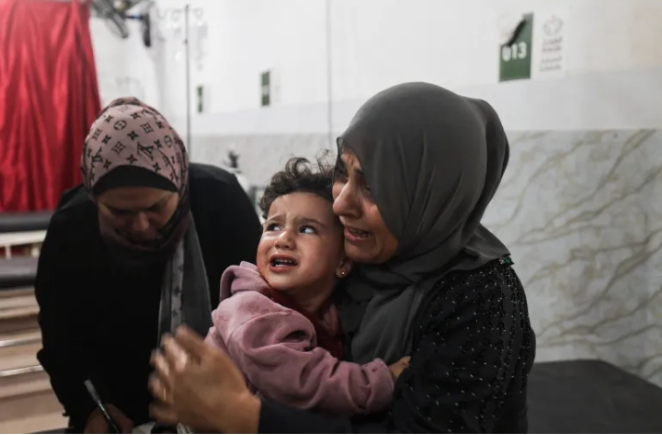
The Israeli attacks overnight killed several children, sparking outrage in Gaza’s central districts where residents pleaded for international intervention and stronger guarantees against further bombardments.
The visiting Hamas delegation, including exiled leader Khalil al-Hayya, demanded “mechanisms that actually work”, urging Egypt and Qatar to document and report every ceasefire violation transparently.
Mediators privately admitted difficulty accessing certain zones, noting that debris, blocked roads, and destroyed communication lines limited verification efforts required for maintaining minimal trust between parties.
Israel defended its operations, claiming a Hamas fighter infiltrated Israeli-controlled territory, prompting targeted strikes, though Hamas leaders described that allegation as “fabricated justification for continued killings”.
Residents of Gaza City said they feared an expansion of air raids beyond established zones, particularly after seeing bulldozers and military vehicles repositioning closer to civilian neighborhoods.
A humanitarian worker said “people no longer know where safety exists”, explaining that the boundaries of danger shifted daily as Israeli forces intensified their presence across contested areas.
Analysts following developments said the Hamas truce warning reflected deeper regional concerns that the ceasefire’s first phase had stalled despite diplomatic optimism in Washington and Doha.
Tensions escalated further after reports indicated communication had been severed with Hamas fighters trapped within tunnel networks beneath Rafah, where Israeli forces expanded surveillance and ground operations.
The United States, Qatar, and Egypt have pushed to salvage the deal, but frustration is rising as humanitarian aid remains limited and border access remains heavily restricted.
A senior Egyptian official said Cairo urged all parties to “avoid miscalculations”, warning that failure to maintain calm could undermine broader regional security aligned with internal political pressures.
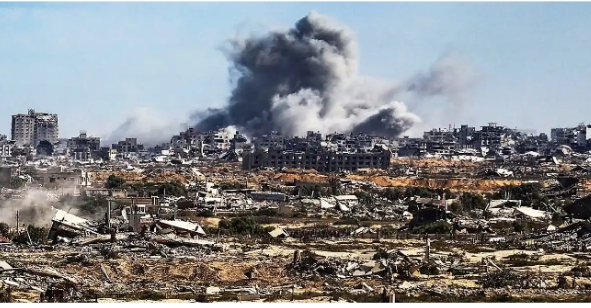
Saturday’s Israeli strikes destroyed several civilian structures, prompting Palestinian families to flee again, carrying belongings through streets lined with rubble, overturned vehicles, and shattered electricity poles.
In hospitals, medical staff described chaotic scenes as wounded victims arrived continuously, overwhelming already strained facilities lacking basic supplies necessary for life-saving treatment.
Doctors at Al-Aqsa Martyrs Hospital said “we are working in impossible conditions”, noting shortages of anesthesia, blood units, and electricity needed to manage rising casualty numbers.
Hamas insisted it fulfilled commitments under phase one, releasing all living captives and returning bodies, while accusing Israel of obstructing aid deliveries and maintaining crippling restrictions on crossings.
Witnesses near Rafah crossing claimed trucks waited for days due to Israeli checks, causing food, medicine, and fuel to spoil or expire before reaching desperate communities.
Israel denied blocking aid intentionally, but humanitarian groups countered, saying the pace of approvals made meaningful relief nearly impossible and placed millions at heightened risk.
A UN aid coordinator said “we cannot rebuild hope without unrestricted access”, urging immediate expansion of humanitarian corridors to stabilize conditions long enough for reconstruction planning.
Families across Gaza expressed doubt about moving to phase two, saying repeated breaches showed Israel lacked commitment to sustaining a peaceful transition under international supervision.
Under the Trump-backed proposal, Gaza would be governed temporarily by a technocratic Palestinian committee supported by a multinational stabilisation force deployed across border regions and major checkpoints.
Critics worry such arrangements fail to address underlying political grievances, particularly the status of displaced Palestinians and long-term guarantees against renewed Israeli occupation.
Hamas leaders insisted they would not disarm “while occupation remains”, arguing that only a political settlement ensuring sovereignty could justify dismantling resistance structures developed over decades.
Israel remains wary of any arrangement allowing Hamas influence in governance, while international partners struggle to craft a system balancing humanitarian needs with security assurances.
Gaza residents said Trump’s promised “no forced displacement” clause offered limited comfort, citing continuous shelling and demolitions as evidence that territorial security remains deeply uncertain.
A Gaza researcher said “people are living in suspended time”, caught between diplomatic promises and the reality of destroyed homes, broken infrastructure, and dwindling hope for lasting peace.
The mounting casualty numbers since October 10 shocked mediators, with nearly five hundred ceasefire violations reported, highlighting severe difficulties enforcing obligations agreed in earlier negotiations.
Funerals became daily rituals, with families gathering in courtyards or makeshift tents, reciting names of victims as cries echoed through neighborhoods devastated by repeated waves of violence.
Local leaders urged mediators to intervene decisively, saying “partial pressure is not enough”, and that Israel must be held accountable for each confirmed violation threatening civilians.
Egyptian intelligence officials emphasized the necessity of stabilizing communication between both sides, especially amid concerns that misreporting or delayed responses could spark unintended escalations.
Qatari diplomats expressed “deep frustration” at the pace of progress, calling for comprehensive monitoring teams with broader access to sensitive zones, including contested buffer areas.
Israel rejected such proposals, insisting operational freedom was essential to neutralize perceived threats, but critics said this contradicted the spirit of the ceasefire’s foundational principles.
Observers in Cairo noted increased diplomatic traffic, with delegations entering closed-door meetings that often extended late into the night, reflecting pressure to prevent imminent collapse.
Regional analysts said the Hamas truce warning carried symbolic weight, signalling to mediators that patience was thinning and that political consequences could escalate sharply.
Crowds in Gaza City gathered around destroyed apartment blocks, sharing stories about relatives still missing under the rubble after overnight airstrikes flattened several densely populated buildings.
One survivor said “I thought the ceasefire meant fewer attacks”, expressing disbelief that bombardments intensified despite international assurances promoting stability and humanitarian relief.
Videos circulating online showed residents digging with bare hands, searching for missing family members trapped beneath collapsed concrete, twisted metal, and sinking sand.
As night fell, drones hummed overhead, deepening public fear and raising questions about the ceasefire’s meaning amid continuous surveillance and sporadic artillery fire.
Parents comforted frightened children unable to sleep, describing “shaking walls and sudden flashes”, signs that danger persisted regardless of diplomatic announcements promising calm.
A Cairo journalist said negotiators were “running out of language” to reassure the public, as credibility eroded with each new strike disrupting fragile conditions on the ground.
Officials warned that uncertainty over border control and troop withdrawal schedules complicated efforts to finalize timelines necessary for advancing phases two and three.
The International Stabilisation Force proposed under Trump’s plan remains controversial, with concerns over mandate clarity, rules of engagement, and its ability to manage volatile zones.
Palestinian civil society groups criticized the proposal, saying reconstruction cannot begin without immediate cessation of attacks and restoration of essential services including water, electricity, and healthcare.
In Gaza’s markets, traders described dwindling supplies and rising prices, with some goods disappearing entirely as transport routes remained disrupted by military activity.
Residents said they felt abandoned, repeating “this is not a ceasefire”, while questioning whether global powers truly prioritized protecting civilians or merely managing geopolitical optics.
Pressure on mediators intensified as Hamas demanded firm guarantees, telling Egypt that “words alone cannot stop bombs”, emphasizing necessity for enforceable, transparent mechanisms.
Israeli officials maintained that operations targeted militants, but Palestinian communities insisted civilian casualties proved otherwise, describing bombardments as deliberate attempts to force political concessions.
The atmosphere in Cairo grew tense as negotiators weighed potential consequences of failure, aware that renewed war could devastate regional alliances and humanitarian conditions.
Gaza residents said survival increasingly depended on luck, describing each day as “a gamble”, while expressing hope that diplomatic pressure might still avert another catastrophic collapse.
The mediators’ challenge remains monumental, balancing competing agendas, mutual mistrust, and a rapidly deteriorating humanitarian crisis overshadowing every attempt to preserve the ceasefire.
As talks extended into late hours, the Hamas truce warning reverberated beyond negotiation rooms, signalling that without concrete safeguards, the frail agreement might not survive.
About The Author


