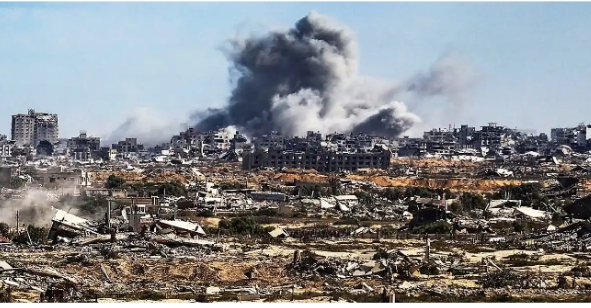
Israel kills Hezbollah leader during a rapidly intensifying phase of regional unrest, raising widespread concern as leaders warn the conflict could cross dangerous thresholds without swift diplomatic intervention.
The fallout deepened after Israel kills Hezbollah leader Haytham Ali Tabatabai, prompting urgent questions about intentions as officials stressed the need for restraint amid widening instability and diplomatic paralysis across volatile frontline regions.
Observers linked the moment Israel kills Hezbollah leader Tabatabai to mounting frustration within Lebanon, where residents described the climate as “suffocating” due to constant fear, displaced families, and deepening political paralysis.
Regional analysts argued that when Israel kills Hezbollah leader figures of Tabatabai’s stature, strategic calculations instantly shift, encouraging armed factions to reassess threats while governments scramble for diplomatic breathing space.
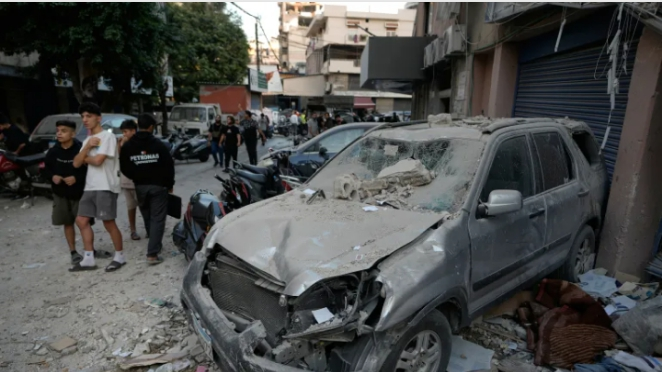
Officials warned that repeating moments where Israel kills Hezbollah leader targets under fragile ceasefire expectations could undermine negotiations, pushing multiple conflict zones into volatile cycles capable of reshaping Middle Eastern geopolitics significantly.
Voices across Beirut insisted that Israel kills Hezbollah leader operations were designed to provoke responses, though some urged caution, saying “reaction must be strategic, not emotional,” amid skyrocketing anxiety across communities.
Lebanese residents said Israel kills Hezbollah leader actions amplified fears of displacement, explaining that “nobody feels safe now,” as many struggled to interpret political signals following unprecedented military escalations.
Diplomats suggested Israel kills Hezbollah leader episodes might derail new communication channels, noting that nations attempting mediation warned of “unrecoverable damage” if violence continues overshadowing ongoing attempts to stabilise negotiations.
Military analysts repeatedly emphasised that Israel kills Hezbollah leader missions carry symbolic significance, often intended to project deterrence, though critics argued such strikes frequently intensify conflict rather than suppress emerging threats.
In southern Beirut, eyewitnesses recounted hearing massive explosions associated with a Beirut air strike that shattered windows, toppled balconies, and sent panicked families racing into dimly lit streets.
Residents described the Beirut air strike as “unlike anything we expected,” noting that rescuers dug through debris for hours, fearing additional explosions as smoke choked heavily populated neighbourhoods.
An elderly resident said the Beirut air strike convinced her the situation “has changed forever,” explaining that recurring blasts created psychological scars influencing daily routines and eroding community trust even further.
Security officials insisted the Beirut air strike targeted high-value figures, though civilians argued that “precision means nothing when entire buildings collapse,” highlighting frustrations over worsening humanitarian conditions.
Health workers warned that the Beirut air strike strained emergency wards, citing insufficient supplies, overwhelmed staff, and growing alarm that repeated assaults could cripple remaining medical infrastructure inside Lebanon.
International observers questioned whether the Beirut air strike breached existing arrangements safeguarding civilian zones, calling for immediate clarification and urging parties to prioritise humanitarian corridors during intensifying hostilities.
Lebanon’s leaders condemned the Beirut air strike, arguing it violated sovereignty and jeopardised negotiation possibilities, while urging the international community to intervene before further destabilisation becomes irreversible.
Tensions grew amid escalating fears of a Hezbollah retaliation threat, with senior figures warning their response would be “measured yet forceful,” signalling potential confrontations stretching beyond traditional conflict boundaries.
Military analysts said the Hezbollah retaliation threat created new regional uncertainties, suggesting the group might expand its operational theatre if leaders deem escalation necessary to maintain internal credibility.
Diplomats expressed alarm because the Hezbollah retaliation threat could undermine slow-moving negotiations, warning that reactionary strikes often spiral into unpredictable cycles capable of engulfing neighbouring states.
Lebanese residents said the Hezbollah retaliation threat reflected local anger, explaining that “people expect a response,” though some urged caution, fearing that retaliation could invite devastating counterattacks.
Experts warned that the Hezbollah retaliation threat intersected with broader regional rivalries, creating conditions where proxy forces might feel compelled to intervene depending on how tensions evolve over coming days.
Journalists reported that the Hezbollah retaliation threat dominated discussions inside Beirut, where communities debated whether restraint or retaliation would best protect vulnerable families amid worsening economic hardship.
International officials urged de-escalation despite the Hezbollah retaliation threat, reminding all parties that uncontrolled retaliation could trigger broader confrontations already feared by millions across Lebanon and neighbouring territories.
Meanwhile, humanitarian monitors documented rising Gaza ceasefire violations that further strained diplomatic tracks, with residents reporting increased shelling despite earlier assurances that agreements would remain intact.
Families described Gaza ceasefire violations as “a constant nightmare,” insisting promises of calm “mean nothing” when explosions continue damaging homes, hospitals, and shelters previously thought protected by fragile truce arrangements.
Health officials said Gaza ceasefire violations overwhelmed hospitals, explaining that emergency workers endured relentless exhaustion while attending to wounded civilians caught in renewed blasts across densely populated districts.
Aid organisations emphasised that Gaza ceasefire violations undermine humanitarian distribution plans, warning that insecurity delayed medical shipments and limited access to vulnerable neighbourhoods requiring immediate relief support.
A local journalist said Gaza ceasefire violations convinced many residents that political negotiations “exist only on paper,” as ground realities contradict official statements proclaiming commitment to lasting tranquility.
Diplomats urged both sides to halt Gaza ceasefire violations immediately, reminding them that continued breaches jeopardise mediation frameworks designed to prevent further humanitarian deterioration and safeguard thousands of displaced families.
Observers warned that prolonged Gaza ceasefire violations fuel broader regional tensions, suggesting they contribute to cycles of distrust capable of worsening the security environment throughout the Middle East’s most sensitive zones.
Across Lebanon, humanitarian teams documented increasing Lebanon civilian casualties linked to expanding military operations, including strikes affecting residential areas that previously remained untouched by direct attacks.
Families mourning Lebanon civilian casualties urged world leaders to intervene, explaining that “every death deepens anger,” while schools, markets, and neighbourhoods struggled to cope with sudden waves of destruction.
Health officials treating Lebanon civilian casualties described horrific scenes, emphasising limited equipment, insufficient electricity, and mounting pressure as wounded civilians arrived in overcrowded wards needing urgent operations.
Rescue teams responding to Lebanon civilian casualties warned that damaged roads slowed mobility, forcing volunteers to carry injured victims through rubble while fearing additional strikes during ongoing recovery efforts.
Local leaders condemned rising Lebanon civilian casualties, stating that “no political justification exists” for operations endangering uninvolved families, and urging global actors to impose immediate pressure for ceasefire reinforcement.
International agencies monitoring Lebanon civilian casualties stressed that each incident erodes diplomatic momentum, arguing that communities require protection, stability, and political clarity instead of recurring cycles of devastation.
Analysts predicted Lebanon civilian casualties would rise unless parties implement stronger restraints, warning that current conditions risk pushing tensions into uncontrolled conflict zones threatening millions across multiple borders.
Residents said feelings of hopelessness expanded as conflict intensified, explaining that “nobody knows what tomorrow brings,” while many struggled to secure shelter, food, or medical support for frightened relatives.
Diplomats scrambling to revive communication channels insisted dialogue remained possible, though they acknowledged that political will decreased sharply following targeted killings and escalating military reprisals.
Parents sheltering children during power outages described nights filled with anxiety, saying they feared further blasts, sudden evacuations, or unpredictable escalations affecting whichever community becomes the next target.
Local journalists covering attacks reported mass displacement, explaining that families fled crowded districts believing quieter villages offered safety, though many discovered new frontlines forming across previously stable areas.
Activists urged global powers to prioritise diplomacy, warning that ongoing violence demonstrated the dangers of assuming conflicts would remain confined to established boundaries amid rapidly changing regional dynamics.
Military analysts said Israel’s operations reflected broader strategic doctrines, emphasising deterrence but acknowledging these actions might inadvertently escalate regional confrontation instead of achieving long-term stability.
Witnesses reported smoke clouds darkening the sky above Beirut, claiming the psychological toll of explosions created unprecedented trauma among younger residents experiencing conflict for the first time in their lives.
Humanitarian groups reiterated concern that prolonged instability threatened vital winter preparations, cautioning that displaced families lacked adequate shelter, heating, and medical supplies to survive approaching colder months.
Political analysts noted that regional powers monitored developments closely, considering whether shifting alliances might emerge depending on international reactions to recent escalations shaping broader geopolitical outcomes.
Residents near affected zones described sirens echoing throughout the night, saying the intensity of panic among children illustrated how deeply communities feared additional military confrontations.
Local officials warned that infrastructure damage could take years to repair, highlighting destroyed residences, collapsed roads, and unstable high-rise buildings that now posed risks of total structural failure.
Teachers supporting traumatised students said children struggled to focus, explaining that repeated explosions disrupted academic routines and created fear-driven behavioural shifts increasingly concerning to counselling volunteers.
Human rights advocates argued that violence must end immediately, insisting civilians “cannot continue paying the price of political failures,” while renewing appeals for urgent international oversight mechanisms.
Voices from across the region demanded accountability, claiming unchecked military actions threatened to unravel decades of fragile stability, pushing communities into deeper cycles of vulnerability and loss.
International leaders called for urgent emergency sessions, warning that failure to contain the crisis might create lasting geopolitical fractures capable of shifting power balances across strategic regional corridors.

Lebanese families said unity became essential, explaining that communities shared resources, shelters, and medical supplies despite limited availability, reinforcing solidarity amid chaotic circumstances threatening daily survival.
Diplomats insisted that de-escalation efforts must intensify, arguing that “the world cannot ignore this moment,” as rising tension jeopardises countless lives across Lebanon, Gaza, and surrounding territories.
Analysts concluded that regional stability depends on sustained diplomacy, humanitarian focus, and credible political commitments aimed at preventing further violence capable of destabilising the Middle East for generations.
About The Author