

This Elche vs Real Madrid analysis breaks down the 2–2 draw, highlighting xT trends, key players, and tactical shifts that shaped a dramatic La Liga showdown.
Real Madrid’s dramatic 2–2 draw away to Elche offered more than just goals and momentum swings — it delivered a statistical story that revealed deeper truths about the team’s current form. This Elche vs Real Madrid Analysis explores how the match evolved, why Real Madrid dominated significant stretches, and how errors in key moments denied them a much-needed victory during a challenging run of fixtures.
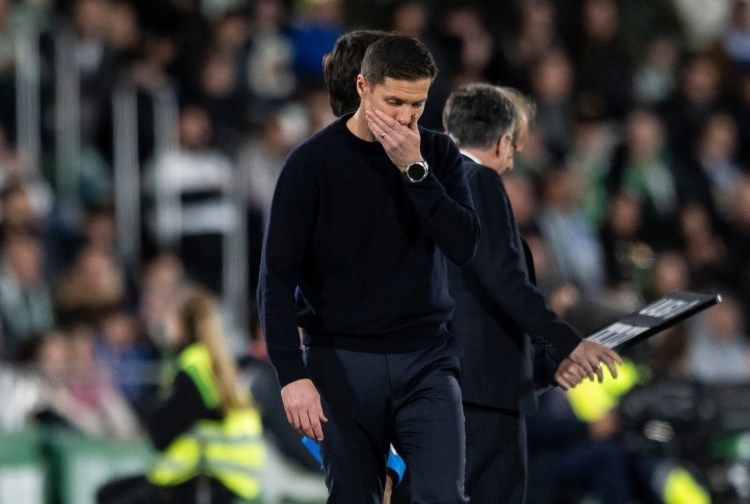
A match that slipped through Madrid’s fingers
For large portions of the game, Real Madrid looked like the team in control. Their patterns of play were fluid, their movement was sharp, and their expected threat numbers (xT) consistently reflected their dominance. Yet, despite this control, the final scoreline highlighted a lack of sharpness where it mattered most.
The opening 15 minutes set the tone for an unexpectedly competitive encounter. Elche pushed forward early, generating an xT of 0.31, slightly edging Madrid’s 0.23. Their early final-third activity disrupted Madrid’s rhythm and signaled that this would not be a routine away match.
As the game progressed, Real Madrid found their footing. Around the 30-minute mark, their xT leapt to 1.44 against Elche’s 0.57. Madrid’s combinations became cleaner, their passing lanes more intentional, and their attackers more involved. By full-time, Los Blancos had amassed an impressive 6.61 xT compared to Elche’s 4.56, and they registered 221 final-third touches — far more than Elche’s 179.
Still, dominance without precision produced only frustration.
How tactical shapes defined the game
The match’s first half showcased contrasting tactical philosophies. Real Madrid leaned into controlled buildup, constructing patient possession sequences designed to wear Elche down over time. Out of their early sequences, three were categorized as long, structured possession phases — the type that reflect composure and confidence in midfield.
Elche, however, took a more vertical approach. They relied on short, rapid sequences intended to catch Madrid’s defensive line unbalanced. Their directness created pockets of danger even when they had less of the ball.
The final 15 minutes revealed urgency from both sides. Real Madrid executed two high-tempo attacking sequences in their push for a winning goal, while Elche managed one short and one more patient buildup. This phase felt like a tug-of-war: Madrid striving for control, Elche fighting to destabilize it.
This second tactical layer is central to any Elche vs Real Madrid Analysis, as it highlights how the match moved from structured dominance to chaotic exchanges.
Individual performances that shaped the match
Several players left significant marks on the match’s tactical and statistical narrative:
Trent Alexander-Arnold
One of Madrid’s brightest performers, Alexander-Arnold delivered a remarkable 3.58 xT and completed 15 progressive passes, constantly feeding the attack with line-breaking balls.
Álvaro Núñez
Operating in midfield, Núñez contributed 1.46 xT and 14 progressive passes. His steady distribution was key in sustaining possession in dangerous areas.
Kylian Mbappé & André Silva
Both recorded 10 progressive carries, using speed and directness to push Elche’s defensive line backward. Their movements opened gaps for Madrid’s midfield runners throughout the match.
Elche’s defensive anchors
Aleix Febas (7 recoveries) and Raúl Asencio (6 recoveries) were crucial in Elche’s ability to withstand Madrid’s pressure. Their ball-winning interventions disrupted Madrid’s passing rhythm and launched several counterattacks.
These individual contributions show how this Elche vs Real Madrid Analysis extends beyond team statistics and into personal impact.
Where the match was lost
Despite their strong statistical profile, Real Madrid struggled in two crucial areas:
1. Inefficiency in the final third
The team often built sequences brilliantly but faltered with the decisive pass or finish. Moments that typically define champions — composure, timing, precision — were missing.
2. Vulnerability to transitions
In transition, Madrid’s defensive unit looked disjointed at times. Elche capitalized on these lapses with sharp, vertical attacks that cut through Madrid’s structure.
Madrid’s struggle to convert dominance into goals has become a recurring theme — one that this Elche vs Real Madrid Analysis underscores repeatedly.
What this means for Real Madrid’s season
This draw extends Real Madrid’s winless streak to three matches, reducing their cushion at the top of the league table. While the numbers show they can outplay opponents, football demands more than control — it requires a ruthless edge.
The critical questions now are:
Can Madrid translate possession and xT dominance into consistent results?
Can they tighten defensive spacing to avoid being exposed in transition?
Will their key creators maintain this level of output when pressure intensifies?
Their upcoming Champions League match against Olympiacos looms large — both as a test of character and a chance to correct course.
This Elche vs Real Madrid Analysis ultimately reveals a match full of promise, control, creativity, yet undone by moments of carelessness and missed chances. Madrid played well enough to win comfortably on paper, but the scoreboard tells a far more complicated story.
Read more news at: ireport247news.com
About The Author


