Guinea coup leader Mamady Doumbouya wins presidential election after provisional results confirmed a landslide victory, consolidating his grip on power four years after a military takeover.
Electoral authorities said Doumbouya secured 86.72 percent of votes cast during polls held on December 28, giving him an outright majority without requiring a runoff.
The vote marked Guinea’s first presidential election since the 2021 coup that removed former president Alpha Condé and ended more than a decade of civilian-led governance.
Officials reported voter turnout of 80.95 percent among approximately 6.7 million registered voters, a figure authorities described as evidence of broad public participation.
The Supreme Court has eight days to validate the results should legal challenges be filed, after which Doumbouya would be formally sworn in as president.
Analysts say the election effectively legitimises Doumbouya’s continued leadership, transforming his rule from military-backed authority into an elected civilian presidency.
The Guinea presidential election followed a tightly managed transition period that critics argue favoured the ruling junta and marginalised opposition voices.
Doumbouya rose to prominence in September 2021 when he led elite forces to overthrow Condé, citing corruption, constitutional manipulation and economic mismanagement.
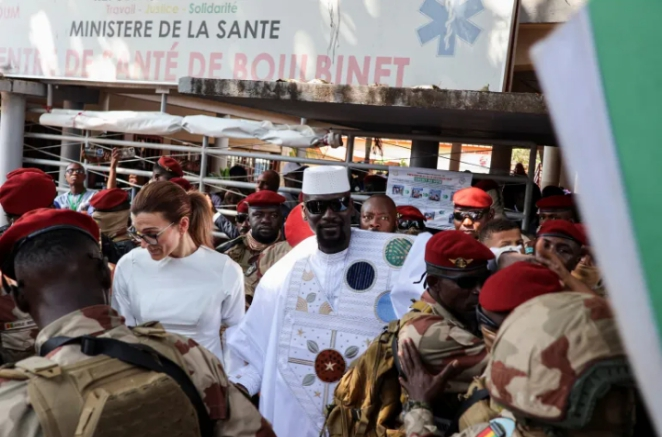
Following the 2021 Guinea military takeover, the junta dissolved state institutions, suspended the constitution and promised a swift return to civilian rule.
That promise evolved over time as transitional deadlines were repeatedly adjusted, prompting concern among regional organisations and international partners.
Key political figures were absent from the race, with both Condé and opposition leader Cellou Dalein Diallo remaining in exile during the campaign.
Their absence significantly reshaped the electoral landscape, leaving Doumbouya without a serious challenger capable of mobilising nationwide support.
Former education minister Yero Baldé placed second with 6.51 percent of the vote, while remaining candidates posted single-digit results.
Opposition groups claim the outcome reflected a controlled process rather than genuine political competition across Guinea’s diverse regions.
Civil society organisations accused authorities of banning demonstrations, restricting opposition meetings and limiting independent media coverage during the campaign.
The United Nations human rights chief said the election environment was marked by intimidation, enforced disappearances and constraints on press freedom.
Volker Türk described the campaign as severely restricted, raising questions about the credibility of the process despite high reported voter turnout.
Opposition candidate Faya Lansana Millimono alleged systematic fraud, claiming observers were prevented from monitoring voting and ballot counting procedures.
The government has not publicly responded to the allegations, maintaining that the election was peaceful, transparent and reflected the will of voters.
Doumbouya previously pledged that neither he nor other military officers would seek elected office following the coup.
That position changed after a constitutional referendum in September allowed military leaders to contest elections and extended presidential terms to seven years.
Supporters argue the reforms provide political stability, while critics say they entrenched military influence within Guinea’s civilian institutions.
Economic policy featured prominently in Doumbouya’s campaign messaging, particularly reforms targeting Guinea’s vast natural resource sector.
Guinea holds the world’s largest bauxite reserves and possesses significant untapped iron ore deposits, including the long-delayed Simandou project.
The Simandou iron ore project was officially launched last month after years of postponements caused by legal disputes and infrastructure challenges.
Doumbouya has cited progress on Simandou as proof of decisive leadership and improved governance under his administration.
His government has pursued greater state control of the mining sector, aligning Guinea with resource-nationalist trends across the Sahel.
Authorities revoked the licence of a subsidiary of Emirates Global Aluminium amid disagreements over refinery construction obligations.
The assets were transferred to a state-owned company, a move praised domestically but criticised by foreign investors.
Similar policies adopted in Mali, Burkina Faso and Niger have strengthened military-led governments despite international concern.
Regional analysts note growing public support for leaders who promise economic sovereignty and reduced foreign corporate influence.
However, critics warn that state-heavy resource management could deter long-term investment if transparency and legal certainty decline.
International reactions to Doumbouya’s victory have been cautious, balancing recognition of electoral outcomes with human rights concerns.
The African Union and ECOWAS previously imposed sanctions following the coup, some of which were eased during the transition.
Whether Doumbouya’s election leads to full regional reintegration remains uncertain as governance standards continue to be scrutinised.

Within Guinea, public opinion appears divided between those welcoming stability and those fearing permanent erosion of democratic space.
Supporters credit Doumbouya with restoring order and asserting national dignity after years of political unrest.
Critics argue the election formalises military dominance rather than restoring pluralistic civilian democracy.
As President Mamady Doumbouya awaits final confirmation of results, Guinea stands at a crossroads between consolidation and reform.
The election’s legacy will depend on whether political freedoms expand or remain constrained under the new administration.
For many Guineans, expectations now centre on economic delivery rather than political theory or constitutional promises.
The coming months will test whether Doumbouya governs as a reformist civilian leader or entrenches military-era controls.
Read also:X-raying Nigeria’s Military capability: Hardline truths, regional realities
About The Author