Nigeria’s power generation companies have rejected claims that the Federal Government has approved N2.8tn as the final settlement of longstanding electricity debts, escalating tensions within the Nigerian Electricity Supply Industry.
The Association of Power Generation Companies (APGC) described the reported figure as inaccurate and not reflective of any concluded reconciliation process. The group insisted that no officially sanctioned audit supports the N2.8tn amount being circulated in sections of the media.
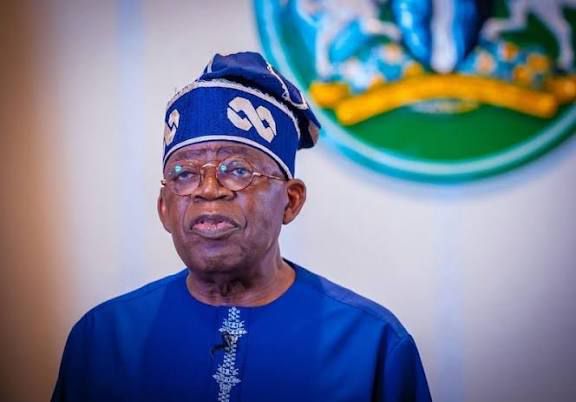
At the centre of the dispute is an alleged approval by President Bola Tinubu of N2.8tn as verified legacy liabilities owed to generation companies for electricity subsidies accumulated over more than a decade. However, the GenCos argue that such a position contradicts earlier engagements and documented reconciliation outcomes.
GenCos dump Presidency’s N2.8tn debt settlement deal, insist on transparent reconciliation
The APGC, through its Chief Executive Officer, Joy Ogaji, maintained that the claim of a N2.8tn final settlement did not emerge from any formally concluded audit or reconciliation exercise involving all critical stakeholders.
According to her, any legitimate determination of outstanding obligations must follow the contractual framework governing the Nigerian Electricity Supply Industry (NESI). She challenged officials behind the reported figure to publicly release the audit report underpinning the computation.
The association stressed that debts owed to GenCos are not discretionary claims but contractual liabilities arising from power generated, transmitted and consumed under regulated tariffs. Electricity generated by GenCos is metered, dispatched to the national grid, and invoiced in accordance with market rules.
Settlement reports are prepared by the Nigerian Bulk Electricity Trading Plc (NBET), forming the basis of verified obligations.
Industry data indicate that the liquidity crisis in the power sector has been driven by tariff shortfalls, settlement gaps, foreign exchange volatility, and accumulated unpaid invoices since the 2013 privatisation of the industry.
Generation companies argue that these structural deficiencies — rather than arbitrary billing — account for the mounting debt profile.
Ogaji disclosed that as of December 2025, no additional reconciliation meeting had been convened following the March 2025 tripartite reconciliation exercise involving GenCos, NBET, the Ministry of Finance, and the Office of the Special Adviser on Energy.
She further recalled that in July 2025, after a comprehensive reconciliation process, President Tinubu approved N4tn in recognition of verified legacy obligations. That commitment, she said, followed due process and formal engagement with relevant institutions.
The GenCos contend that they acted on the strength of that approval by engaging financial institutions, gas suppliers and investors. Revising figures outside an established reconciliation framework, they warn, could undermine contractual sanctity and erode investor confidence in a sector already grappling with capital constraints.
The controversy surrounding the N2.8tn figure has significant implications for market stability. Power generation companies rely heavily on gas suppliers and servicing lenders to sustain operations.
Persistent payment delays have constrained their ability to meet upstream obligations, raising concerns about generation sustainability.
Sector analysts note that non-cost-reflective tariffs remain a central challenge.
While electricity is generated at commercially determined costs, end-user tariffs are often regulated below cost-recovery levels. The resulting subsidy burden accumulates as unpaid obligations within the market structure.
Foreign exchange exposure further compounds the crisis. Many generation companies have dollar-denominated loans and maintenance contracts. Exchange rate volatility has significantly inflated repayment obligations, deepening liquidity stress across the value chain.
The APGC emphasised that any reconciliation or audit of outstanding liabilities must be conducted transparently and strictly in line with bilateral agreements governing the electricity market. The association reaffirmed confidence in the President but insisted that engagements must adhere to established contractual processes.
Energy economists warn that abrupt revisions of reconciled figures could deter fresh investment at a time when Nigeria requires expanded generation capacity to meet rising demand. The country’s installed capacity significantly exceeds actual available generation, largely due to gas supply constraints and financial bottlenecks.
Since privatisation, GenCos have repeatedly cautioned that unresolved debt accumulation threatens operational viability. Settlement deficits from NBET and distribution companies have widened over time, creating a cascading effect across the electricity value chain.
The current dispute underscores broader governance challenges within NESI, where policy decisions, tariff regulation, and fiscal constraints intersect. Market participants argue that sustainable reform requires cost-reflective pricing, transparent subsidy accounting, and disciplined settlement enforcement.
For now, the standoff between GenCos and the Presidency over the N2.8tn claim highlights the fragility of confidence in the sector’s financial architecture.
With investor sentiment already cautious, stakeholders are watching closely to see whether formal reconciliation mechanisms will be reconvened to clarify the government’s verified liability position.
Until a mutually acknowledged audit is published, the disagreement over the alleged settlement figure is likely to persist, adding another layer of uncertainty to Nigeria’s power sector recovery efforts.