Gaza, Central Strip – Gaza Ramadan 2026 begins under a fragile ceasefire, with families striving to celebrate amid grief, scarcity, and lingering fears of renewed conflict.
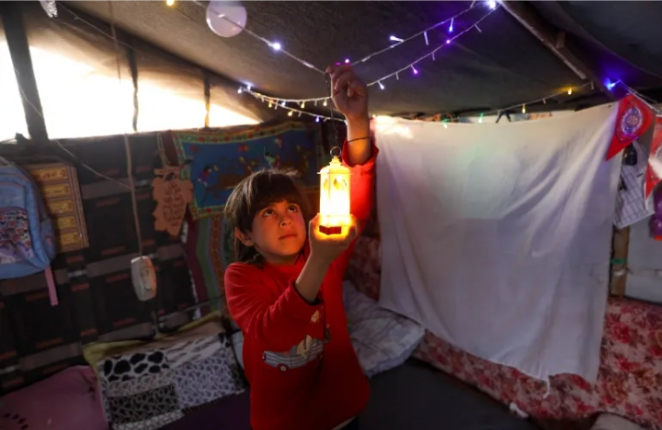
Maisoon al-Barbarawi, a mother of two, decorates her tent with lanterns and colourful drawings to mark the arrival of the holy month.
“We brought you a small lantern,” Maisoon tells her nine-year-old son, Hasan, smiling despite exhaustion and limited means. “What matters is that the children feel happiness and hope during Ramadan.”
Maisoon, known as Umm Mohammed, 52, lost her home in southeastern Gaza at the start of the war. She emphasizes that every day her children remain safe is a day of gratitude, even as shelling sometimes pierces the fragile calm.
“My older son is 15, my younger son is nine. They are my most precious treasures,” she says, her voice mixing pride with fear. “During Ramadan, I try to focus on what we still have, not what we lost.”
This is the third consecutive Ramadan that Maisoon and her family have spent displaced. “We lost homes, families, and many loved ones,” she explains. “But in the camp, neighbours share the same pain, and we support each other socially and spiritually.”
Maisoon participates in camp administration, helping distribute bread, dates, and water before the first call to prayer. For her, Ramadan offers a chance to create moments of life and joy out of hardship and scarcity.
“The situation is not completely calm,” she adds. “We all know the war hasn’t truly stopped. Shelling still happens occasionally, but compared to past years, the intensity is reduced, and we try to make the best of what we have.”
Fear of renewed conflict during Ramadan is widespread. Many residents recall last year’s escalation when fighting resumed in the second week of Ramadan, triggering severe food shortages and the closure of crossings that prolonged humanitarian famine.
“People keep saying: store flour, store food. They fear the war is coming back,” Maisoon says anxiously. “Last Ramadan, famine and war happened at the same time. I spent all my money just to feed my children.”
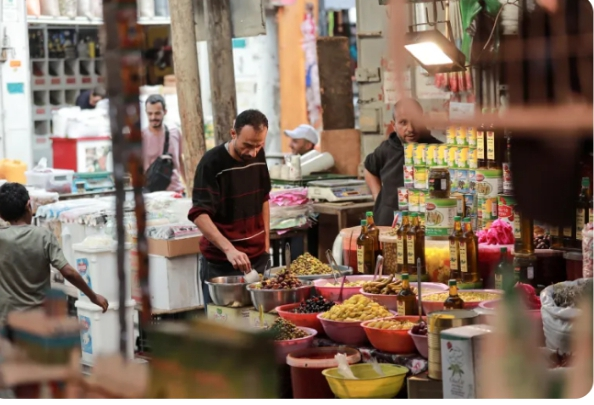
Markets in Gaza show signs of recovery, with commercial activity gradually resuming. Aid agencies have been able to deliver some supplies, although access remains inconsistent and subject to logistical obstacles and security restrictions.
Despite a broader range of goods appearing in markets, prices remain high, and purchasing power is weak. Large segments of Gaza’s population rely on humanitarian assistance to meet basic needs, including food, water, and cooking fuel.
Hanan al-Attar, 55, is one of many relying on aid during Ramadan. She fled Beit Lahiya last year and now shares a tent with 15 family members in Deir el-Balah. “Today we received a food parcel,” she says, opening cans and packages with a broad smile.
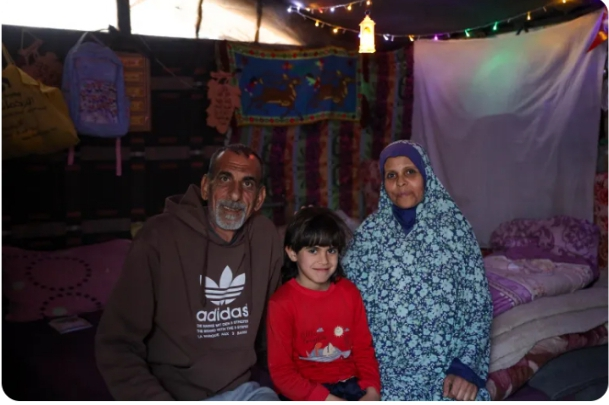
“Fava beans, halva, dates, tahini, oil, lentils, spreadable cheese, mortadella… this is excellent for suhoor,” Hanan adds, gesturing at her grandchildren who gather around the parcels, eager to help prepare for the predawn meal.
Hanan is careful with her limited resources. She secretly set aside a small amount of money to prepare a tray of potatoes with minced meat and rice for the first iftar. “Fasting requires protein,” she says softly, mindful of her family’s nutritional needs.
Storage is a challenge. With no electricity and limited infrastructure, meals must be purchased and consumed immediately. “We buy day by day so the food does not spoil,” Hanan explains. “There are no refrigerators, no safe storage. Everything depends on what arrives that day.”
Loss and grief remain central to Ramadan. Hanan’s two sons, in their late twenties, were killed in a strike last year. “This is the first Ramadan after their martyrdom,” she says through tears. “When family gathers and members are missing, you feel deep pain and emptiness.”
Cooking in the tent is a daily struggle. Wind often extinguishes flames, and open fires are necessary due to shortages of cooking gas. Hanan’s hidden eight-kilo gas cylinder is treated as a treasure, reserved carefully for critical moments like suhoor preparation.
“Gas is precious,” she says. “We save it, use it sparingly, and manage with firewood most days. Ramadan hasn’t changed our reality much, but being together in health and safety is a blessing in itself.”
The memory of famine further deepens anxiety. During previous Ramadan shortages, Hanan recalls grinding lentils to replace flour and stretching limited bread by cutting it into smaller portions. “I made it smaller so everyone could have enough,” she says quietly.
Still, Ramadan brings moments of light amid hardship. Small acts of generosity, shared meals, and community support remind families of resilience and hope, even when scarcity dominates daily life in Gaza.
For Maisoon and Hanan, prayers during Ramadan focus on peace, safety, and the eventual return to their homes. “I pray the army withdraws from our land,” Maisoon says, pointing to bullet holes from a recent drone strike. “I pray the war never returns.”
“May this Ramadan be one of goodness and peace for everyone,” Hanan adds. “We only wish to return home and rebuild our lives. That is all anyone wants during this holy month.”
Gaza Ramadan 2026, therefore, is not only about fasting and religious observance. It is a period of resilience, community solidarity, and a testament to human endurance amid years of war, displacement, and scarcity.
Amid fragile calm and lingering fears, the holy month is a reminder that even in the most difficult circumstances, families strive to celebrate life, hold onto hope, and maintain cultural and spiritual traditions.
About The Author