The fragile Pakistan-Afghanistan talks have collapsed spectacularly, exposing layers of mistrust, broken promises, and escalating violence that threaten to ignite another full-blown regional conflict, analysts and diplomats warn gravely.
For three tense days in Istanbul, officials sought to salvage the Pakistan-Afghanistan talks, but negotiators left divided over demands to dismantle the Tehreek-e-Taliban Pakistan (TTP) network fueling cross-border bloodshed.
Sources revealed that despite mediation by Qatar and Türkiye, the Pakistan-Afghanistan talks were marred by accusations, confusion, and ideological rigidity, leaving regional stability teetering dangerously close to collapse once again.
Pakistani negotiators accused the Taliban delegation of reversing earlier commitments, claiming Kabul had shifted its stance under pressure from its hardline factions within the Afghan Taliban government structure.
Afghan officials countered, asserting that Pakistan’s envoys displayed “poor coordination” and unclear positions, walking out repeatedly while Islamabad insisted Kabul must act decisively against the TTP armed group.
Qatar and Türkiye attempted to bridge the divide, but mistrust ran too deep. One Pakistani official lamented that “the spirit of peace has evaporated before our eyes.”
The breakdown of the Pakistan-Afghanistan talks has reignited fears of renewed cross-border clashes, with both sides reinforcing military positions and accusing each other of violating the fragile ceasefire secured earlier in Doha.
Heavy exchanges of fire in Khyber Pakhtunkhwa and Kandahar this month have already left dozens dead, shattering illusions of lasting stability between the volatile South Asian neighbours.
United States President Donald Trump, ever eager for global spotlight, declared his readiness to “solve the Pakistan-Afghanistan crisis quickly,” though observers dismissed his comment as largely symbolic and politically driven.
Analysts argue that genuine resolution remains elusive because the Pakistan-Afghanistan relationship is haunted by decades of interference, ideological rivalry, and conflicting national priorities anchored in deep historical grievances.
Former Wilson Center fellow Baqir Sajjad Syed noted that Islamabad’s historic support for the Afghan Taliban has backfired, creating a militant echo chamber now beyond Pakistan’s control or influence.
“The Afghan Taliban’s reliance on the TTP for domestic security makes it impossible for Kabul to sever ties,” he warned, underscoring why the Pakistan-Afghanistan border conflict is so entrenched.
Once hailed as ideological allies, Islamabad and Kabul now view each other with suspicion. Pakistan’s demand for a crackdown on militants is perceived in Kabul as political manipulation.
The Taliban insists that the TTP crisis is Pakistan’s internal problem, rejecting accusations of harboring militants. Yet Pakistan’s intelligence claims otherwise, citing continued attacks launched from Afghan soil.
Observers say this blame game has hardened narratives on both sides, leaving diplomacy paralysed while militants exploit the chaos to expand operations across the Pakistan-Afghanistan frontier.
The TTP, born from the chaos of America’s “war on terror” in 2007, has re-emerged as a dominant destabilising force, staging deadly assaults on both civilians and security forces.
A recent Armed Conflict Location & Event Data (ACLED) report confirmed that the TTP carried out more than 600 attacks in the past year alone, signalling a rapidly worsening security environment.
Pakistan recorded over 2,500 casualties in 2024, making it the bloodiest year in nearly a decade. Analysts fear 2025 could be even deadlier if peace efforts continue collapsing.
Security expert Ihsanullah Tipu Mehsud stressed that the Afghan Taliban’s ideological kinship with the TTP prevents meaningful cooperation, calling it “a fraternal bond stronger than political pressure or financial incentives.”
Another veteran observer, journalist Sami Yousafzai, warned that Pakistan’s military threats might backfire, noting that Taliban resilience under fire could turn public sympathy against Islamabad.
“The Afghan Taliban survived superpowers. Bombing them only breeds nationalism and hatred,” Yousafzai cautioned, adding that an air campaign would only harden their anti-Pakistani resolve.
Indeed, Defence Minister Khawaja Asif’s warning of “open war” has alarmed regional powers, prompting urgent appeals from China, Iran, and Russia for restraint and renewed Pakistan-Afghanistan diplomacy.
Beijing, already mediating in other regional disputes, has quietly urged both sides to maintain dialogue, while Moscow has reminded the Taliban of earlier pledges to eliminate transnational militants.
Yet insiders say Islamabad is fast losing patience, viewing Taliban inaction as betrayal. The Pakistan-Afghanistan crisis has thus shifted from diplomacy to brinkmanship, with dangerous implications for the wider region.
Analysts believe that unless third-party mediators such as Qatar or Türkiye propose new incentives, military escalation along the border may soon be unavoidable and devastatingly counterproductive.
Syed suggested that economic aid or reconstruction packages might persuade Kabul to curb TTP activities, but warned that “trust, not money, is the true currency of peace.”
Trump’s self-styled role as peacemaker has further complicated matters, with many fearing his intervention could politicize mediation and distract from genuine Pakistan-Afghanistan reconciliation efforts.
His recent success in mediating a ceasefire between Thailand and Cambodia was cited as evidence of his ambition to broker “quick fixes,” but South Asia’s deep-rooted tensions defy superficial solutions.
Observers argue that without a structured roadmap and regional consensus, the Pakistan-Afghanistan talks risk turning into yet another diplomatic carousel — all motion, no meaningful progress.
Meanwhile, the Taliban appears to have gained domestic legitimacy through confrontation. Afghan citizens view resistance against Pakistan as patriotic defiance rather than reckless escalation.
“The Taliban’s image has improved,” one Kabul-based analyst noted. “Fighting Pakistan feeds nationalism and distracts from Afghanistan’s internal economic collapse and social discontent.”
If Pakistan resorts to aerial bombardment, analysts fear the Taliban’s Supreme Leader, Haibatullah Akhundzada, might issue a jihad edict, mobilising thousands of Afghan youth into the battlefield.
Such a call could trigger uncontrollable escalation, experts warn, transforming localized clashes into an ideological war that would engulf the Pakistan-Afghanistan border regions in perpetual conflict.
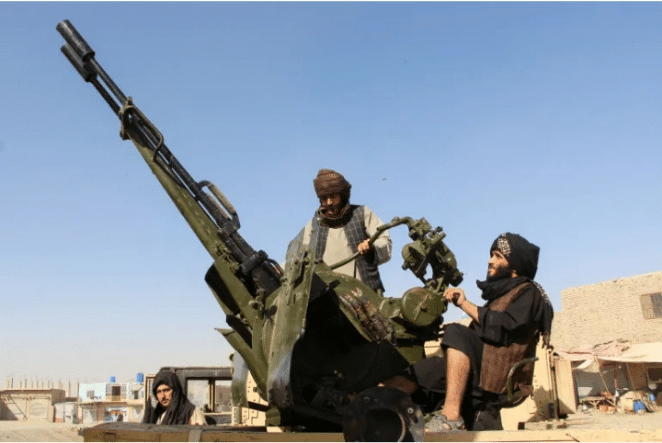
The TTP would be the greatest beneficiary, emboldened by chaos to step up its insurgency across Pakistani territory, attacking border posts, police stations, and civilian targets with renewed confidence.
For Islamabad, this nightmare scenario underscores the futility of relying solely on force. Without Kabul’s cooperation, the Pakistan-Afghanistan peace process will remain trapped in a cycle of betrayal and retaliation.
Diplomats close to the Istanbul meeting suggest a “pause for reflection” rather than total breakdown, but even that optimism seems misplaced given the bitterness that now defines bilateral relations.
As of Tuesday night, both delegations had returned home without joint statements, and the promised follow-up session in Doha remains uncertain amid hardening political rhetoric.
Observers believe that a limited resumption of talks might still occur, possibly under Qatari facilitation, but only if the Taliban demonstrates willingness to restrain the TTP militarily.
However, the ideological linkage between the Afghan Taliban and their Pakistani counterparts remains the most formidable barrier, blurring lines between governance, religion, and militancy.
For now, the region waits anxiously. Each diplomatic failure fuels fresh violence, each missile strike deepens resentment, and every dead soldier becomes another obstacle to reconciliation.
Whether diplomacy can still rescue the Pakistan-Afghanistan relationship from collapse is uncertain, but without trust, even the most determined “last-ditch push” may fall tragically short once again.