At least four people have been killed in Cameroon election protests, igniting nationwide outrage as opposition supporters accuse President Paul Biya of manipulating the vote to extend his decades-long rule.
The clashes erupted in Douala, Cameroon’s largest city, when hundreds of demonstrators defied a protest ban to demand the release of what they called “true results” from the presidential election.
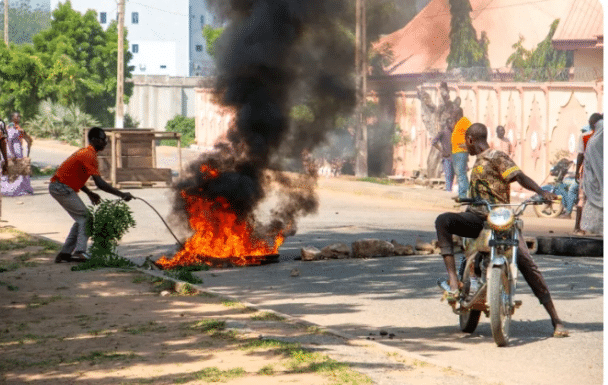
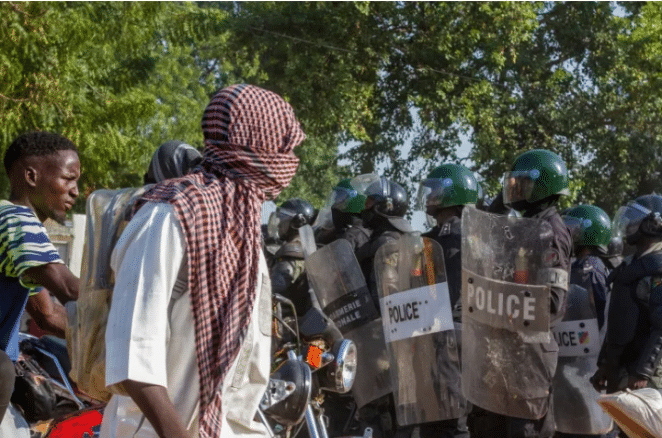
Witnesses said protesters set up barricades, burned tyres, and hurled stones at riot police. Security forces responded with tear gas and water cannons, intensifying the chaos across the port city.
Regional governor Samuel Dieudonne Ivaha Diboua confirmed that four people died during the violent confrontations, while several security officers sustained injuries. “The situation is unfortunate but under control,” he said.
The Cameroon election protests began after opposition leader Issa Tchiroma claimed victory in the October 12 vote, alleging he won 54.8 percent compared with Biya’s 31.3 percent. “The people’s will cannot be overturned,” Tchiroma declared.
Government officials dismissed his claims, urging citizens to wait for the Constitutional Council’s official announcement. Still, many citizens believe the vote was rigged in favor of Biya, who has ruled Cameroon since 1982.
As tensions mounted, demonstrations spread from Douala to other major cities including Yaoundé, Garoua, Maroua, and Bafoussam, where residents demanded transparency and called for international monitoring.
In Garoua, protesters carried signs reading “Biya Must Go” and “Our Votes Count.” Despite reports of internet restrictions, footage circulated online showing burning barricades and police dispersing crowds with force.
“You can really see the frustration and anger when you talk to young people,” journalist Blaise Eyong said. “They feel robbed of a future, and this anger fuels the Cameroon election protests.”
Eyong added that rising youth unemployment and poverty have intensified the political tension, turning what began as an electoral dispute into a nationwide movement demanding reform and accountability.
Paul Biya, at 92, is the world’s oldest serving ruler. His expected eighth term has deepened public resentment in a country where most citizens have known no other leader.
“People are exhausted,” said activist Djeukam Tchameni, speaking before his detention. “They want a peaceful transition, not endless rule. This is a cry for change.”
Tchiroma’s campaign reported that more than 30 of his allies were arrested, including Anicet Ekane, leader of the MANIDEM party. Authorities accused them of “inciting an insurrectional movement.”
Minister of Territorial Administration Paul Atanga Nji confirmed some arrests, saying security operations aimed to preserve order. “No democracy allows anarchy,” he asserted during a press briefing.
But opposition figures say the government is using repression to silence dissent. “They fear the truth,” Tchiroma’s spokesman Jean Claude Nkem said. “If they believe they’ve won, why arrest everyone questioning the results?”
Analysts argue that the Cameroon election protests expose deep mistrust between the government and citizens after years of corruption, repression, and economic stagnation.
“The protests are not just about the vote,” political expert Marie Ekoko explained. “They represent decades of frustration with a system that no longer listens to its people.”
Civil society organizations condemned the excessive use of force and urged dialogue. “Violence won’t solve this crisis,” human rights lawyer Emmanuel Mbaku said. “The government must respect freedom of expression and the right to protest.”
In Yaoundé, shops closed early as residents feared renewed violence. Public transportation was suspended in parts of the city, leaving empty streets and heavy security patrols.
“We are not afraid anymore,” said student activist Clarisse Ndong. “Our voices matter. The world must see what is happening in Cameroon.”
The government insists the elections were fair and transparent. “Allegations of fraud are politically motivated,” government spokesperson René Sadi said, calling Tchiroma’s claims “an attempt to destabilize the nation.”
Tchiroma, once a minister under Biya, insists he will not accept what he terms “fabricated results.” His supporters argue that he represents a new era of leadership and a break from decades of authoritarianism.
Observers warn that continued unrest could lead to a wider political crisis. The Cameroon election protests are unfolding amid existing security challenges in the Anglophone regions, where separatist violence continues to destabilize the nation.
“The combination of political anger and regional unrest is explosive,” said analyst Pascal Talla. “If dialogue doesn’t start soon, the country could face prolonged instability.”
International organizations have begun to respond cautiously. The African Union called for calm, urging leaders to ensure transparency and fairness. The European Union echoed similar concerns, stressing the need for peaceful resolution.
The United Nations Office for Central Africa expressed alarm at the violence and urged all sides to prioritize national unity. “The will of the people must be reflected in the final announcement,” its statement read.
In Douala, despite heavy police presence, small groups of protesters returned to the streets late Sunday. “We will not be silenced,” shouted one demonstrator, waving the national flag amid clouds of tear gas.
Others lit candles in memory of those killed during the Cameroon election protests, chanting “Their blood will bring freedom.” Many residents said they feared more confrontations once results are formally announced.
Social media access remained restricted across several regions. “The blackout won’t stop us,” said a protester in Yaoundé. “We will keep speaking out, even in darkness.”
Opposition groups have urged the Constitutional Council to publish all polling data publicly and allow independent verification to restore confidence in the electoral process.
The ruling party, meanwhile, accused foreign media and local activists of fueling unrest. “Cameroon will not yield to external pressure or fake narratives,” the party’s spokesperson said.
Still, anger continues to simmer nationwide. “Peace cannot come without justice,” said university lecturer Ernest Ngwa. “Cameroon stands at a crossroads—either it reforms or risks collapse.”
As the nation awaits the official results expected Monday, uncertainty hangs heavy. Many fear that unless transparency prevails, the unrest could spiral into a deeper political and humanitarian crisis.
For protesters like Clarisse Ndong, the struggle transcends politics. “We’re not just fighting for votes,” she said. “We’re fighting for dignity, truth, and the future of our country.”
The Cameroon election protests have thus become more than an outcry against a contested election—they symbolize a generational demand for change in a nation desperate for renewal.