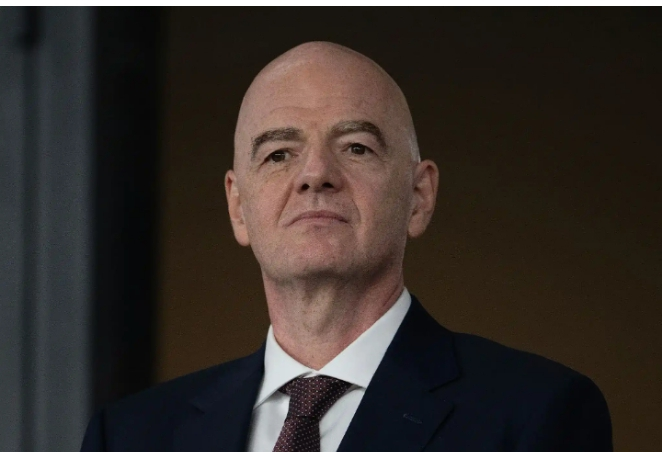
FIFA president Gianni Infantino has called for the FIFA Russia ban to be lifted, claiming that the suspension “has achieved nothing.”
The ban, which has barred Russian clubs and the national team from participating in FIFA and UEFA competitions since February 2022, was initially imposed following Russia’s invasion of Ukraine.
Infantino argues that such measures have not brought the intended political or social outcomes and have instead fueled frustration among Russian players and fans, while isolating youth athletes from international football opportunities.
Infantino, speaking to Sky Sports, emphasized that the sanctions have not solved the underlying issues, saying, “This ban has not achieved anything, it has just created more frustration and hatred.” He suggested that allowing Russian children to participate in international competitions would help maintain connections between nations and foster goodwill through football.
“Having girls and boys from Russia being able to play football games in other parts of Europe would help,” he added, highlighting the potential of sport as a unifying force rather than a political tool.
The FIFA president also questioned the broader principle of banning national teams due to the actions of their governments.
“Football should actually never ban any country from playing because of the acts of their political leaders,” Infantino said. “Somebody needs to keep the ties open.”
He argued that isolating athletes and children from international competitions punishes individuals who have no role in government decisions, undermining the positive impact that football can have in bridging divides.
However, Infantino’s call to lift the FIFA Russia ban drew swift criticism from Ukraine. Ukrainian sports minister Matvii Bidnyi described the comments as “irresponsible” and “infantile,”
emphasizing the ongoing human cost of the war. “They detach football from the reality in which children are being killed,” Bidnyi told Sky Sports, stressing that the invasion has had devastating effects on Ukrainian society, including its young athletes. He also argued that maintaining the ban is a necessary stance to signal international disapproval of Russia’s military actions.
The debate over the FIFA Russia ban underscores a longstanding tension in global sport: whether athletic competitions should remain separate from politics, or whether international bans can serve as a meaningful form of sanction.
Supporters of keeping the ban argue that lifting restrictions prematurely risks normalizing aggressive behavior and diminishing accountability, while critics, including Infantino, emphasize the humanitarian and developmental consequences for athletes who are not involved in political decision-making.
Since the ban was imposed, Russian football clubs and the national team have been excluded from all major competitions, including the UEFA Champions League, UEFA Europa League, and FIFA World Cup qualifiers.
Several high-profile Russian players have also faced restrictions on transfers to European clubs, limiting their exposure to top-level competition.
For youth players, the suspension has meant fewer opportunities to compete internationally, hampering skill development and reducing cultural exchange opportunities that are often critical in shaping future professional athletes.
Infantino’s perspective highlights a broader philosophical approach within FIFA that prioritizes inclusivity and dialogue. He maintains that sport, and football in particular, can serve as a bridge even in times of geopolitical conflict.
“Football is a universal language,” Infantino said. “It can bring people together in ways that politics cannot.” He cited examples from history where sports have facilitated understanding and reduced tensions between rival nations.
Critics of lifting the FIFA Russia ban, however, warn that removing the restrictions now could be perceived as rewarding aggressive behavior and undermining international solidarity with Ukraine.
Many European football associations, athletes, and fans continue to support the ban, seeing it as a moral imperative aligned with global condemnation of Russia’s invasion.
UEFA has repeatedly stated that the ban is based on the extraordinary circumstances of the conflict and the safety and integrity of competitions, rather than political alignment with any particular country.
The impact of the FIFA Russia ban has also been felt financially. Russian clubs have faced sponsorship losses, reduced revenue from international competitions, and challenges in attracting foreign talent.
While these economic pressures were intended to create incentives for policy change, Infantino argues that they have largely affected athletes and local fans rather than influencing political decision-making in Moscow.
“The ban is not punishing the right people,” he said, emphasizing that the human cost on ordinary athletes and children has been overlooked in the broader geopolitical calculations.
Infantino’s comments have sparked renewed debate in global sports governance circles. Analysts argue that FIFA faces a delicate balance: maintaining moral authority while promoting the universal values of football.
Some experts suggest a phased approach, such as allowing youth and amateur teams to compete internationally while keeping senior professional teams suspended, as a compromise that preserves accountability without isolating young athletes.
Others call for more dialogue between FIFA, UEFA, and national football associations to assess the long-term consequences of the ban.
For Russia, the suspension has created both frustration and uncertainty. While professional players continue to compete domestically, the inability to participate in international competitions has affected their global rankings and career trajectories.
Youth academies report declining interest from international partners, and coaches face challenges in providing their players with exposure to diverse playing styles.
The FIFA Russia ban, while intended as a political statement, has had deep and lasting implications on the development of football in Russia.
Conversely, in Ukraine, the ban is seen as a symbol of international support. Many Ukrainian athletes and officials believe that lifting the ban too early would send the wrong signal, undermining ongoing efforts to draw attention to the humanitarian crisis caused by the conflict.
Bidnyi’s strong response to Infantino underscores the emotional and moral dimensions that continue to influence decisions around the ban. Ukraine remains a vocal advocate for sustained restrictions until there is a meaningful resolution to the conflict.
The broader conversation around the FIFA Russia ban also touches on questions of fairness in sport. Is it justifiable to punish entire populations for the actions of a government?
Or should international sport take a stronger stance to signal global norms and values? Infantino’s position leans toward the former, emphasizing that football’s purpose is to unite people and provide opportunities, particularly for children who are otherwise removed from political decision-making.
In practical terms, lifting the FIFA Russia ban could involve phased reintegration. Youth competitions, friendly matches, and training exchanges could be resumed under strict monitoring, while senior professional teams remain restricted until broader geopolitical conditions improve.
This approach, some argue, preserves both the ethical stance against aggression and the developmental benefits of international football for young athletes.
Infantino’s remarks have reignited debate among football fans worldwide.
Social media discussions reflect a polarized community: some applaud his humanitarian perspective, while others criticize what they see as naivety in separating sport from political realities.
Analysts note that FIFA’s decisions will have long-term implications not just for Russia and Ukraine, but for the credibility of international sport as a platform for moral and social influence.
As discussions continue, FIFA faces the challenge of navigating a complex web of ethical, political, and sporting considerations.
The FIFA Russia ban is not just a restriction on competition; it is a symbol of the tension between global governance, human development, and the role of sport in society. How FIFA handles the ban in the coming months could set a precedent for how the organization responds to future conflicts.
Infantino’s call to lift the FIFA Russia ban reflects a broader vision of football as a tool for connection rather than punishment.
While critics highlight the ongoing conflict and the symbolic value of sanctions, Infantino emphasizes the human side: children, athletes, and the broader football community who have been affected by political decisions beyond their control.
The debate over the ban continues to evoke strong opinions, reflecting the complex interplay between sports, politics, and global ethics in the modern era.
About The Author